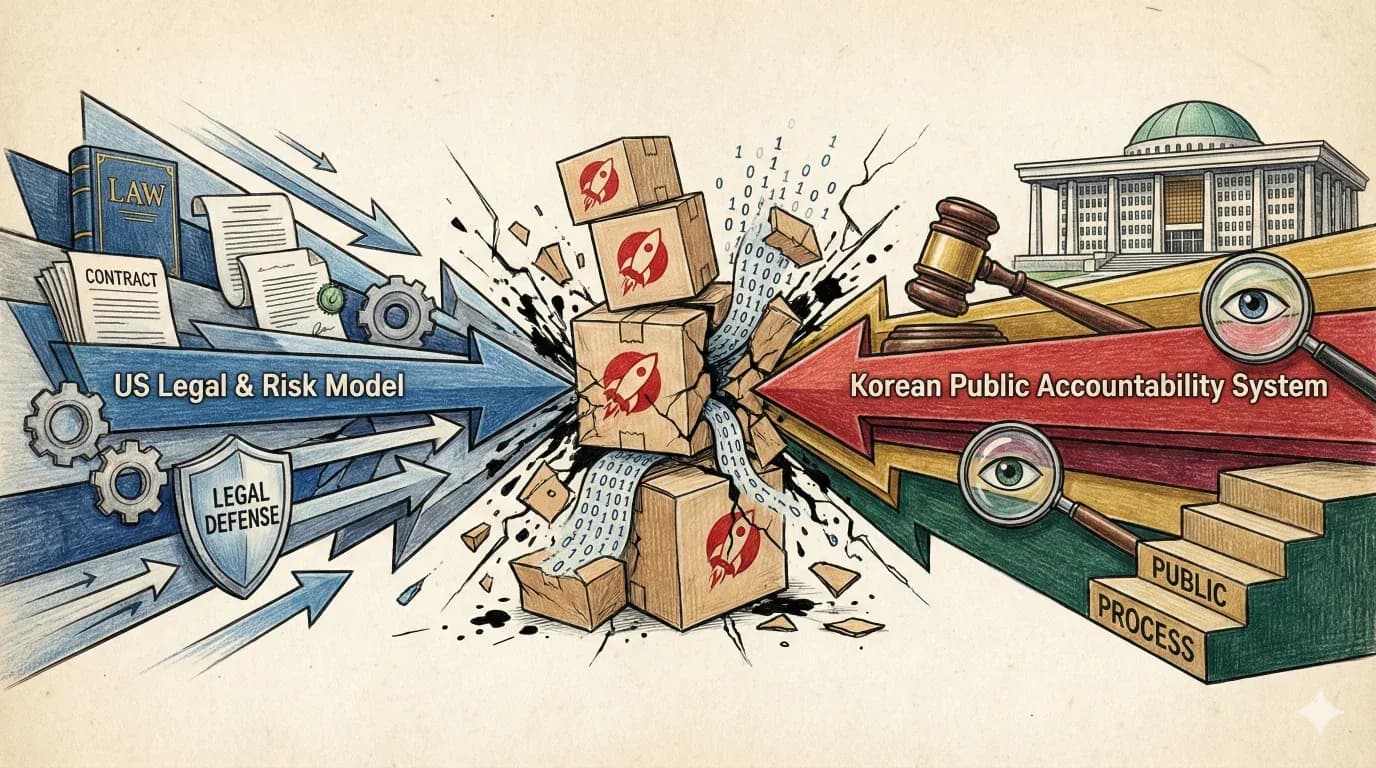
South Korea’s Elite Institutions and the Democracy Dilemma
South Korea’s elite public institutions still select power-holders through closed pipelines and test scores. Can democracy survive without reform?

South Korea’s Power Elite: Born from Exams, Insulated from the People
In South Korea, a select group of institutions have long served as pipelines to power. The Korea Military Academy produces generals. The Korea National Police University grooms police chiefs. The Judicial Research and Training Institute channels high-scoring law graduates directly into the judiciary and the prosecution service. From national security to law enforcement to the courts, these elite schools shape the people who enforce—and interpret—state authority.
What sets these institutions apart isn't just their prestige. It's how much power they confer, how quickly, and how narrowly. A teenager who enters the military academy emerges four years later as a commissioned officer with command responsibilities. A police university graduate, barely out of school, skips over years of street-level service to enter as an inspector. A law graduate who aces the bar and tops the training institute may become a judge or prosecutor before turning 30—without ever having argued a case or counseled a client.
For decades, this fast-track model has been defended as efficient and meritocratic—a way to train disciplined, loyal, and intellectually capable public servants. But critics say it’s time to question the system. The problem isn't just speed. It’s insulation. These paths favor test-taking ability over lived experience, hierarchy over diversity, and institutional loyalty over public accountability. The result is a leadership class that often lacks connection to the people it serves—and sometimes, even empathy.
The roots of these systems run deep. Many were born during South Korea’s authoritarian decades, inspired in part by military governance and colonial bureaucracy. They were designed to create order, not openness—to produce loyal stewards of the state, not independent guardians of the public. That legacy persists, even decades into democratization.
Today, however, South Korean society is changing rapidly. It is more pluralistic, better educated, and increasingly skeptical of centralized elites. Citizens are asking new questions: Why do judges and prosecutors rise without real legal practice? Why are top police officers shielded from front-line experience? Why does the military still favor a single academy for its high command? And why haven’t these systems adapted to the democratic, diverse society they now claim to protect?
The hidden architecture of power in South Korea has long remained out of sight—now, we must explore how elite institutions were constructed, how they operate, and what their persistence reveals about the challenges facing Korean democracy. In a society where legitimacy is earned through service, not assigned through exams, leadership must be based on more than just a test score.
Behind South Korea's corridors of power lies a carefully constructed system—one that shapes its judiciary, military, and police. But what happens when these institutions resist the forces of change? This is a critical moment to understand their operation and their implications for the future of Korean democracy. True leadership, in a democracy, cannot be built on test scores alone.
Fast-Tracked to Authority: Korea’s Engineered Routes to Public Power
Across different arms of the South Korean state—military, police, and judiciary—a similar pattern emerges: an elite institution selects young candidates, immerses them in an insulated training environment, and deposits them directly into positions of authority. These fast-track systems are not merely academic—they’re institutionalized gatekeepers of public power.
Founded in 1981 under the Chun Doo-hwan regime, the Korea National Police University was created to professionalize policing and centralize control. But in practice, it has created a two-tier system within the force: a small cadre of police cadets who skip over entry-level duties and begin their careers in mid-ranking leadership roles, and the vast majority of officers who rise slowly through the ranks from field duty.
Police university graduates—less than 1% of all police personnel—go on to occupy a disproportionate share of senior positions. Critics say the system breeds resentment, creates internal friction, and insulates future leaders from the communities they’re meant to serve. They have power but often lack practical exposure to crisis response, community policing, or frontline dynamics. The result is a command culture with shallow roots in democratic policing.
For decades, South Korea’s judges and prosecutors came almost exclusively through the JRTI, an elite program linked to the national bar exam. Top performers were fast-tracked into lifelong judicial or prosecutorial careers—often without ever practicing law, facing clients, or engaging in adversarial trial work.
Although the JRTI was formally phased out after the introduction of the law school system, the fast-track mentality remains. Today, high-scoring law school graduates still enter the judiciary or prosecution in their twenties, often with no real-world legal experience. In many democratic countries, judges are appointed after a decade or more in practice. In Korea, a 28-year-old may sentence a defendant to life imprisonment with less courtroom experience than the average public defender.
The Korea Military Academy—South Korea’s West Point equivalent—has long been the dominant pipeline for military leadership, particularly in the Army. Established in 1946, and modeled on Japanese and American military academies, KMA emphasizes hierarchy, discipline, and loyalty.
But in recent years, the military has been criticized for lacking intellectual diversity, gender inclusion, and field-adapted leadership styles. The overrepresentation of KMA alumni in top brass has created what some describe as a "uniform command class"—officers trained in the same way, thinking the same way, and advancing together. Alternative routes like ROTC (Reserve Officers' Training Corps) or OCS (Officer Candidate School) are underrepresented at the general level, despite producing officers with broader educational and professional backgrounds.
Though each institution has its own mission, they share a design philosophy: concentrate authority early, filter access through tests, and minimize external oversight. The result is a class of public officials who are loyal to their institution—but not always in touch with the people they serve.
This model worked for a developmental state focused on rapid growth and internal control. But in a democracy, it raises hard questions. Should state power be so tightly held by those with so little experience? And why are these pipelines still intact, decades after democratization?
Built for Obedience: Colonial Bureaucracy and the Birth of Exam-Based Power
To understand why South Korea’s public authority pipelines are so rigid, closed, and centralized, it helps to ask not how they work—but why they were created in the first place. The answer isn’t democratic innovation or administrative efficiency. It’s power.
The modern Korean state inherited more than its borders from history. It absorbed entire systems of governance from two authoritarian traditions: Japanese colonial rule (1910–1945) and military dictatorship (1961–1987). Both were obsessed with control, and both left deep imprints on how Korea selects, trains, and promotes those who wield public power.
Under Japanese colonial rule, Korea’s legal and administrative systems were built to serve Tokyo—not the Korean public. The colonial government relied on a tightly controlled bureaucracy to enforce imperial law, using judges, prosecutors, and police officers as instruments of compliance rather than justice. Law wasn’t a shield for citizens—it was a weapon of the state.
Access to these roles was tightly guarded. Legal officials were trained in Japanese law schools, appointed centrally, and promoted internally. The emphasis was on loyalty and administrative performance—not public service or accountability. This early model laid the groundwork for Korea’s later test-based bureaucratic culture, where exams became the main gate to power, and public authority was something to be earned through selection, not scrutiny.
After independence and a brief experiment with democratic governance, the military coups of the 1960s reset the state. Under Park Chung-hee and later Chun Doo-hwan, South Korea became a militarized republic in everything but name. The military didn’t just run the government—it shaped how power was distributed across society.
The Korea Military Academy (KMA) became the backbone of the officer corps. The Korea National Police University was founded in 1981, shortly after Chun’s rise to power, to cultivate “loyal and professional” police leaders—meaning ideologically reliable. The Judicial Research and Training Institute, too, became a channel for producing obedient legal elites through high-stakes exams and bureaucratic promotion.
These institutions were explicitly designed to insulate leadership from public pressure. Cadets lived in cloistered campuses. Police and prosecutors answered upward, not outward. Judges were chosen not by juries or peers, but by internal appointment. The goal wasn’t civic trust—it was chain of command.
South Korea formally democratized in 1987, but its governance architecture remained remarkably intact. The military returned to the barracks, but its institutional DNA lingered in how authority was cultivated and exercised. Promotions still followed rank, not review. Exams still decided who would govern. Citizens gained the right to vote—but not to oversee how judges, prosecutors, or senior officers were selected.
Even today, many of the most powerful positions in Korean public life remain effectively sealed off from democratic input. Judges are appointed, not elected. Police chiefs are career bureaucrats, not community leaders. Generals rise through internal hierarchies, not civilian commissions.
In short, Korea democratized on the surface—but deep inside the state, authoritarian machinery still hums quietly, choosing who gets to rule.
Why Reform Fails: When Institutions Protect Their Own
South Korea’s elite pipelines were not only built to produce power—they were built to protect it. And decades after democratization, they still do.
Despite waves of public discontent, reform proposals, and presidential campaign pledges, the systems that train and appoint judges, prosecutors, police commanders, and military officers have proven remarkably resistant to change. Reform has been discussed. Reform has been promised. But reform has rarely been implemented—and almost never endured.
This is not simply because of political indecision or legislative gridlock. It is because these institutions were never designed to be easily opened. Their core logic—select early, train internally, promote from within—was forged during eras of centralized control, when state stability was equated with institutional loyalty. That logic has proven astonishingly resilient.
Nowhere is this clearer than in the judiciary. After the introduction of law schools and the formal closure of the Judicial Research and Training Institute, there were hopes that legal careers would diversify, and that judges and prosecutors would emerge from real practice, with experience in advocacy and client service. But the reality changed little. The new system continued to favor those with elite academic backgrounds and top exam scores. Most judges are still appointed before their mid-30s. Most prosecutors have never defended a client.
This internal isolation reached a breaking point in 2018, when the judicial corruption scandal erupted. Senior judges, including former Supreme Court Chief Justice Yang, were found to have manipulated rulings in politically sensitive cases to curry favor with the presidential office. Public outrage was immediate and intense. But despite dozens of indictments and trials, few institutional reforms followed. The judiciary apologized—but then quickly returned to business as usual. No independent oversight body was created. No system for external evaluation was implemented. The crisis exposed the system, but the system endured.
The police, too, have seen power grow faster than oversight. While prosecutors lost investigative authority under recent reforms, the police gained it. But the pipeline of leadership remains the same. Graduates of the Korea National Police University, selected through hyper-competitive teenage entrance exams, still rise rapidly into supervisory positions—often without substantial field experience.
A 2021 audit by the Board of Audit and Inspection revealed that over 60% of senior police appointments in major metropolitan areas came from the KNPU alumni network. In some provinces, every police chief had a KNPU background. Rank-and-file officers have described the culture as one where “outsiders never get to the top”—a perception that undermines morale and widens the gulf between leadership and street-level enforcement.
In the military, resistance to reform is quieter—but no less entrenched. The Korea Military Academy continues to dominate senior appointments, especially in the Army. Alternative pathways like ROTC or OCS produce capable officers, many with broader educational or civilian experience. But few of them rise to general. The official line is that KMA graduates are “better suited to command,” but what’s left unsaid is that the command structure itself is designed to reproduce its own image.
Even after public scandals—including sexual harassment cases involving cadets, the death of a female officer who reported abuse, and persistent complaints of hazing—no meaningful structural change has occurred. Committees are formed. Reports are issued. But the same schools keep feeding the same ranks.
In each case, reform efforts have faced the same quiet wall: networks of alumni in key decision-making posts, bureaucratic self-interest, political caution, and a cultural belief in test-based meritocracy. These systems, built to control rather than respond, are extraordinarily good at outlasting change.
For many, the consequence is a creeping democratic fatigue. The public may distrust these institutions. They may resent their opacity or arrogance. But having seen reform attempts stall or fail for decades, many Koreans now see the system not as broken, but as immovable.
The question, then, is no longer just how to fix the system—but whether those inside it have any incentive to change at all.
What Democracies Do Differently: Public Authority Beyond Test Scores
South Korea is not the only country that values discipline, public service, and professional training in its institutions of law and order. However, it remains one of the few democracies where these functions are still highly centralized, exam-based, and insulated from the public. In most democratic systems, the path to positions of power is longer, more varied, and more open to oversight and accountability. Experience, real-world performance, and the ability to connect with the public often matter as much—if not more—than passing an exam or attending a prestigious institution.
In the U.S., the process for attaining positions of power in the judiciary and law enforcement is significantly more protracted and transparent. Judges, for example, are rarely appointed without a decade or more of legal experience, with many elected at the state level or subject to extensive confirmation hearings in front of the public. This process ensures a higher degree of accountability, as candidates must answer to the people they serve.
Prosecutors in the U.S. typically rise from within the profession, gaining practical legal experience, and often subject to elections themselves, making them directly accountable to the public. Police chiefs, too, are typically appointed by elected officials, with oversight from civilian review boards. While military academies like West Point are still prestigious, the majority of officers in the U.S. military come through ROTC programs, where leadership roles are earned through performance, not inherited from an exclusive academy.
The central difference between South Korea and the U.S. is clear: democratization of oversight. Power in the U.S. doesn’t begin with a test result—it is earned through time, experience, and public trust. Leadership is built from within the community, not outside it.
The U.K. takes a different approach, focusing on professionalization through experience rather than elite academy training. Police officers rise through the ranks based on field experience, with leadership roles often open to people from outside the policing system altogether. Recent reforms in the U.K. have introduced direct-entry superintendent programs, allowing social workers, lawyers, and even private-sector professionals to step into higher ranks after specialized training. The idea behind these changes is simple: leadership should reflect society and the real world, not just the image of an isolated elite.
Similarly, judges in the U.K. are drawn from the legal profession after years of experience, with most spending over a decade as barristers or solicitors. The emphasis is on experience and judgment, rather than youth or institutional pedigree. This approach creates a more representative and democratic judiciary, one that values practical experience over academic achievement alone.
Germany offers a more structured system but still incorporates democratic safeguards. Judges and prosecutors in Germany are selected through rigorous legal training and extensive field experience, with advancement often depending on peer evaluation, supervisor reviews, and public performance audits. This ensures that public authority is held accountable at every level, with regular checks on the performance and integrity of those in power.
The police system in Germany similarly ensures accountability through state-level police academies, where recruits train together regardless of their future rank. Promotions are based on years of service and continuing education, rather than solely on exam results or institutional ties. The focus here is on building practical, real-world skills rather than abstract authority. In the military, Germany has embraced a civil-military balance, where officers are encouraged to pursue higher education and maintain strong ties to civilian values and democratic principles.
Both France and Japan maintain prestigious systems for training judges, police officers, and military leaders, but these systems are embedded in broader civil service structures that require rotations, field assignments, and regular evaluations. In France, institutions like the École Nationale de la Magistrature for judges may hold significant prestige, but they are part of a larger civil service network that ensures ongoing accountability.
In Japan, the police and military academies remain selective, but the promotion process is more balanced. Leadership typically rises from within the ranks, and there is greater oversight from civilian ministries. Both countries emphasize the importance of experience and democratic oversight, ensuring that those in power are accountable to the people they serve.
What stands out about South Korea’s system is its emphasis on speed, insulation, and exam-based legitimacy. Unlike other democracies, South Korea front-loads power based on performance in exams, creating a system where individuals can hold some of the highest positions in society—judges, prosecutors, police chiefs, and military commanders—despite having limited real-world experience.
In South Korea, leaders are chosen more for their ability to excel in a test than for their capacity to serve the public. The result is a system where some of the most powerful people in the country enter public service having never worked outside their institution—or answered to the public they serve. This insulated, exam-based power is a legacy of South Korea’s authoritarian past, and in a modern democracy, it’s no longer enough. In a democracy, power must be earned over time, with experience, accountability, and service—not assigned by exam scores alone.
While other democracies have prioritized experience, diversity, and public accountability, South Korea continues to lean on exam-based selection and early appointments, leaving power to flow from a narrow, insulated group of elites. This approach may have worked for the developmental state of the past, but it is not suitable for a democratic society that demands transparency, inclusivity, and legitimacy from those who hold power.
Earning Power, Not Inheriting It: A New Vision for Public Authority
If South Korea’s elite institutions were designed to serve an earlier age—one defined by hierarchy, control, and rapid national development—then the age they now inhabit demands something altogether different. In a democracy, power cannot be justified solely by performance on exams, or by passage through a single, tightly guarded gate. It must be earned, sustained, and above all, subject to trust.
What is needed today is not merely institutional reform, but a fundamental reimagining of what qualifies someone to hold power in a democratic society. And the answer begins not with credentials, but with competence grounded in lived experience.
In the judiciary, real reform would mean ending the tradition of appointing judges and prosecutors before they have spent a single year in actual legal practice. Legal authority should not be granted to those who have never sat across from a client, argued in court, or faced the moral complexity of real-world cases. It should emerge from exposure, reflection, and the ability to weigh competing truths—not simply from textbook precision or exam speed. Judges and prosecutors must be chosen for their capacity to understand society, not just apply the law.
In policing, leadership must be built from the ground up—not parachuted in from a single elite academy. The Korea National Police University, if it is to exist at all, must shed its image as a command pipeline for teenage exam prodigies. The streets are where trust is built, not seminar halls. To lead the police in a democratic age requires years spent listening to civilians, diffusing conflict, and navigating complexity on the ground. Without that foundation, authority becomes brittle, and public confidence fades.
The military, for its part, must begin to reflect the society it serves. The Korea Military Academy continues to dominate the upper ranks of command, but no one school—no matter how proud—can represent a nation of 50 million. ROTC and OCS officers deserve a clear and fair path to senior leadership. Breaking the monopoly of a single training lineage is not a threat to military discipline—it is the only way to ensure that leadership is shaped by diversity of thought, not just uniformity of training.
But reform cannot stop at admissions or career tracks. The deeper question is one of accountability. In too many corners of Korean public life, oversight remains an internal affair—managed by those already inside the system. True reform would bring public evaluation into the process: independent review bodies, citizen panels, transparent appointment criteria, and term-based leadership subject to renewal. No official in a democracy should wield unchecked, indefinite power—not even judges or generals.
Perhaps most importantly, Korea must let go of the belief that excellence is best measured at age 19. The brightest may pass the test, but the wisest are shaped over time—by failure, by learning, by human contact. A society that draws its leaders only from those who test well in youth will continue to miss out on the very people democracy is meant to uplift: those with different stories, different strengths, and deeper empathy.
Reforming South Korea’s elite institutions is not about weakening the state—it’s about strengthening its legitimacy. Authority drawn from the public must return to the public. That means building institutions that welcome, not repel, difference. That grow, not calcify. That serve, not rule.
Because in the end, a democracy is only as strong as the trust its citizens place in those who lead it—and that trust must be earned, not inherited.
The Weekly Breeze
Keep pace with Busan's deep narratives.
Delivered every Monday morning.