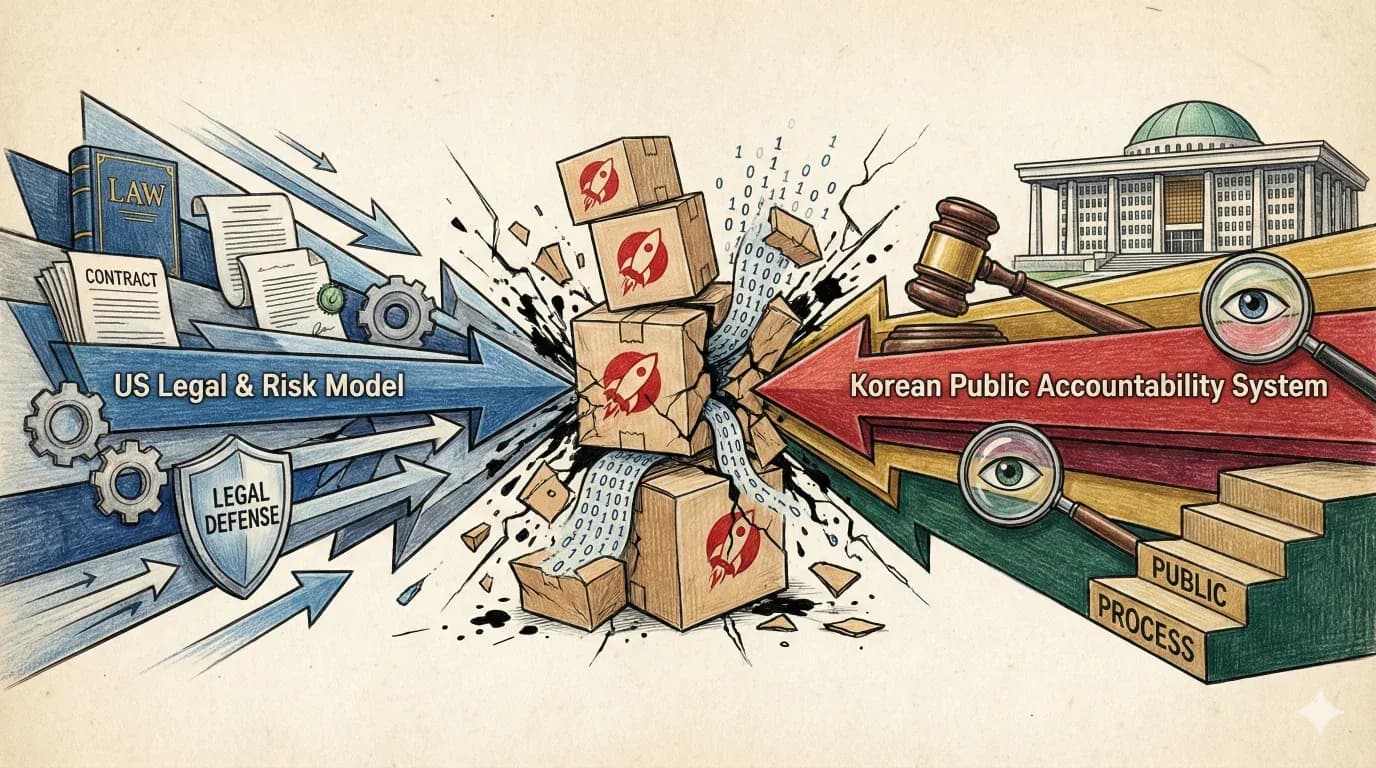
South Korea’s Alliance Choices in an Age of Populism
U.S. forces in Korea are not charity. The peninsula anchors Washington’s Indo-Pacific strategy as much as it safeguards Seoul. The alliance is reciprocal, not one-sided.

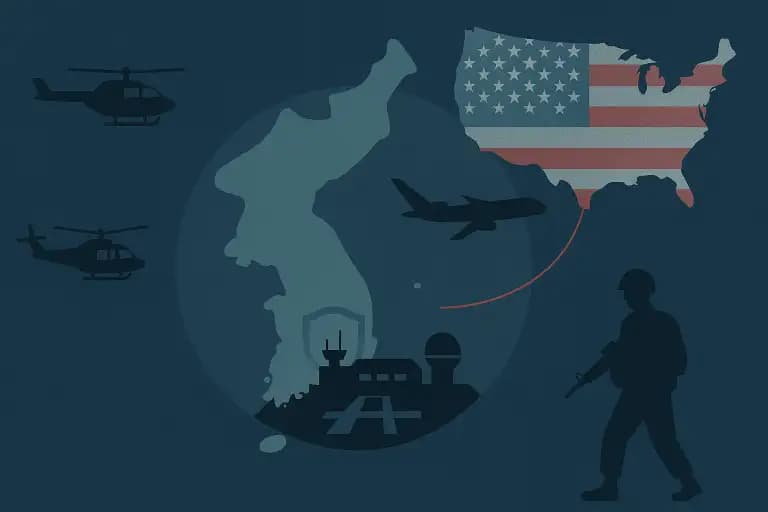
Debates over the U.S. military presence in South Korea are usually framed in the language of protection: America as the guarantor, Korea as the beneficiary. This vocabulary has persisted for decades, reinforcing a posture of dependence that too often passes as strategic realism. The framing is misleading. U.S. Forces Korea are not maintained out of benevolence but because the peninsula provides Washington with a forward operating platform of extraordinary value in the Indo-Pacific.
The global environment only sharpens this point. Populist politics in the United States and Europe have unsettled assumptions once treated as fixed. Alliances are spoken of less as communities of shared purpose and more as contracts subject to renegotiation, sometimes with the language of extortion. What is cast as “cost-sharing” frequently disguises leverage politics aimed at extracting concessions from anxious partners.
South Korea enters this landscape with more at stake than most. Its geography places it at the fault line of maritime and continental power competition, and its infrastructure now hosts the largest U.S. overseas base in the world. To describe this arrangement as if it were one-sided protection is to miss the reciprocal nature of the alliance and, more importantly, to weaken Seoul’s own bargaining position. With another season of diplomatic theater unfolding at the United Nations, the central question is not whether the alliance endures, but whether South Korea can articulate its role on terms of equality rather than dependence.
When Populism Redraws the Map of Alliances
The strategic debate over alliances cannot be separated from the political environment in which they are managed. The past decade has seen a steady retreat of liberal democratic norms. Freedom House has recorded nineteen consecutive years of global decline in political rights and civil liberties. The Democracy Index 2024, published by the Economist Intelligence Unit, places the global average at 5.23 out of ten, pushing more states into “hybrid” or “authoritarian” categories. International IDEA’s Global State of Democracy Report 2024 captures the trend in sharper terms: erosion is now more common than improvement, and backsliding has become the prevailing condition rather than an exception.
This erosion is not confined to fragile states. It is reshaping the politics of established democracies. In Europe, the 2024 parliamentary elections produced unprecedented gains for far-right movements, triggering early elections in France and altering the Dutch coalition landscape in favor of radical nationalists. These outcomes reflect not only shifts in voter preferences but the normalization of political rhetoric once considered fringe.
The United States is not insulated from this current. The return of Donald Trump to office in 2025 has revived a language of alliances that treats security commitments as bargaining chips. His earlier demand that Seoul pay nearly five billion dollars annually for hosting American troops, reported widely in 2019, illustrates how populist leaders transform alliances into platforms for domestic political performance. What is at stake for allies is not simply the cost of hosting troops but the uncertainty generated when alliance politics are filtered through volatile electoral moods.
For South Korea, this context matters profoundly. An alliance framed in Washington through the lens of populist bargaining cannot be managed by Seoul with a rhetoric of gratitude. The task is to recognize that volatility abroad constrains the reliability of promises and amplifies the need for a posture grounded in reciprocity and strategic clarity.
The Politics Behind Threats and Promises
The uncertainty surrounding alliances is not new. International relations scholarship has long examined the tensions that arise when states of unequal power bind themselves together. Glenn Snyder, in Alliance Politics (1997), described the dilemma starkly: weaker allies fear abandonment, while stronger allies fear entrapment in conflicts not of their choosing. This dual anxiety continues to define the dynamics of the U.S.–ROK relationship, even when the rhetoric of solidarity obscures the asymmetry.
Andrew Morrow’s analysis of asymmetric alliances (Arms versus Allies, 1991) adds another layer. He shows that smaller states often exchange constraints on autonomy for protection, providing material support or political concessions to secure a stronger partner’s commitment. South Korea’s financing of base relocations and its acceptance of limitations on operational control fit squarely within this logic. What appears in domestic debate as a matter of generosity or dependency is, from a theoretical standpoint, the expected transaction of an asymmetric bargain.
David Lake’s Hierarchy in International Relations (2009) reframes alliances as hierarchical orders in which authority flows unequally. In such systems, the stronger state leverages the possibility of withdrawal not necessarily as a credible policy option but as a tool of discipline. The frequent invocation of troop reductions or burden-sharing demands by U.S. leaders should be read less as operational intent and more as bargaining rhetoric embedded in this hierarchy.
These frameworks do not dismiss the practical stakes of the alliance but sharpen our understanding of how rhetoric functions within it. By seeing threats of withdrawal or exaggerated financial demands as bargaining devices rather than genuine strategic preferences, policymakers in Seoul can avoid overreacting to political theater abroad. The value lies in recognizing structure: the United States requires its forward position in Korea no less than South Korea requires its deterrent shield. Misinterpreting bargaining language as existential risk only entrenches the very dependency that Seoul must outgrow.
Why U.S. Bases in Korea Serve Washington Too
The material presence of U.S. forces in South Korea reveals a reality that contradicts the language of unilateral protection. Camp Humphreys in Pyeongtaek, officially described by the U.S. Army as the largest overseas American base, stands as a visible reminder of how the alliance operates. Its expansion required more than ten billion dollars, of which South Korea covered close to ninety percent. Far from symbolizing dependency, the base illustrates the host nation’s extensive financial and political commitment.
Financial records reinforce this point. A 2021 report by the U.S. Government Accountability Office estimated that between 2016 and 2019 the Department of Defense spent $13.4 billion on stationing forces in South Korea. In the same period, Seoul provided $5.8 billion in direct and indirect support. These figures do not suggest a free ride. They reveal a distribution of costs in which the host state assumes substantial responsibility for sustaining the infrastructure that Washington relies on.
Geography adds a strategic dimension that money alone cannot capture. Situated along the first island chain, the Korean Peninsula offers a forward operating platform within striking distance of Chinese and Russian coastal zones. From Pyeongtaek, Osan, or Kunsan, U.S. forces can reach key areas in hours rather than days. RAND studies and Congressional Research Service reports emphasize that such positioning reduces response times, increases deterrence credibility, and reassures allies across the region. A withdrawal to Japan or Guam would lengthen timelines, complicate logistics, and erode the very deterrent Washington seeks to maintain.
The role of U.S. Forces Korea is no longer confined to deterring North Korea. Declassified strategy documents, including the 2018 Indo-Pacific Framework and the 2022 Indo-Pacific Strategy, position South Korea as part of a broader regional balance. The rhetoric of “strategic flexibility” reflects this shift: American planners see the peninsula not only as a shield for Seoul but as a launch point for operations throughout the Indo-Pacific.
Taken together, these realities dismantle the notion that U.S. troops remain in Korea solely for the sake of Korean security. They are embedded in Washington’s global posture, serving as both a deterrent against regional adversaries and a logistical hub for power projection. For South Korea, acknowledging this duality is not a matter of vanity but a precondition for negotiating alliance terms from a position of clarity rather than subordination.
Cost-Sharing or Political Theater?
The most visible pressure point in the alliance has been the question of cost. In 2019, then-President Donald Trump demanded that Seoul increase its annual contribution for hosting U.S. troops to nearly five billion dollars — more than a five-fold increase from previous agreements. The figure was politically untenable, yet it served a purpose. By invoking the threat of troop reductions, Washington signaled that what had long been treated as a strategic constant could be turned into a bargaining chip.
Negotiations eventually produced a different outcome. The 11th Special Measures Agreement, concluded in 2021, and the 12th, signed in 2025, settled on contributions far below Trump’s demand. The gap between rhetoric and settlement is telling. Inflated figures were less about actual requirements than about generating leverage, both in negotiations with Seoul and in the U.S. domestic arena, where the image of allies “paying more” could be presented as political success.
This pattern fits the logic of asymmetric alliances described in scholarship. David Lake’s analysis of hierarchy highlights how stronger states use the possibility of abandonment not as a genuine option but as a disciplinary tool. The United States gains materially from its presence in Korea, but by portraying the alliance as an act of generosity, it extracts additional concessions. Glenn Snyder’s concept of the abandonment dilemma helps explain the resonance of such rhetoric in Seoul: when leaders internalize the fear of being deserted, they become more susceptible to accepting unfavorable terms.
South Korea’s own political discourse has, at times, reinforced this imbalance. Conservative voices often emphasize the indispensability of U.S. protection, framing contributions as the price of survival rather than as part of a reciprocal arrangement. This mindset allows Washington’s rhetoric of withdrawal to have greater effect than its strategic circumstances warrant. The reality, as shown in cost data and strategic geography, is that U.S. Forces Korea are as integral to Washington’s regional posture as they are to Seoul’s defense.
Understanding this dynamic is essential. To mistake bargaining rhetoric for existential threat is to cede negotiating ground before discussions even begin. Recognizing extortionary language as performance — both for alliance bargaining and domestic politics — allows South Korea to approach cost-sharing not as tribute but as an exchange within a mutually beneficial framework.
From Client State to Strategic Actor
South Korea’s security environment demands more than passive adjustment to the rhetoric of its ally. The challenge is to articulate a diplomatic posture that acknowledges mutual dependence without surrendering agency. This requires reframing cost, redefining flexibility, and diversifying partnerships.
First, reframing cost-sharing. The financial contributions Seoul makes to sustain U.S. forces should not be presented as payments for protection. They are investments in a shared deterrence architecture that benefits both capitals. GAO figures and RAND studies provide empirical support: forward deployment reduces the response time of U.S. forces and enhances regional stability, effects that cannot be achieved by distant bases alone. By grounding arguments in such evidence, Seoul can counter the narrative that it is a client paying tribute.
Second, redefining strategic flexibility. Washington increasingly views U.S. Forces Korea as part of a regional posture extending beyond the peninsula. For Seoul, acceptance of this shift must be conditional. Linking broader operational roles for U.S. forces to the gradual transition of wartime operational control and to modernization of the Combined Forces Command can ensure that expanded flexibility does not translate into diminished autonomy. Flexibility should be framed not as unilateral concession but as negotiated alignment.
Third, diversifying partnerships. A rational foreign policy cannot rely on a single alliance, however central. Engagement with Europe, India, and ASEAN states broadens South Korea’s strategic options and reduces vulnerability to political volatility in Washington. The government’s Indo-Pacific Strategy of 2022, with its emphasis on inclusive and values-based networks, provides an institutional basis for such diversification. This is not a substitute for the alliance but a hedge against uncertainty, consistent with theories of middle-power strategy.
These elements form the outline of a more autonomous diplomacy: one that is pragmatic, evidence-based, and less vulnerable to rhetorical pressure. Autonomy here does not imply distancing from the United States. It means ensuring that the alliance operates on terms of reciprocity, where South Korea is a participant shaping outcomes rather than a dependent adjusting to threats.
Speaking as an Equal on the Global Stage
The United Nations General Assembly offers not only a global platform but also a stage on which national leaders signal how they conceive their alliances. For South Korea, the task is to demonstrate that its relationship with Washington rests on reciprocity and shared interests, not on gratitude for protection.
The language chosen in New York will matter. References to “shared interests” and “forward presence” would affirm that South Korea recognizes its role in sustaining regional stability. Acknowledging the institutionalization of extended deterrence through mechanisms such as the Nuclear Consultative Group would underscore that deterrence is not a unilateral guarantee but a structured framework in which Seoul is a participant.
Joint statements will also be read closely. Phrases emphasizing modernization of the Combined Forces Command, the visibility of U.S. strategic assets, and the scale of South Korea’s financial contributions can reinforce the narrative of mutual investment. By contrast, a message couched in deferential tones risks reinforcing the very dependency frame that U.S. populist rhetoric exploits.
The General Assembly is not merely a diplomatic ritual. It is a moment when governments frame their strategic posture before an international audience and, indirectly, their own citizens. For Seoul, the measure of success is not applause in the hall but whether the speech positions South Korea as a state capable of defining alliance terms in language that reflects parity. In a period when populism and nationalist bargaining erode predictability in Washington, clarity of this kind is essential for preserving strategic stability.
Breaking Free from the Vocabulary of Dependence
The debate over U.S. forces in South Korea is often reduced to a question of protection and payment. This framing misses the strategic core. American troops remain not simply to defend the South but because the peninsula anchors Washington’s position in the Indo-Pacific. The presence of Camp Humphreys, the financial contributions recorded by the GAO, and the deterrence studies produced by RAND all point to the same conclusion: this is an arrangement of mutual benefit, not unilateral charity.
Yet rhetoric continues to obscure structure. Populist leaders in Washington portray allies as dependents to secure domestic political gains. Conservative voices in Seoul sometimes echo that view, presenting cost-sharing as tribute rather than investment. Both narratives reinforce dependency at the expense of strategic clarity. The danger lies not in abandonment itself but in allowing exaggerated threats to shape policy choices.
The alternative is a diplomacy grounded in reciprocity. By reframing contributions as shared investment, by conditioning flexibility on greater autonomy, and by widening partnerships beyond the United States, South Korea can position itself as an actor with agency. This does not weaken the alliance; it strengthens it by removing the distortions of extortionary rhetoric.
The United Nations General Assembly is a reminder that language matters. How Seoul speaks about its role will shape how others perceive it — allies, adversaries, and its own citizens alike. The challenge is to move beyond the vocabulary of gratitude and dependency, and to claim the alliance as a framework of equals confronting shared risks.
In an international order unsettled by populism and nationalist bargaining, clarity and reciprocity are not luxuries. They are the conditions under which alliances endure and states preserve their autonomy. For South Korea, the task ahead is to shed the weight of submissive frames and to articulate a role that reflects both its strategic importance and its political maturity.
The Weekly Breeze
Keep pace with Busan's deep narratives.
Delivered every Monday morning.