Managing Household Debt in South Korea Through the Third-Phase DSR Policy
The third-phase Stress Debt Service Ratio (DSR) policy, effective July 1, 2025, seeks to curb South Korea's escalating household debt by tightening lending conditions.

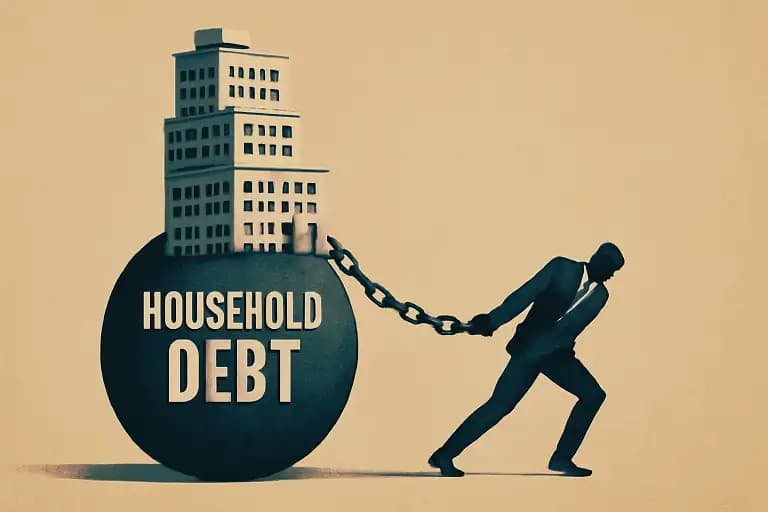
South Korea’s household debt has reached concerning levels, surpassing 100% of GDP. In response, the government is implementing decisive measures to mitigate the risks posed by increasing debt, particularly in the housing sector. The third-phase Stress Debt Service Ratio (DSR), which will come into effect on July 1, 2025, represents a key step in addressing these risks.
The third-phase DSR introduces a stress interest rate on household loans to ensure borrowers do not overextend their credit. By applying higher stress rates, the policy aims to limit borrowing capacity, especially in speculative areas, while stabilizing the housing market.
This article outlines the specifics of the third-phase DSR, its anticipated effects on the banking sector, the real estate market, and household borrowers, as well as its broader economic implications.
Strengthening Household Debt Management
The third-phase Stress Debt Service Ratio (DSR), set to be implemented on July 1, 2025, seeks to address South Korea's escalating household debt by tightening borrowing conditions. This policy introduces higher stress interest ratesdesigned to ensure debt obligations remain manageable, even as interest rates fluctuate.
For loans in the Seoul metropolitan area, where housing prices have seen rapid inflation and speculative demand, a 1.50% stress rate will be applied. In contrast, non-capital areas will face a 0.75% stress rate effective until the end of 2025. This differentiated approach reflects the varying economic and market conditions across regions.
The third-phase DSR will cover all household debt types, including mortgages, credit loans, and other personal loans. Loans with both fixed and floating interest rates, such as mixed and periodic loans, will be subject to more stringent stress rate applications. Fixed-rate loans will experience less impact, as their repayment terms remain predictable.
Through tighter lending conditions, the government aims to curb excessive borrowing and mitigate risks associated with rising interest rates. Additionally, the policy seeks to slow speculative growth in the real estate market, particularly in regions where demand and prices have been rising sharply.
Addressing South Korea’s Household Debt Challenge
The third-phase Stress Debt Service Ratio (DSR) policy is primarily designed to curb the rapid growth of South Korea’s household debt, which has reached concerning levels. With household debt now exceeding 100% of GDP, the government is taking proactive steps to mitigate risks to financial stability and economic growth.
The main objective of the third-phase DSR is to ensure that borrowing remains in line with borrowers’ ability to repay. By imposing a stress interest rate on household loans, the government aims to limit excessive borrowing, particularly in speculative markets. This measure will help ensure that even as interest rates rise, borrowers are not overexposed to debt they cannot sustain.
The 1.50% stress rate applied to loans in the Seoul metropolitan area reflects the heightened risk of interest rate volatility in this region, where housing prices have been significantly influenced by speculative pressure. Conversely, the 0.75% stress rate in non-capital areas aims to balance the need for regulation while recognizing the more stable market conditions in these regions.
In addition to mitigating risks for financial institutions and borrowers, the third-phase DSR seeks to stabilize the real estate market. By tightening borrowing conditions, the policy aims to slow the rapid rise in housing prices, particularly in high-demand urban areas. This is expected to improve housing affordability in the long term, particularly for first-time homebuyers who have increasingly been priced out of the market.
Ultimately, the policy is designed to foster a more sustainable relationship between income levels and borrowing capacity, contributing to greater financial stability in South Korea’s housing sector.
Mitigating Household Debt Risks
The introduction of the third-phase Stress Debt Service Ratio (DSR) is not just a regulatory shift within the financial and real estate sectors, but also a significant macroeconomic development for South Korea. As the country faces one of the highest household debt-to-GDP ratios among OECD nations, the policy aims to address the broader economic risks of excessive borrowing.
South Korea’s household debt has been rising at an alarming rate, with total debt surpassing 100% of GDP. This escalating debt poses a threat not only to financial institutions but also to the broader economy, as high levels of debt can lead to reduced consumer spending and slower economic growth.
The third-phase DSR aims to manage these risks by ensuring that borrowers’ debt obligations are sustainable in the context of rising interest rates. By applying a higher stress interest rate to household loans—particularly in more speculative areas like Seoul—the policy seeks to temper excessive credit growth. This will help prevent the overextension of credit, reducing the risks of widespread defaults and financial instability.
The real estate market, a critical component of South Korea’s economy, is heavily influenced by access to credit. The third-phase DSR aims to moderate the rapid price inflation seen in the housing market, particularly in speculative urban areas where home prices have risen sharply in recent years. By reducing demand for housing through tighter lending, the policy is expected to slow the pace of price increases and lower the risk of a housing bubble.
While the immediate effect may include a slowdown in housing transactions and price adjustments, the long-term economic effect of a more stable real estate market could be positive. It would contribute to greater financial stability, reduce household debt burdens, and prevent the economy from becoming over-leveraged.
In the context of macroeconomic growth, tightening borrowing limits may temporarily dampen household consumption, as consumers allocate more of their incomes to debt repayment. This reduction in spending could slow economic growth in the short term. However, the policy’s long-term goal is to foster more sustainable financial behavior, leading to stronger economic fundamentals in the future.
South Korea’s economy is highly dependent on domestic consumption and real estate investments, and stabilizing household debt is crucial to prevent these sectors from becoming sources of financial instability. If the policy proves effective, it will reduce the risk of a debt crisis, which could have severe repercussions for the national economy.
Global Perspectives on DSR-Like Policies
South Korea’s third-phase Stress Debt Service Ratio (DSR) policy is part of a global trend toward regulating household borrowing, as advanced economies grapple with rising levels of household debt and the risks of financial instability. While South Korea’s high household debt-to-GDP ratio makes this policy particularly critical, comparing it with global approaches can offer useful insights.
Countries such as Canada, New Zealand, and Ireland have adopted Debt-to-Income (DTI) ratios and other macroprudential measures to regulate household borrowing. These policies are designed to curb excessive credit accumulation and mitigate the risks of housing market bubbles.
In Canada, tightening DTI ratios has slowed household debt growth, particularly in the housing market. However, stricter lending conditions have also reduced market activity, especially for first-time homebuyers. This has raised concerns about housing affordability, an issue South Korea also faces as its housing market becomes financially constrained.
In New Zealand, the Reserve Bank has implemented loan-to-income (LTI) ratios to address rising property prices. While effective in stabilizing the market, this has made housing less affordable for lower-income buyers, mirroring some of South Korea’s affordability challenges in non-capital regions.
In Europe, countries like Ireland and the Netherlands have used macroprudential tools, including limits on loan-to-value (LTV) ratios and DTI caps, to manage speculative property investments and control credit growth. While successful in reducing speculative bubbles, these measures have also raised concerns about affordability, especially in urban centers. This is a concern South Korea shares, particularly in its capital region, where speculative demand remains high.
Lessons from these global practices suggest that, while DSR-like policies can help control household debt, they must be carefully calibrated to avoid unintended consequences, such as reducing homeownership opportunities for first-time buyers or lower-income households, which could exacerbate economic inequality.
Furthermore, regional disparities in South Korea’s housing market highlight the need for a tailored approach to policy implementation. Unlike countries that apply DSR measures uniformly, South Korea must adjust its regulations to address the specific dynamics of both speculative urban markets and more stable regions.
Finally, the experiences of other countries underscore the importance of complementary policies that focus on housing supply and affordability. Regulating borrowing alone will not resolve South Korea’s housing challenges; these policies must be paired with efforts to ensure adequate housing supply to meet demand, particularly in the capital region.
South Korea’s third-phase DSR is an essential policy tool aimed at stabilizing household debt and preventing financial instability. However, the unique characteristics of South Korea’s housing market, including its high debt-to-GDP ratio and speculative urban demand, require ongoing adjustments to ensure its effectiveness.
Drawing on global best practices, South Korea must refine the third-phase DSR to reflect its specific market conditions. By adopting a balanced approach that addresses both demand and supply-side challenges, policymakers can create a more sustainable and resilient housing market, ultimately fostering long-term economic stability
The Weekly Breeze
Keep pace with Busan's deep narratives.
Delivered every Monday morning.