Independence or Privilege? Inside the Battle Over Korea’s Financial Supervisory Service Reform
The Financial Supervisory Service has sweeping powers over banks, insurers, and securities firms—but little structural responsibility when scandals erupt. The government’s reform plan seeks to fix this imbalance, sparking fierce resistance from within.

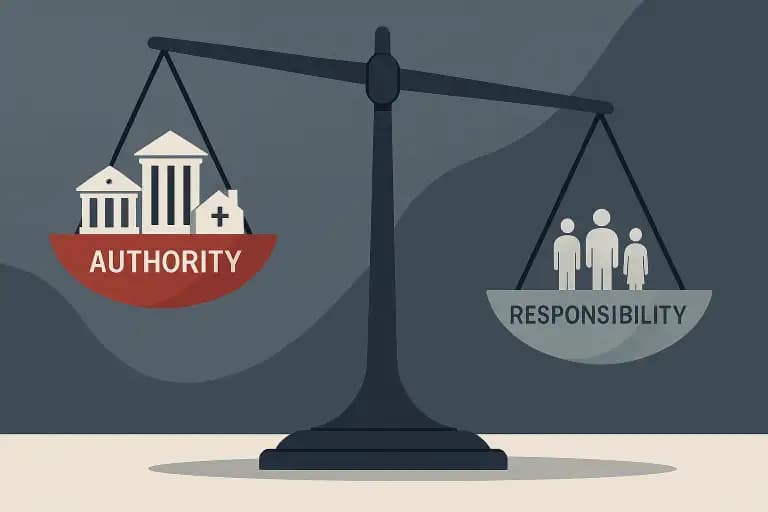
The controversy over restructuring Korea’s Financial Supervisory Service (FSS) has resurfaced. On the surface, the clash is simple: the union warns of lost independence; the government says accountability is overdue. The real problem is older—a structural exception the FSS has lived with since its founding.
The FSS wields sweeping authority over banks, insurers, and securities firms. It can inspect, sanction, and issue corrective orders across the financial sector. But despite this reach, it has long operated outside the framework of parliamentary scrutiny and government budget oversight. Funded by levies from the very firms it regulates, the agency has avoided classification as a public institution under the Ministry of Strategy and Finance. That exemption has left it with considerable autonomy—and with little structural responsibility when supervision fails.
The result is a recurring cycle: major scandals such as the Lime and Optimus fund collapses, the sale of risky derivatives to retail investors, and the latest real estate fund disputes expose regulatory lapses, yet accountability remains diffuse. The current reform debate is not merely about whether the FSS should remain “independent.”
The question is not independence versus control; it is whether authority will finally meet responsibility.
Built After Crisis, Shaped by Exception
The Financial Supervisory Service was born out of the 1997 Asian financial crisis. In 1999, four separate supervisory agencies were merged to form a single watchdog. The aim was efficiency and stronger oversight in a fragile financial system.
Legally, the FSS is defined as a “special corporation without capital” under the Financial Services Commission Act. Unlike most state-affiliated bodies, it is not funded through the national budget. Its operations rely instead on supervisory fees collected from financial institutions. This design gave the agency operational flexibility but placed it outside the framework of public-institution control.
That exception is critical. Because the FSS is not designated as a public institution under the 2007 Act on the Management of Public Institutions, it is free from the Ministry of Strategy and Finance’s direct limits on wages, staffing, and spending. In practice, this means higher salaries and greater autonomy compared with other quasi-governmental bodies. It also means weaker external checks.
The structure was deliberate, meant to shield financial supervision from political interference. But over time, the autonomy hardened into insulation. Authority expanded, while accountability remained thin.
Authority Without Responsibility
Since its establishment, the Financial Supervisory Service has presided over some of the largest financial failures in Korea. The pattern is consistent: authority to license, inspect, and sanction is clear, but accountability when things go wrong is blurred.
In 2019, the derivatives-linked fund (DLF) crisis exposed structural weaknesses. Retail investors lost nearly 800 billion won after banks pushed complex interest-rate products with little explanation of risk. The FSS eventually imposed heavy sanctions on the CEOs of Woori and Hana Bank. But the measures came months after losses had crystallized, and both executives challenged the sanctions in court. Compensation was uneven and slow, with some investors receiving partial relief only after protracted arbitration.
The same year, the collapse of Lime Asset Management created losses exceeding 1.6 trillion won. Here too, oversight was reactive. Investigations showed the FSS had been aware of red flags in fund operations, but no decisive intervention came until redemption suspensions made headlines. Disputes over compensation stretched for years, and sanctions against sales firms varied widely.
The Optimus scandal followed in 2020, adding another 500 billion won in investor losses. Again, the regulatory response was fragmented. Sanctions against individuals and firms were issued, but victims faced a long wait for redress, with many cases still unresolved years later.
More recently, in 2024, Woori Bank’s sales of overseas real estate funds in Belgium and Spain highlighted the same gaps. While some banks moved quickly to compensate clients, Woori resisted, leaving customers in limbo. In 2025, the Mirae Asset Maps No. 9-2 fund case underscored inconsistency in dispute resolution: the FSS arbitration panel dismissed claims, offering no compensation despite clear investor anger.
Taken together, these cases show a recurring cycle. Failures occur, the FSS intervenes belatedly, sanctions are contested in court, and compensation drags on. Authority is exercised, but responsibility for outcomes remains diffuse. Consumers bear the cost, while the institution avoids structural scrutiny.
Splitting Functions, Redefining Control
The government has put forward a plan to redraw the structure of financial oversight. At its core are two changes. One is to separate the Financial Consumer Protection Bureau from the FSS and turn it into an independent Financial Consumer Protection Agency. The other is to bring both bodies under the Public Institutions Management Act, placing them within the Ministry of Strategy and Finance’s control system.
Spin off the FSS’s Financial Consumer Protection Bureau to create an independent Financial Consumer Protection Agency.
Designate both the FSS and the new agency as public institutions under the Ministry of Strategy and Finance (per the Act on the Management of Public Institutions).
Industry levies remain the primary revenue source; spending decisions move under ministerial review and annual evaluation.
Establish a reworked Financial Supervisory Commission alongside the Securities and Futures Commission and a Consumer Protection Commission for enforcement and coordination.
Bring a powerful regulator into a transparent, auditable framework after repeated supervisory failures.
Ministerial control could blunt independence and affect sensitive enforcement against major institutions.
This shift would be more than administrative. As public institutions, the FSS and the new agency would have their budgets, staffing, and pay structures reviewed by the ministry. The system of industry-funded levies would remain in place, but spending decisions would face external review. For employees, this means losing the autonomy that has allowed higher salaries and broader benefits than those at comparable public bodies.
Supporters of the reform argue that this oversight is overdue. They see it as a way to curb the pattern of unchecked authority and weak accountability that has marked the FSS for decades. Opponents counter that such control risks weakening the independence of financial supervision. Enforcement decisions, they warn, could be shaped by political or fiscal considerations rather than regulatory judgment.
The plan also outlines a new Financial Supervisory Commission, designed to handle enforcement decisions alongside the existing Securities and Futures Commission and a proposed Consumer Protection Commission. Together, these changes would create a more fragmented oversight structure, raising questions about overlap, coordination, and potential gaps in authority.
What is being tested is not only the FSS’s internal design but the broader balance between independence and accountability in Korea’s financial governance.
Defending Autonomy—or Defending Privilege?
The sharpest resistance to the reform comes from within the Financial Supervisory Service itself. The union argues that placing the agency under the finance ministry’s budgetary and personnel controls would erode its ability to act as a neutral supervisor. If salaries, staffing, and spending require ministerial approval, enforcement actions against politically connected banks or insurers could become harder to pursue. Independence is the agency’s shield, and staff point to cases abroad where regulators weakened once political oversight grew too close.
Union argues ministry oversight on pay and staffing could chill tough sanctions against major institutions.
FSS pay and benefits exceed typical public-institution levels; designation would impose caps and external evaluations.
A principled defense of neutrality and a defense of material advantages can coexist. The reform needs to address both.
Build an independence firewall for enforcement decisions while applying transparent pay and evaluation rules agency-wide.
Yet the argument is not only about neutrality. The FSS is structured as a special corporation, not a public institution. That status has given it unusual autonomy in how it pays and manages staff. Internal figures show the average salary sits well above one hundred million won, higher than in most comparable agencies. Performance bonuses, housing support, and education subsidies track closer to private-sector practice than to the public-service norm. Promotion rules and transfers are decided in-house with little external input.
Designation as a public institution would end that system. Total payroll would be capped. Bonuses would be tied to annual evaluations run under finance ministry guidelines. Hiring and promotion would face stricter rules. To employees, this is not an abstract shift in governance; it is a direct cut to income, benefits, and workplace autonomy.
The protests therefore carry two strands. One is the principled case: a fear that public-institution status would expose supervision to political pressure and blunt the regulator’s ability to act against powerful firms. The other is material: the defense of salaries and conditions that the FSS’s exceptional legal status has allowed for over two decades. Both are real, and both explain why resistance has been unusually fierce.
The policy question is whether reform can preserve genuine independence while imposing stronger accountability. Without a framework that addresses both concerns—the risk of political capture and the reality of institutional privilege—the settlement will remain fragile.
Global Regulators Balance Independence with Accountability
The resistance within the FSS highlights a larger question: what kind of independence is necessary, and how should it be balanced with accountability? To answer this, it is useful to look abroad.
In the United Kingdom, the Financial Conduct Authority (FCA) and Prudential Regulation Authority (PRA) operate with budgets drawn from industry levies, similar to Korea. But unlike the FSS, they are required to report regularly to Parliament and are subject to audits by the National Audit Office. Independence exists, but it is counterweighted by institutionalized public oversight.
The United States divides responsibility among several agencies. The Securities and Exchange Commission is funded by fees from securities markets but remains accountable through congressional hearings and reviews by the Government Accountability Office. The Office of the Comptroller of the Currency, housed in the Treasury, supervises national banks but must submit annual reports to Congress. Authority is broad, yet every agency faces layers of scrutiny.
Japan’s Financial Services Agency offers a different model. It is firmly placed within the government structure, reporting directly to the Cabinet Office. Independence is narrower, but accountability to elected officials is direct and formalized.
- Industry levies finance operations (no routine Treasury appropriation).
- Mandatory parliamentary reporting; leadership questioned by select committees.
- National Audit Office scrutiny of performance and value-for-money.
- Funded largely by market fees and assessments; fines supplement budgets.
- Regular congressional hearings and GAO reviews; rules litigated in courts.
- Multi-agency model creates overlapping checks on supervision.
- Embedded under the Cabinet Office; budget via national appropriation.
- Direct parliamentary questioning; Board of Audit oversight.
- Clear ministerial accountability; narrower operational independence.
- Financed by supervisory levies; outside routine parliamentary budgeting.
- No systematic parliamentary reporting; limited external audit.
- Wide authority; weaker formal checks compared with peers.
Compared with these models, Korea’s FSS sits in an unusual position. It enjoys autonomy in staffing and spending, shielded from both parliamentary oversight and ministerial control. The design intended to guard against political interference, but in practice it left the agency with wide discretion and few counterbalances. The imbalance explains why debates over its reform keep returning, especially after each financial scandal.
Drama Over Substance
Mainstream coverage of the reform debate has leaned heavily toward the visible and the dramatic. Photographs of Financial Supervisory Service staff holding placards, clips of fiery speeches by union leaders, and quotes from partisan lawmakers dominate the news cycle. Many headlines present the issue as a confrontation between government and regulator, a familiar script of bureaucracy versus politics.
The structural backdrop rarely makes it above the fold. Since 2019, a series of high-profile failures—the derivatives-linked fund crisis, the collapse of Lime and Optimus asset management, repeated losses in overseas real estate funds—have highlighted weaknesses in the supervisory framework. In each case, investors faced delayed or incomplete compensation, sanctions were contested in court, and the regulator avoided clear accountability. Yet these episodes are often referenced only in passing, if at all, when the reform plan is reported.
The same omission is visible in how the FSS’s legal and financial design is covered. Its unusual status as a “special corporation without capital,” funded by levies on the very firms it regulates, has allowed higher salaries and broad autonomy while limiting external checks. Few stories connect this institutional design to the accountability vacuum that reform now seeks to address. Instead, the narrative is dominated by resistance from inside the agency and speculation about political motives.
This imbalance in coverage has consequences. For the general reader, the debate risks being reduced to questions of pay scales and union defiance, obscuring the larger stakes for financial stability and consumer protection. For policymakers, the media framing blurs a governance issue into a labor dispute, making substantive reform harder to sell. And for consumers—the group most affected when supervision fails—the essential question remains unanswered: whether a restructured FSS can prevent another round of costly scandals.
The contest over the FSS is not simply a turf war between a union and a ministry. It is a reckoning with an institution that has operated in the space between state and market for more than two decades. Independence was meant to shield supervision from politics; in practice, it became a shield from accountability. The result has been a cycle of scandal, belated sanctions, and unresolved losses.
The government’s plan carries risks. Ministerial control could compromise regulatory judgment in politically sensitive cases. Yet leaving the FSS in its current form has already shown its cost. A hybrid path—preserving operational autonomy while embedding mandatory reporting, external audits, and clear rules for compensation—would match international practice and confront the structural weaknesses that past crises exposed.
What is at stake is not just the pay of civil servants or the hierarchy of commissions. It is whether Korea can build a supervisory regime that commands trust after repeated failures. Trust will not come from authority alone. It will come when authority is matched, visibly and measurably, by responsibility.
The Weekly Breeze
Keep pace with Busan's deep narratives.
Delivered every Monday morning.