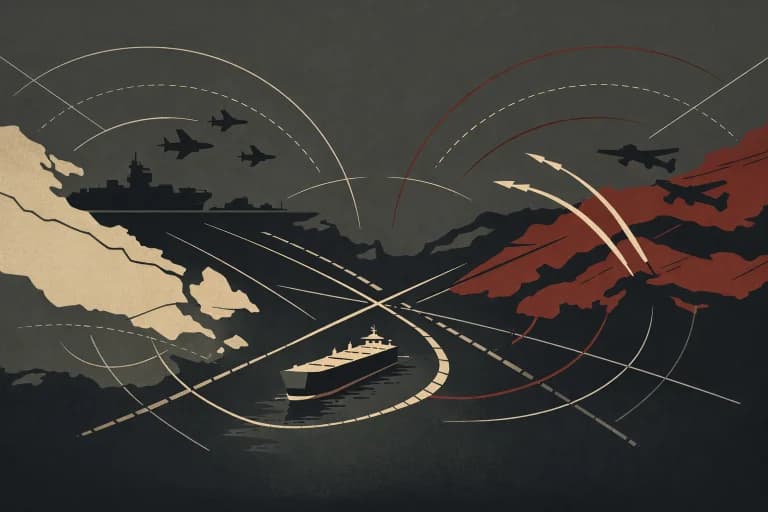
The U.S.-Iran war has moved beyond its earlier energy-and-shipping phase into a more dangerous contest over maritime denial, infrastructure coercion and the credibility of last-minute diplomacy. What began on Feb. 28 as a joint campaign to degrade Iran’s military capacity has widened into a conflict that now threatens Gulf navigation, power systems and broader regional stability.
Washington says its objectives remain focused on weakening Iran’s missile-launch capability, naval threat and nuclear-related capacity. But the practical consequences of the war have expanded faster than its stated aims, and the latest U.S. posture shows that coercive pressure on infrastructure is now part of the escalation ladder.
Iranian pressure around the Strait of Hormuz has evolved beyond disruption into explicit threats of mine-laying and effective Gulf-wide closure if its southern coast or islands come under attack. That shift matters because it raises the conflict from a shipping-risk story to a potential maritime-denial crisis with broader implications for trade, energy supply and military escalation.
At the same time, Washington’s decision to delay threatened strikes on Iran’s power network did not resolve the crisis. Instead, it created a more unstable picture in which the United States claims productive contacts while Iranian officials deny that talks are taking place, leaving threats, signaling and bargaining to unfold at the same time.
The war should now be read not only through the targets already hit, but through the systems newly at risk: maritime access, electricity networks, desalination-linked regional infrastructure and the global energy market. The conflict is no longer only a battlefield confrontation; it has become a wider test of whether coercion can be contained before it produces structural economic damage.
Visible differences between Washington and Jerusalem still matter because they affect both target selection and the political meaning of success. But the immediate variables have changed. The most important questions now are whether the Gulf moves closer to actual closure, whether infrastructure threats turn into reciprocal attacks, and whether claimed diplomacy can slow a war whose coercive logic is still intensifying.