Korea Navigates Delicate Balance Amid Escalating US-China Tensions
In the 30 years since establishing diplomatic relations in 1992, South Korea and China have seen their trade volume increase 47-fold, symbolizing the significant growth of their economic cooperation. While the two nations have faced political and diplomatic challenges, their economic relationship has continuously advanced through complementary cooperation. However, Korea's relationship with China is facing new challenges due to the intensifying strategic competition and decoupling between the U

In the 30 years since establishing diplomatic relations in 1992, South Korea and China have seen their trade volume increase 47-fold, symbolizing the significant growth of their economic cooperation. While the two nations have faced political and diplomatic challenges, their economic relationship has continuously advanced through complementary cooperation.
However, Korea's relationship with China is facing new challenges due to the intensifying strategic competition and decoupling between the US and China. The trade war that began during the Trump administration has escalated under Biden, with efforts to separate supply chains in core industries such as semiconductors. The US has proposed a semiconductor supply chain alliance with Korea, Japan, and Taiwan, called the 'Chip 4 Alliance,' as part of its Indo-Pacific Economic Framework (IPEF). China perceives this as an attempt to exclude them from global supply chains and further decouple the two nations.
The Yoon Suk-yeol administration has declared its proactive participation in the IPEF and the preliminary Chip 4 meetings. While Korea maintains that these initiatives do not target or exclude China, China has consistently expressed its opposition to decoupling and called for maintaining stable global supply chains. China's Foreign Minister Wang Yi emphasized this stance during a recent meeting with South Korea's Foreign Minister Park Jin.
In this situation, Korea faces a dilemma. If it actively participates in the US-led containment and supply chain exclusion initiatives against China, economic friction with China becomes inevitable. To navigate the US-China strategic competition, Korea needs the wisdom of Solomon: strengthening economic cooperation with the US while not excluding China and securing benefits from both sides.
The Korea Trade Association states that Korea must adapt to the changing trade environment, such as China's strengthening manufacturing competitiveness and the US-China hegemonic competition. They call for a thorough analysis of the sustainability of Korea-China trade structures and the development of responsive strategies.
Meanwhile, Tesla has deepened its ties with China despite US efforts to bring manufacturing back to the US. In 2017, Tesla first entered the Chinese market with its Gigafactory 3 in Shanghai. Since then, Tesla's share of the total EV market in China has increased to 10%. The company recently announced plans to build a second factory in China to produce its Megapack battery, with production scheduled to begin in 2024. The move signifies Tesla's commitment to expanding its energy storage business in the country, which accounts for nearly a quarter of its revenue. As Korea navigates the delicate balance amid escalating US-China tensions, it must consider the strategies of companies like Tesla, which are deepening connections in both countries.
Continue this reporting
Reporting on the same issue
Related coverage selected from the article's desk, topics and newsroom relationships.
 NewsOct 9, 2026
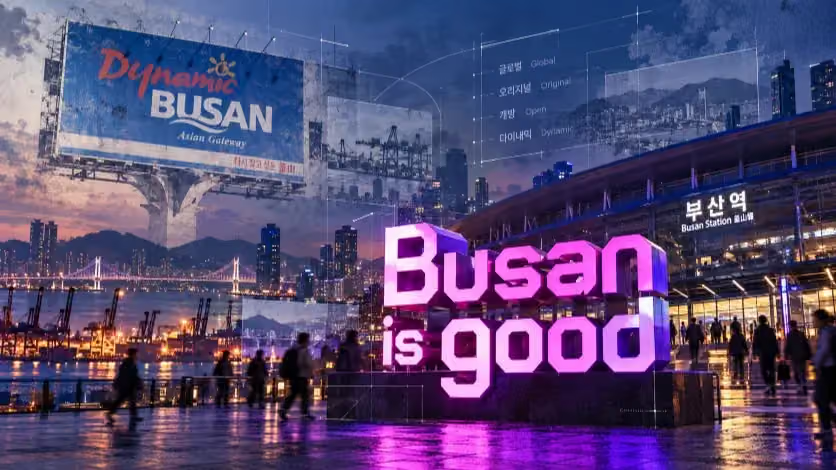
Why “Busan Is Good” Falls Short as a City Brand
“Busan Is Good” now reaches public transport, city institutions and local bus...
 NewsSep 18, 2026
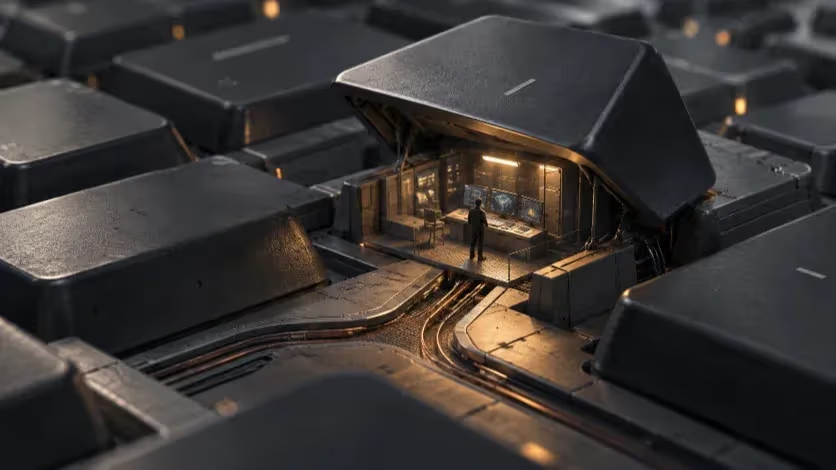
The Other AI Race Is for the Freedom to Change Course
Korea’s HBM strength gives it unusual leverage inside the AI stack. The harde...
 NewsAug 27, 2026
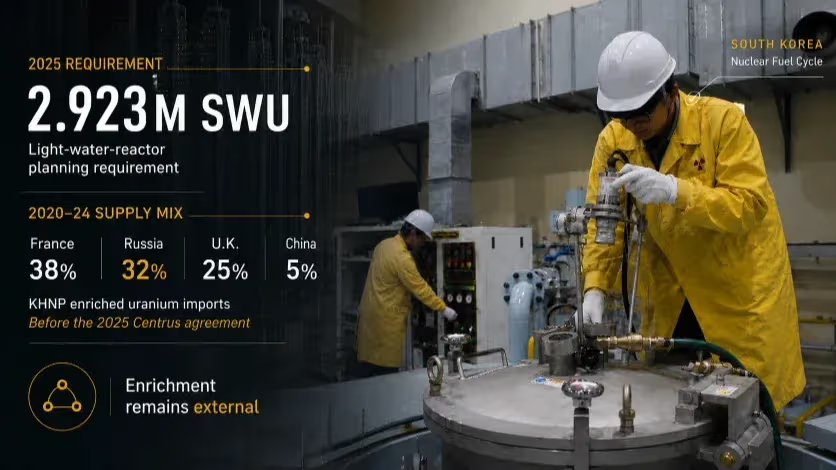
South Korea Has Outgrown Washington’s Nuclear Rules
The U.S. once constrained South Korea’s nuclear fuel cycle over real prolifer...
More from the author
More from this byline
Stay with the same line of reporting through more work from this byline.
- NewsOct 9, 2026
Why “Busan Is Good” Falls Short as a City Brand
- NewsSep 18, 2026
The Other AI Race Is for the Freedom to Change Course
Reader Signal
Community readWhat did this report leave you with?
Choose the signal that best reflects your reading. Select it again to remove it.
One response per article
No response selected
A moderated conversation about the reporting.
One-level replies and newsroom moderation keep the conversation anchored to this article.
Discussion Status
Open
Please sign in to join the discussion.
Newsletter
Weekly reporting and context from Busan and Korea.