Western Busan Districts Prepare for Development Opportunities as Gadeokdo New Airport Opening Approaches
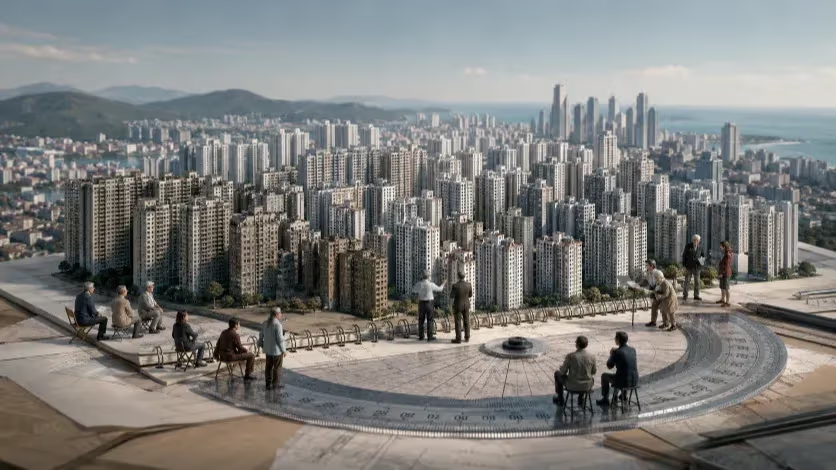
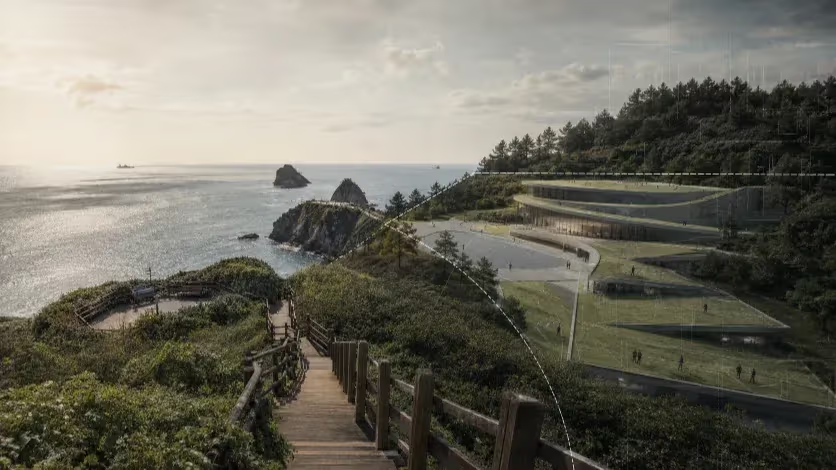
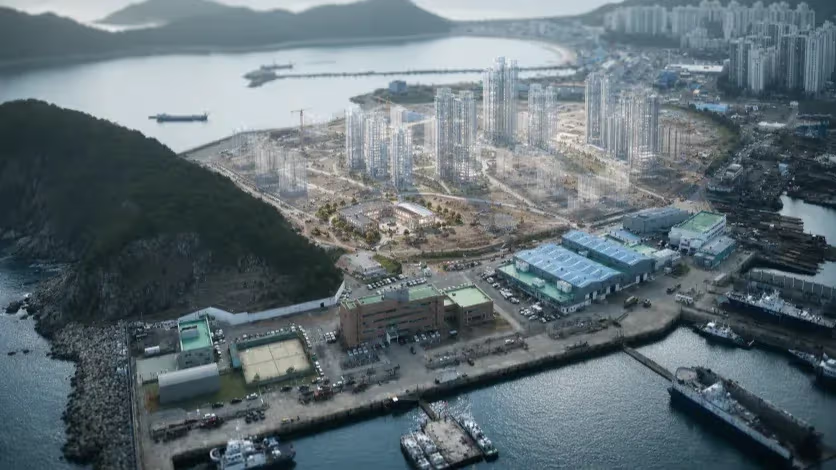
As anticipation builds for the opening of Gadeokdo New Airport in 2029, local governments in western Busan, South Korea, including Saha-gu and Gangseo-gu, are preparing to capitalize on the development opportunities it will bring. Saha-gu, a less developed district in western Busan, is home to 300,000 people, making it the third most populous area in the city after Haeundae-gu and Busan Jingu. Despite its large population, Saha-gu has faced development challenges. However, as the closest distri

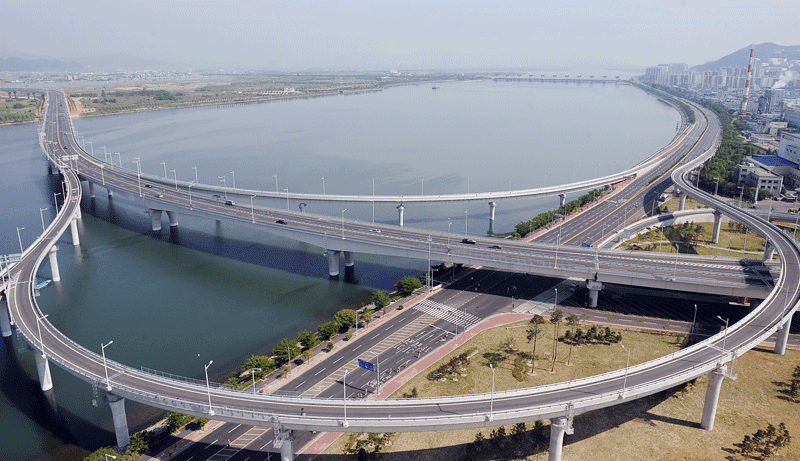
As anticipation builds for the opening of Gadeokdo New Airport in 2029, local governments in western Busan, South Korea, including Saha-gu and Gangseo-gu, are preparing to capitalize on the development opportunities it will bring.
Saha-gu, a less developed district in western Busan, is home to 300,000 people, making it the third most populous area in the city after Haeundae-gu and Busan Jingu. Despite its large population, Saha-gu has faced development challenges. However, as the closest district to Gangseo-gu, where Gadeokdo New Airport will be located, Saha-gu is expected to experience a turning point by effectively utilizing the ripple effect caused by the new airport's opening. According to the World Bank, airports often serve as catalysts for local economic development by attracting businesses, boosting tourism, and improving accessibility to global markets (World Bank, 2016).
A recent study by the Korea Transport Institute (KTI) found that new airports typically have a significant impact on surrounding areas, with increased economic activity and investment opportunities in transportation, logistics, and tourism industries. With this in mind, Saha-gu is developing strategies to attract private investment and facilitate population influx.
Meanwhile, Gangseo-gu, the district where Gadeokdo New Airport will be built, has initiated a program to establish a regional development direction linked to large-scale development projects. The program will assess changes in conditions due to large-scale development projects such as Gadeokdo New Airport, Busan R&D Special Zone, and Daejeo Public Housing District and develop plans to expand cultural and welfare facilities, as well as upgrade industrial complexes. By proactively planning for the changes that the new airport will bring, Gangseo-gu aims to create a more vibrant and dynamic district.
Sasang-gu, a leading industrial area in West Busan, is expected to benefit from the ripple effect of Gadeokdo New Airport's opening. Sasang Industrial Complex is being promoted as a 'Sasang Smart City,' featuring advanced manufacturing industries by 2030. A report by the Korea Institute for Industrial Economics and Trade (KIET) suggests that the establishment of new transportation infrastructure, such as the Umgung Bridge or Daejeo Bridge, could help transmit the benefits of Gadeokdo New Airport to Sasang-gu and other districts in the region (Park, 2018).
The amendment of the Gadeokdo New Airport Special Act, currently pending in the National Assembly's Land, Infrastructure, and Transport Committee, could expand the planned development area around the new airport to a radius of 20 kilometers. If the law is amended, most of the western part of the city, including Saha-gu, Sasang-gu, and Seo-gu districts, will be included in the peripheral development area, potentially transforming the region and bringing substantial economic growth.
Editorial Context
"Independent journalism relies on radical transparency. View our full log of editorial notes, corrections, and project dispatches in the Newsroom Transparency Log."
Reader Pulse
The report's impact signal
Be the first to provide a reading pulse. These collective signals help our newsroom understand the impact of our reporting.
Join the discussion
A more thoughtful conversation, anchored to the story
Atlantic-style discussion for this article. One-level replies, editor prompts, and moderation-first participation are now powered directly by Prisma.
Discussion Status
Open
Please sign in to join the discussion.
The Weekly Breeze
Independent reporting and analysis on Busan,
Korea, and the broader regional economy.