Uncovering the Underbelly of Korea's Housing Market
Jeonse Scams and Financially Compromised Homes Threaten Tenants The South Korean housing market has been in the spotlight due to skyrocketing prices and a growing demand for affordable housing. Amidst this challenging landscape, tenants seeking rental properties face two increasingly prevalent risks: Jeonse scams and financially compromised homes. These issues not only pose financial dangers but also highlight the urgent need for reforms to protect tenants' rights. Jeonse, a unique rental syst


Jeonse Scams and Financially Compromised Homes Threaten Tenants
The South Korean housing market has been in the spotlight due to skyrocketing prices and a growing demand for affordable housing. Amidst this challenging landscape, tenants seeking rental properties face two increasingly prevalent risks: Jeonse scams and financially compromised homes. These issues not only pose financial dangers but also highlight the urgent need for reforms to protect tenants' rights.
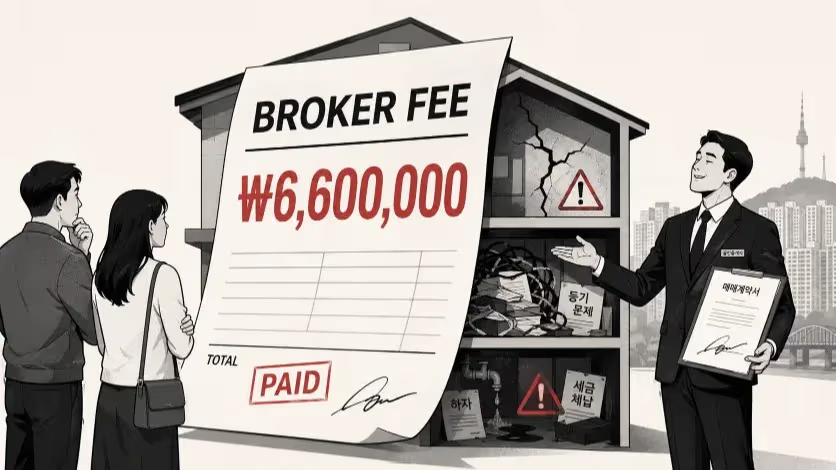
Jeonse, a unique rental system in Korea, requires tenants to pay a lump-sum deposit (typically between 50% to 80% of the property's value) instead of monthly rent. While this system can offer certain benefits, it has also become fertile ground for scams. Some unscrupulous landlords inflate property values to collect higher deposits, exploiting the lack of market transparency, particularly in newly built properties. When tenants discover the real value of the property upon lease termination, they often find themselves shortchanged and struggling to recover their deposits.
The rise in financially compromised homes, where property values are lower than outstanding mortgage debts, further complicates the situation for tenants. Financially distressed landlords, desperate to meet their debt obligations, offer these properties at significantly reduced Jeonse rates. While these deals may appear attractive, tenants face the risk of losing their deposits if the property is seized in a foreclosure auction.
Awareness of tenant rights and legal protections is crucial in navigating these risks. For instance, the Lease Protection Act and the Priority Repayment Right can help tenants recover their deposits in foreclosure situations. Furthermore, tenants should exercise caution when entering Jeonse agreements, thoroughly researching property values and conducting background checks on landlords.
Recent studies and reports have also shed light on these issues, offering valuable insights and suggesting possible reforms. For example, experts have called for stricter regulations on property value assessments and increased transparency in the real estate market to curb fraudulent practices. Additionally, some have proposed the establishment of government-backed insurance schemes to protect tenants' deposits in cases of foreclosure.
Thus, the prevalence of Jeonse scams and financially compromised homes in South Korea's housing market underscores the need for increased tenant awareness and systemic reforms. By understanding their rights, taking necessary precautions, and advocating for change, tenants can better protect themselves from potential financial harm and contribute to a more equitable housing market.
Editorial Context
"Independent journalism relies on radical transparency. View our full log of editorial notes, corrections, and project dispatches in the Newsroom Transparency Log."
Reader Pulse
The report's impact signal
Be the first to provide a reading pulse. These collective signals help our newsroom understand the impact of our reporting.
Join the discussion
A more thoughtful conversation, anchored to the story
Atlantic-style discussion for this article. One-level replies, editor prompts, and moderation-first participation are now powered directly by Prisma.
Discussion Status
Open
Please sign in to join the discussion.
The Weekly Breeze
Independent reporting and analysis on Busan,
Korea, and the broader regional economy.