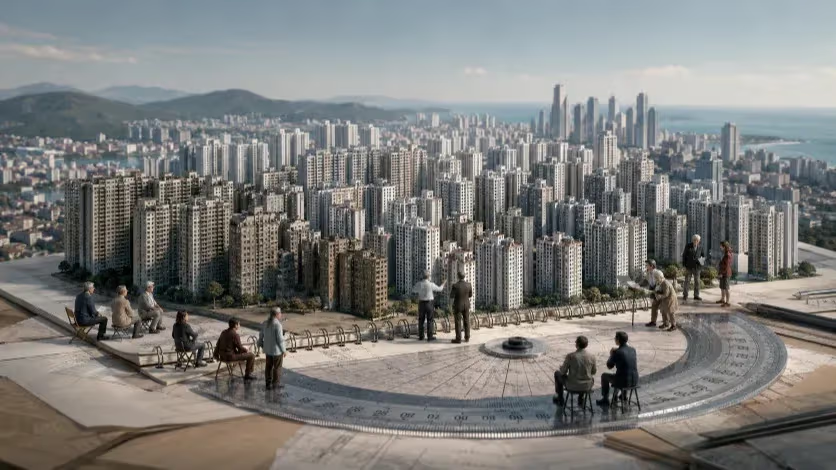
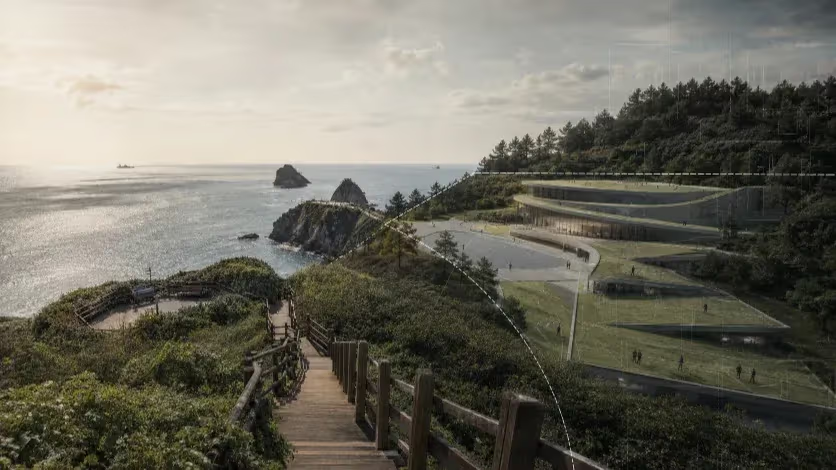
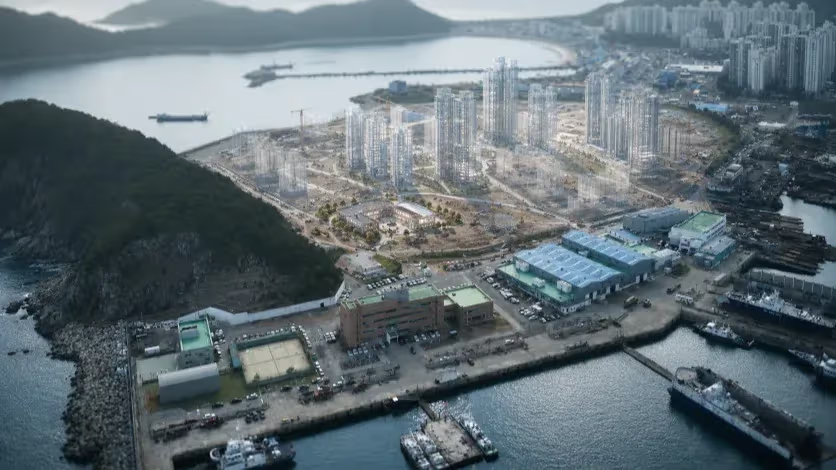
The Dawn of the 'Dadaepo New Dream Plan'
The city of Busan is gaining momentum in its pursuit of balanced development, particularly through its 'Dadaepo New Dream Plan', a strategy aimed at revitalizing previously unused industrial sites. According to city and development sector sources, Sungchang Enterprise, a corporation that had previously been hesitant about redeveloping its 150,000 square meter property in Saha District, has recently started discussing potential development strategies with the city. This includes an intriguing pr


The city of Busan is gaining momentum in its pursuit of balanced development, particularly through its 'Dadaepo New Dream Plan', a strategy aimed at revitalizing previously unused industrial sites.
According to city and development sector sources, Sungchang Enterprise, a corporation that had previously been hesitant about redeveloping its 150,000 square meter property in Saha District, has recently started discussing potential development strategies with the city. This includes an intriguing proposal to reclaim part of the adjacent sea.
However, the city asked Sungchang to provide a more detailed proposal. Once a comprehensive plan is presented, the city intends to proceed with public contribution negotiations, a method which allows developers to alter the use of long-abandoned land in exchange for contributing the difference in land appraisal value to the public. This approach is currently being employed in the development of Hanjin CY and Korea Glass sites.
The Dadaepo New Dream Plan is a significant project for Busan, seeking to turn parts of Saha District(Western Busan), along with Haeundae (Eastern Busan) and North Port (Central Busan), into internationally recognized waterfront cities. The core of this project involves the development of former industrial areas totalling 550,000 square meters, including the former Hanjin Heavy Industries site, the current Sungchang Enterprise site, and several smaller shipyard sites.
One of the biggest obstacles for the New Dream Plan was Sungchang Enterprise. While the former Hanjin site is vacant, Sungchang's site is still operational, housing plywood manufacturing factories among other businesses. With Sungchang's renewed interest in redevelopment, the city now anticipates accelerating the Dadaepo project.
The city aims to transform these sites into bustling tourist hubs, complete with cultural, relaxation, and leisure activities. This area is expected to serve as a key connection point for the future Gaedok New Airport and Eco-Delta City, projects that are considered future growth engines for Busan.
The development of the Sungchang site could positively influence the ongoing redevelopment of the former Hanjin site, which was approved by the Busan City Council in April. One of the conditions for this approval was the linked development with the Sungchang site. As the Sungchang site development becomes more concrete, various solutions such as prioritizing construction at the entrance of the old Hanjin site are being considered. Furthermore, it is anticipated that the significant development of these large sites will encourage redevelopment of surrounding smaller shipyard sites as well.
With these plans in motion, the city of Busan takes another step toward balanced development and a brighter future.
Editorial Context
"Independent journalism relies on radical transparency. View our full log of editorial notes, corrections, and project dispatches in the Newsroom Transparency Log."
Reader Pulse
The report's impact signal
Be the first to provide a reading pulse. These collective signals help our newsroom understand the impact of our reporting.
Join the discussion
A more thoughtful conversation, anchored to the story
Atlantic-style discussion for this article. One-level replies, editor prompts, and moderation-first participation are now powered directly by Prisma.
Discussion Status
Open
Please sign in to join the discussion.
The Weekly Breeze
Independent reporting and analysis on Busan,
Korea, and the broader regional economy.