Overcrowding Crisis at Busan Detention Center Sparks Calls for Urgent Action
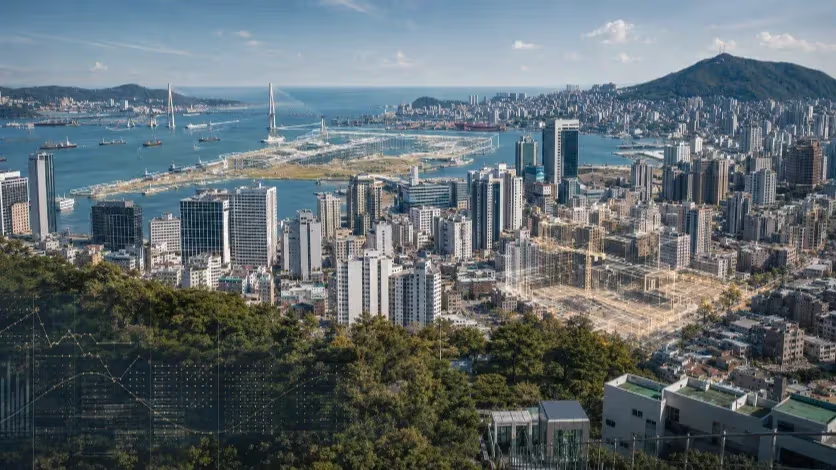
Busan, South Korea – The Busan Detention Center, an institution that has stood since 1973, is now facing a crisis of overcrowding that threatens to spiral into a systemic failure. Designed to house 1,480 inmates, the facility currently accommodates over 2,200 individuals, making it one of the most overcrowded correctional facilities in South Korea. With occupancy rates exceeding 150% for men and a staggering 200% for women, the center has become a glaring example of the country’s struggle to bal

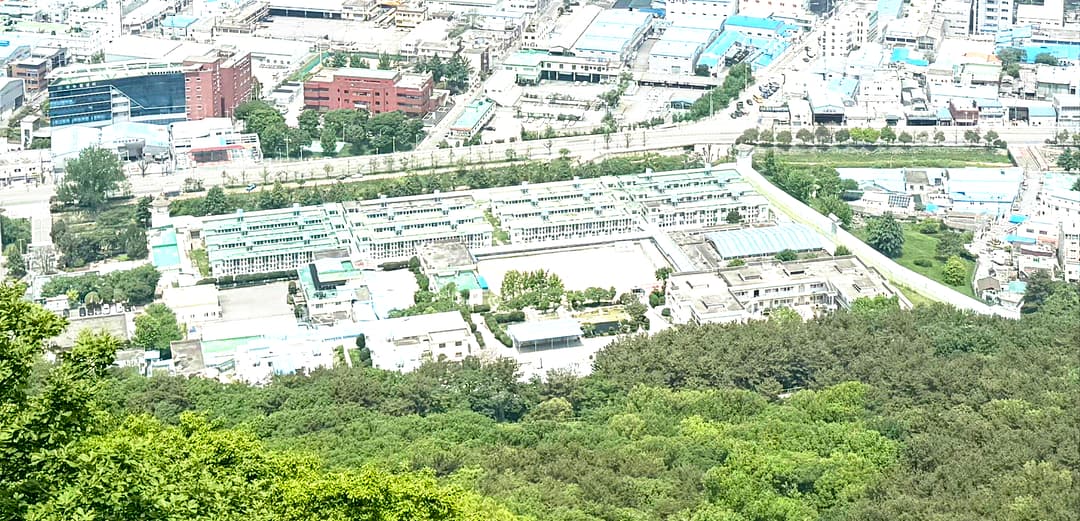
Busan, South Korea – The Busan Detention Center, an institution that has stood since 1973, is now facing a crisis of overcrowding that threatens to spiral into a systemic failure. Designed to house 1,480 inmates, the facility currently accommodates over 2,200 individuals, making it one of the most overcrowded correctional facilities in South Korea. With occupancy rates exceeding 150% for men and a staggering 200% for women, the center has become a glaring example of the country’s struggle to balance justice and infrastructure.
Recently, the detention center took the unprecedented step of issuing a plea to judicial authorities. In October 2024, it sent an official request to prosecutors and courts, urging them to exercise greater discretion in issuing detention warrants and to explore alternatives such as bail and detention suspension. This move underscores the dire state of the facility and highlights the urgent need for long-term solutions.
The overcrowding crisis at Busan Detention Center is not unique. Across the globe, correctional facilities face similar challenges, and the experience of the United Kingdom offers a sobering lesson. Since the early 2000s, the UK has grappled with persistent overcrowding in its prisons, with some facilities operating at over 150% of their intended capacity. Despite multiple policy interventions, the problem has not only persisted but, in some cases, worsened.
One of the UK’s key strategies was the introduction of alternative sentencing measures, such as electronic tagging and community service. While these measures initially appeared promising, they soon revealed significant shortcomings. The overuse of alternative sentencing led to rising reoffense rates, particularly among individuals with insufficient supervision. This highlights the limitations of such measures when not paired with robust support systems.
Additionally, the UK sought to modernize and expand its correctional facilities. However, many of these projects faced delays due to opposition from local communities and political inertia. The resulting stagnation exacerbated existing issues, leaving the justice system strained and prison conditions deteriorating.
The UK’s struggle underscores a critical lesson for South Korea: while alternative sentencing and facility modernization are important components of reform, they are not standalone solutions. Delays in action only deepen the crisis, as overcrowding worsens and societal costs mount.
Why Busan Must Act Swiftly
Busan cannot afford to follow in the UK’s footsteps of prolonged inaction. The detention center’s current conditions already violate fundamental human rights, as recognized by South Korea’s Constitutional Court in 2016. Prolonged overcrowding not only undermines inmates’ dignity but also compromises their mental health, physical well-being, and prospects for rehabilitation.
The situation also imposes significant financial burdens on the state. Legal battles stemming from inmate lawsuits over poor living conditions have led to costly compensation payouts. Medical expenses for health issues exacerbated by overcrowding further strain public resources. These growing costs, as seen in the UK, will only escalate if the issue remains unaddressed.
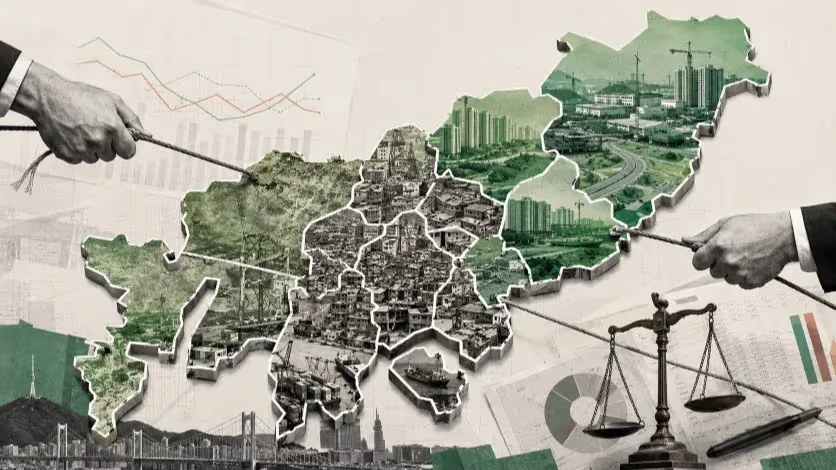
The most viable solution lies in the swift relocation and expansion of Busan Detention Center. In 2023, the Busan Correctional Facility Site Selection Committee recommended consolidating the detention center and Busan Prison into a modern facility in Gangseo-gu. While this proposal offers a clear path forward, it has been met with fierce resistance from local residents and political figures. Critics argue that the committee lacks legal authority, and the “Not In My Backyard” (NIMBY) sentiment has stalled progress.
To overcome this impasse, Busan must prioritize active engagement with the Gangseo-gu community. The city can draw lessons from the UK’s missteps by emphasizing the economic and social benefits of hosting a modern correctional facility. Compensation packages, infrastructure investments, and clear communication about safety measures can help mitigate opposition and foster collaboration.
With local elections approaching, there is a risk that political considerations will overshadow the urgent need for action. Officials may hesitate to pursue contentious decisions, further delaying much-needed reforms. However, postponement is not an option. The UK’s experience demonstrates that delays only exacerbate overcrowding, leading to compounded human rights violations and escalating costs.
Busan must act decisively to resolve this crisis. By expediting the relocation and expansion of its detention facilities, the city can address the immediate challenges of overcrowding while laying the groundwork for a more sustainable correctional system. Balancing judicial reforms with infrastructure investments will ensure that South Korea avoids the pitfalls experienced in the UK.
The overcrowding crisis at Busan Detention Center is more than an administrative issue; it is a moral imperative that demands bold and swift action. Stakeholders must set aside political and regional differences to prioritize the dignity and safety of those impacted by the system. By embracing a comprehensive approach—one that includes facility relocation, judicial reform, and community collaboration—Busan can lead the way in addressing one of the most pressing challenges facing modern justice systems.
For the inmates confined within the overcrowded walls of the Busan Detention Center, reform is not merely a policy objective; it is a matter of survival. It is time for the city to take decisive action and ensure that justice is served—not just within courtrooms, but in the fundamental conditions of human confinement.
Editorial Context
"Independent journalism relies on radical transparency. View our full log of editorial notes, corrections, and project dispatches in the Newsroom Transparency Log."
Reader Pulse
The report's impact signal
Be the first to provide a reading pulse. These collective signals help our newsroom understand the impact of our reporting.
Join the discussion
A more thoughtful conversation, anchored to the story
Atlantic-style discussion for this article. One-level replies, editor prompts, and moderation-first participation are now powered directly by Prisma.
Discussion Status
Open
Please sign in to join the discussion.
The Weekly Breeze
Independent reporting and analysis on Busan,
Korea, and the broader regional economy.