Korean Shipping Industry Confronts Fourfold Crisis Amid Rising Costs, Environmental Regulations, and Falling Freight Rates
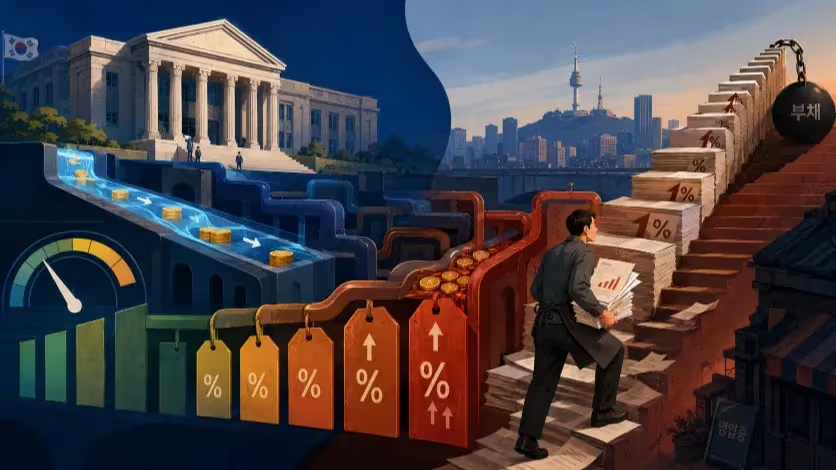
The Korean shipping industry is facing a fourfold crisis as it contends with plummeting freight rates, soaring shipbuilding prices, surging ship capacity, and the imposition of stricter environmental regulations by governments worldwide. In March, the Shanghai Export Containerized Freight Index (SCFI), a critical indicator of global trade activity, recorded a value of 909.72— a stark contrast to its peak of 5,109.6 in January last year. This decline in freight rates is exacerbating the challeng


The Korean shipping industry is facing a fourfold crisis as it contends with plummeting freight rates, soaring shipbuilding prices, surging ship capacity, and the imposition of stricter environmental regulations by governments worldwide.
In March, the Shanghai Export Containerized Freight Index (SCFI), a critical indicator of global trade activity, recorded a value of 909.72— a stark contrast to its peak of 5,109.6 in January last year. This decline in freight rates is exacerbating the challenges posed by a significant increase in new ship supply. In Q2 2023, container ship deliveries are expected to rise by a staggering 62%, with large vessels representing over 80% of the handover.
Clarkson Plc's New Building Price Index, which measures shipbuilding prices, reached a 14-year high last month. At the same time, the International Maritime Organization's regulations are fueling demand for eco-friendly vessels, such as those capable of hauling liquefied natural gas (LNG) or liquefied petroleum gas (LPG).
The domestic shipping industry is apprehensive about the SCFI falling even further as more mega vessels enter service in the coming months. High-interest rates, inflation, and economic downturns have all contributed to a reduction in shipping volumes, forcing companies to operate at a loss. As a result, Korean shipping companies are planning to scrap more container ships next month in an effort to slow the increase in capacity.
While shipbuilders specializing in eco-friendly ships, such as LNG and methanol carriers, are experiencing a surge in orders for high-value vessels, the shipping industry faces a triple bind of global recession, high-interest rates, and eco-friendly ship regulations. Over 70% of the domestic shipping industry's vessels do not meet environmental standards, necessitating a $40 billion investment over the next decade.
The shipping industry is also bracing for skyrocketing delivery costs due to high-interest rates, as container ship deliveries ordered during the boom two years ago continue to increase. Experts are urging Korea to follow the lead of countries like the UK, France, and Japan, which have implemented tax reduction benefits for initial ship purchases to attract private investors. Such measures could provide much-needed relief to an industry in the midst of a complex and challenging period.
Editorial Context
"Independent journalism relies on radical transparency. View our full log of editorial notes, corrections, and project dispatches in the Newsroom Transparency Log."
Reader Pulse
The report's impact signal
Be the first to provide a reading pulse. These collective signals help our newsroom understand the impact of our reporting.
Join the discussion
A more thoughtful conversation, anchored to the story
Atlantic-style discussion for this article. One-level replies, editor prompts, and moderation-first participation are now powered directly by Prisma.
Discussion Status
Open
Please sign in to join the discussion.
The Weekly Breeze
Independent reporting and analysis on Busan,
Korea, and the broader regional economy.