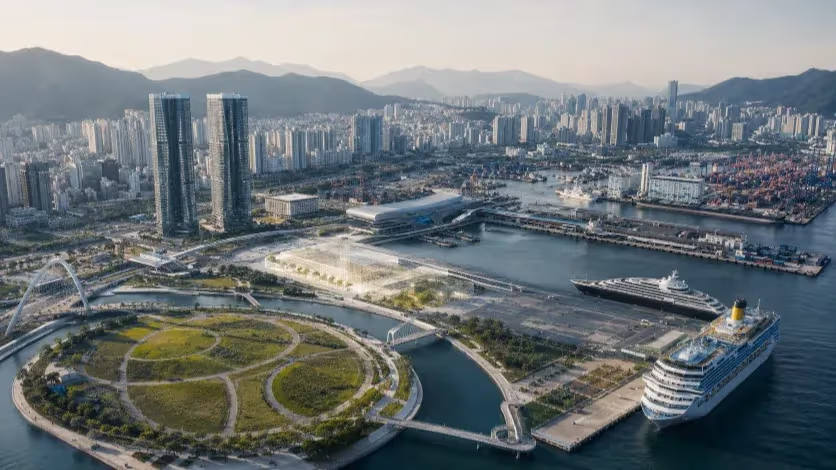
Busan Unlocks Largest Development Expansion in 17 Years
Busan secures the largest development expansion in 17 years as South Korea lifts restrictions on 16,528,925 square meters (1,652 hectares) of land. With major projects in AI, logistics, and smart cities, the city aims to become a global economic hub.

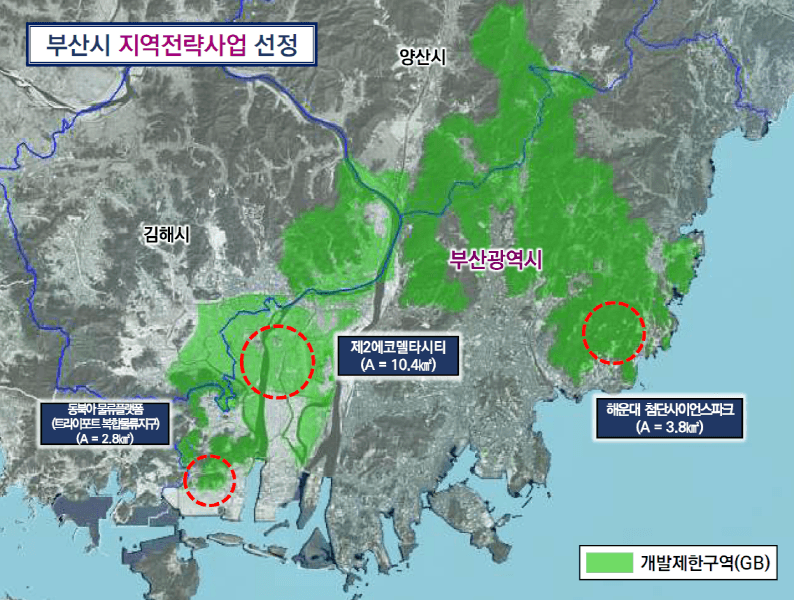
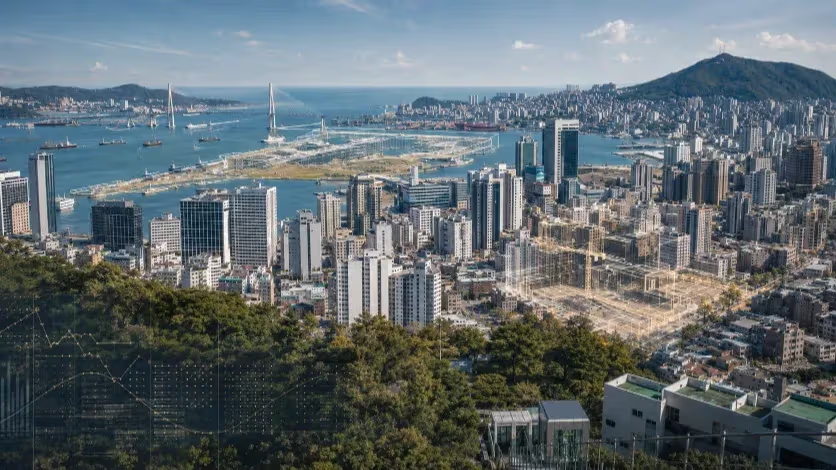
BUSAN, South Korea - Busan is set for a major transformation following the South Korean government’s decision to lift development restrictions on approximately 16,528,925 square meters (1,652 hectares) of land, marking the largest such expansion in nearly two decades. The move, which was confirmed by the Ministry of Land, Infrastructure and Transport (MOLIT), is expected to accelerate the city’s long-term vision of becoming a global hub for high-tech industries, logistics, and sustainable urban development.
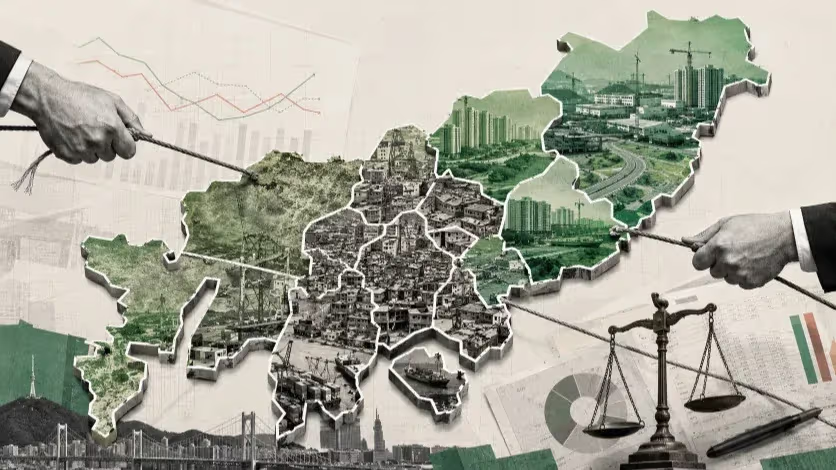
The decision is part of the national Regional Strategic Projects Initiative, a framework designed to boost regional economies and counterbalance Seoul’s economic dominance. Busan successfully secured three major projects under this initiative: Haeundae Advanced Science Park, the Second Eco Delta City, and the Northeast Asia Logistics Platform (Tri-Port Complex). The lifting of Green Belt restrictions on these sites, which were previously designated as development-restricted or military zones, is expected to create new opportunities for industrial investment, job creation, and infrastructure modernization
The Green Belt policy, originally introduced to prevent overdevelopment and protect natural spaces, has long been considered a barrier to large-scale economic projects in Busan. While urban expansion in Seoul has been heavily prioritized, cities like Busan have faced limited access to industrial land, constraining their ability to attract advanced technology firms, logistics hubs, and investment in future industries.
With this newly approved land release, Busan is now positioned to reshape its economic landscape by fostering innovation-driven sectors and strengthening its role as a global trade and logistics hub. The three approved projects aim to integrate cutting-edge technology, eco-friendly infrastructure, and international investment, ensuring that Busan remains competitive in the evolving global economy.
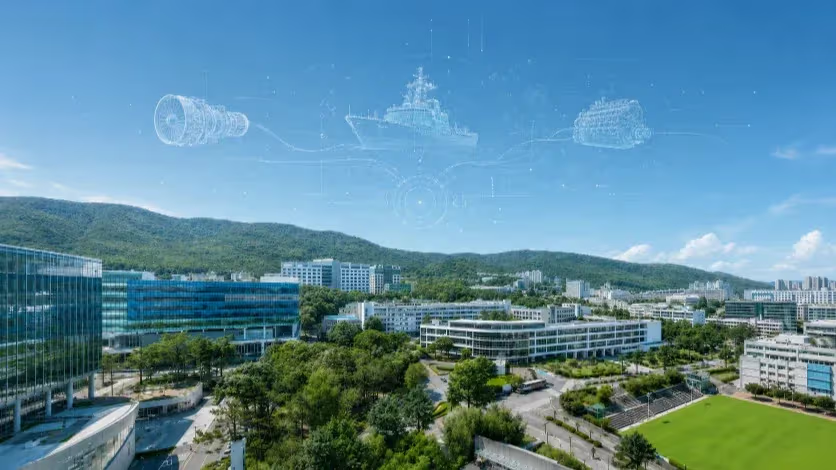
One of the most ambitious undertakings in this expansion is the Haeundae Advanced Science Park, a project designed to transform a former military zone into a center for AI research, defense technology, and high-tech manufacturing. Located on the site of the 53rd Division’s military base, the initiative includes plans to modernize and consolidate military operations, freeing up space for innovation clusters and research facilities. By leveraging public-private partnerships, Busan aims to position the park as a leading hub for advanced industries in Northeast Asia.
In western Busan, the Second Eco Delta City is set to take shape as a smart, low-carbon urban development, strategically located near Gimhae Airport, the New Busan Port, and the planned Gadeokdo International Airport. This district is expected to integrate future mobility solutions, digital technology centers, and eco-friendly housing, with a focus on attracting global companies specializing in green energy and sustainable urban planning. Officials anticipate that the project will support West Busan’s economic revitalization, strengthening its role as a key transportation and logistics corridor.
The third and perhaps most commercially significant project is the Northeast Asia Logistics Platform (Tri-Port Complex). Located in Gangseo District, this initiative aims to establish a fully integrated logistics hub, linking air, sea, and rail transport to enhance South Korea’s global trade capabilities. With its proximity to Gadeokdo International Airport and Busan’s major port terminals, the facility is expected to attract multinational logistics and e-commerce companies, positioning the city as a central player in Asia’s supply chain network.
Despite the optimistic outlook, the large-scale expansion also raises several challenges and concerns. The environmental impact of such developments remains a key issue, as large portions of the land set for development were previously protected under the Green Belt designation. Critics argue that rapid industrialization could disrupt local ecosystems and increase carbon emissions, making it imperative that the projects incorporate sustainable urban planning and green infrastructure.
Another consideration is the impact on existing communities. While the projects are expected to bring economic benefits, concerns remain about potential displacement, rising property costs, and changes to neighborhood demographics. Ensuring that development is carried out in consultation with local residents and includes affordable housing and public amenities will be critical to maintaining social balance.
Additionally, the financial feasibility of the projects will play a significant role in their success. While the land release provides the legal framework for development, securing investment from both public and private sectors will determine how quickly and effectively these projects move forward. Clear funding commitments, streamlined regulatory processes, and long-term economic viability will be essential to ensuring that the developments meet their intended goals.
The decision to lift restrictions in Busan is part of South Korea’s larger effort to decentralize economic activity and reduce reliance on Seoul as the nation’s primary economic center. While the capital continues to attract the majority of investment, cities like Busan have been seeking policy adjustments that allow them to compete on a global scale.
By positioning itself as a leader in high-tech research, logistics, and eco-friendly urban innovation, Busan is aligning with South Korea’s national development priorities. These include advancing the country’s competitiveness in AI and automation, expanding trade partnerships, and developing smart cities that can accommodate future demographic shifts. If successful, Busan’s transformation could serve as a model for other regional cities looking to revitalize their economies through strategic infrastructure and industry growth.
The expansion of Busan’s development zones represents a pivotal moment in the city’s history, offering a rare opportunity to reshape its economic and industrial future. If executed effectively, the projects could attract major global corporations, create thousands of jobs, and establish Busan as a major international business hub. However, challenges related to environmental sustainability, investment security, and social impact will need to be addressed to ensure long-term success.
The coming years will determine whether this initiative becomes a landmark success in South Korea’s regional development strategy—or a case study in the complexities of large-scale urban transformation.
Editorial Context
"Independent journalism relies on radical transparency. View our full log of editorial notes, corrections, and project dispatches in the Newsroom Transparency Log."
Reader Pulse
The report's impact signal
Be the first to provide a reading pulse. These collective signals help our newsroom understand the impact of our reporting.
Join the discussion
A more thoughtful conversation, anchored to the story
Atlantic-style discussion for this article. One-level replies, editor prompts, and moderation-first participation are now powered directly by Prisma.
Discussion Status
Open
Please sign in to join the discussion.
The Weekly Breeze
Independent reporting and analysis on Busan,
Korea, and the broader regional economy.