Busan to Host 22nd International Performing Arts Festival from May 23 to June 1
The 22nd Busan International Performing Arts Festival runs from May 23 to June 1, presenting 58 productions from 14 countries. With the theme "Regeneration & Balance," the festival blends classic reinterpretation with new artistic voices across venues citywide.

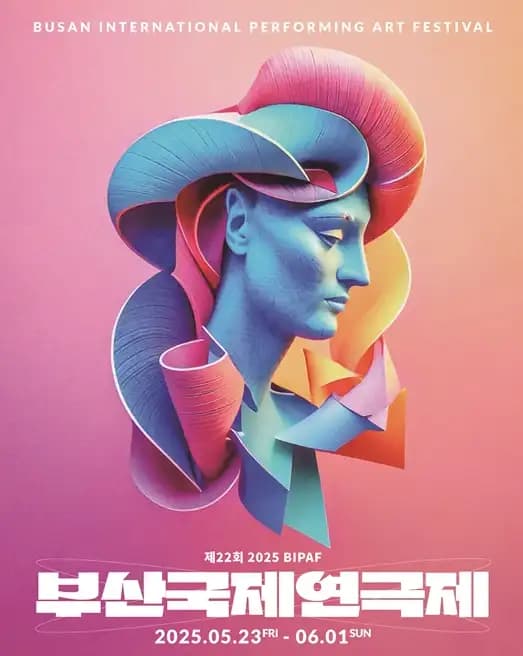
BUSAN, South Korea — The city of Busan is set to host the 22nd edition of the Busan International Performing Arts Festival (BIPAF), a ten-day celebration of global theater that will take place from May 23 to June 1, 2025. Bringing together 58 productions from 14 countries, this year’s festival reflects the city’s growing role as a regional nexus for cultural exchange and performing arts innovation.
Under the theme “Regeneration & Balance,” BIPAF 2025 focuses on the artistic tension between tradition and experimentation, offering a curated program that reinterprets classical texts while embracing new theatrical languages. The theme also underscores the festival’s commitment to sustainability and resilience in the performing arts.
This year, the spotlight shines on Italy as the festival’s guest country, coinciding with the Korea–Italy Year of Cultural Exchange. The collaboration is represented symbolically and practically through key productions and institutional partnerships.
The festival opens with a Korean premiere of Tragùdia – The Song of Oedipus, a contemporary adaptation of the Greek tragedy by Teatro di Sardegna, known for its award-winning presentation at the Mess Festival in Sarajevo. The production will be staged at the Busan Cinema Center, setting the tone for a lineup that blends myth with modernity.
Closing the festival is The Vegetarian, based on the novel by Han Kang and reimagined for the stage by Italian director Daria Deflorian. This Korean–Italian collaboration offers a visceral meditation on personal autonomy and existential resistance, framed through a minimalist yet provocative aesthetic.
Throughout the city, performances will take place across eight venues, including Busan Citizens’ Hall, Dongseo University’s theater spaces, and Millak the Market, integrating traditional theater halls with urban public spaces. Notable international entries include Antigone by Israel’s Beit Lessin Theater and Ascension by French company SITIO, further contributing to the festival’s global breadth.
BIPAF also continues to invest in the future of Korean theater through its K-Stage initiative, which supports the internationalization of domestic works. Six Korean companies will present original productions as part of this competitive showcase. Meanwhile, the BIPAF Rookies program, launched in partnership with Dongseo University, will spotlight emerging talent, with this year’s featured piece Unanswered Question exploring physical theater through a student-led ensemble.
Audience participation plays a vital role in the festival’s identity. The 10-Minute Theater Festival returns as an open platform for local citizens and university students, encouraging creative experimentation in a community setting. In parallel, the Dynamic Street series brings performances into open-air spaces, creating moments of spontaneous artistic encounter and drawing in a wider, informal audience.
Beyond performances, BIPAF serves as a platform for global dialogue among artists, curators, and producers. The Global Forum, scheduled for May 25, will provide insight into international festival models and cultural infrastructures. The following day, the Global Connection networking session will facilitate introductions between Korean companies and global programmers, encouraging long-term collaborations and cultural mobility.
The festival’s professional development offerings include a masterclass workshop led by Japanese director Takahiro Fujita, whose company Mum & Gypsy is recognized for its distinct narrative style and integration of movement-based dramaturgy.
Tickets are available via YES24, Interpark, and through major venue box offices. Full scheduling and program information can be found on the festival’s official website.
As Busan prepares to host artists and audiences from across the world, the 22nd BIPAF stands as both a celebration of international theatrical excellence and a testament to the city’s growing cultural infrastructure. With a program that spans continents and generations, the festival invites everyone—from seasoned theatergoers to curious newcomers—to witness how performance can regenerate meaning, balance tradition, and bring communities together.
Continue this reporting
Reporting on the same issue
Related coverage selected from the article's desk, topics and newsroom relationships.
 NewsSep 28, 2026
Why Some Commercial Space in Busan Is Hard to Reuse
Two empty commercial spaces exposed to the same broader economy can have very...
 NewsSep 20, 2026
What It Takes for U.S. Navy Repair Work to Become a Busan Industry
HJ Shipbuilding has brought U.S. Navy maintenance work to Yeongdo. Whether it...
 NewsSep 17, 2026
Busan’s Finished Homes, Unfinished Projects
Busan’s unsold homes sit in one monthly total, but they belong to very differ...
More from the author
More from this byline
Stay with the same line of reporting through more work from this byline.
 NewsApr 23, 2026
Gaza photo exhibition opens at Busan’s Arise Art Space
 NewsNov 10, 2025
Busan Fireworks Festival Marks 20 Years With Expanded Show
Reader Signal
Community readWhat did this report leave you with?
Choose the signal that best reflects your reading. Select it again to remove it.
One response per article
No response selected
A moderated conversation about the reporting.
One-level replies and newsroom moderation keep the conversation anchored to this article.
Discussion Status
Open
Please sign in to join the discussion.
Newsletter
Weekly reporting and context from Busan and Korea.