Busan Standardizes Public Facility Designs to Improve Urban Aesthetics
Busan, South Korea – Busan is taking steps to enhance the consistency, safety, and functionality of its urban landscape by introducing standardized designs for key public facilities. Recognizing the challenges posed by inconsistent infrastructure across the city’s districts, officials have developed a unified approach for bus stops, manhole covers, and public signage. This initiative is expected to streamline the city’s visual identity while improving accessibility and safety for residents and v

Busan, South Korea – Busan is taking steps to enhance the consistency, safety, and functionality of its urban landscape by introducing standardized designs for key public facilities. Recognizing the challenges posed by inconsistent infrastructure across the city’s districts, officials have developed a unified approach for bus stops, manhole covers, and public signage. This initiative is expected to streamline the city’s visual identity while improving accessibility and safety for residents and visitors alike.
The development of public spaces in Busan has historically lacked uniformity, with each district and administrative agency making independent design choices. This has led to a fragmented urban aesthetic, where public facilities vary widely in color, materials, and style. To address this, the city conducted a survey across its 16 districts to assess the most pressing design needs. Based on the results, officials selected three essential public infrastructure elements—bus stops, manhole covers, and pedestrian signage—for standardization.
"Urban design is more than aesthetics—it’s about creating an environment that is functional, safe, and welcoming for everyone," said a city official. "With these standard designs, we are ensuring that public facilities across Busan meet high-quality standards while also reinforcing a distinct and recognizable city identity."
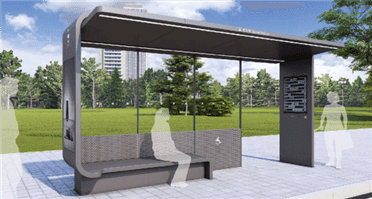
Among the most visible changes will be the redesigned bus stops, which have been developed with modular structures to allow for flexibility based on location. The new designs incorporate LED lighting for improved visibility, a five-stage color system to harmonize with Busan’s urban landscape, and universal accessibility features such as Braille signage, QR codes, and audio guidance. These updates are intended to make public transport more user-friendly while integrating seamlessly into the city’s architectural environment. In addition, the modular nature of the bus stops will enable future expansions, including the installation of smart shelters with features such as heated benches and digital information displays.
Public signage, a critical element for wayfinding, has also been reimagined to improve readability and reduce visual clutter. The new signs will use typography-based logos for easier recognition and will follow a standardized format that aligns with Busan’s official branding colors. This is expected to enhance navigation for residents and tourists alike, making urban spaces more intuitive and user-friendly. Officials believe that a more consistent signage system will also reduce unnecessary duplication and create a clearer, more legible environment.
A key focus of this initiative is the enhancement of manhole cover designs, a response to growing safety concerns following past incidents in the city. In December 2023, a pedestrian accident in Busan’s Dong-gu district highlighted the dangers posed by deteriorating infrastructure. A young man fell into an uncovered manhole after stepping onto a weakened concrete cover that collapsed under his weight. The incident, which resulted in serious injuries, drew attention to the urgent need for safer, more durable public infrastructure. In response, the city undertook a large-scale replacement of outdated concrete manhole covers, reinforcing safety measures across the city. The newly designed manhole covers build on these efforts by incorporating embossed Busan city logos to enhance visibility, using reinforced materials suited to different environments, and introducing anti-slip surfaces to reduce the risk of accidents, particularly in wet conditions.
The city plans to register the new designs and distribute them to all relevant agencies within the first half of the year, ensuring they are gradually integrated into new urban development projects. By standardizing public facilities, Busan aims not only to create a more visually cohesive city but also to prevent redundant spending on separate design efforts across different districts. Officials view this initiative as a step toward establishing Busan as a city with a distinct and thoughtfully designed public environment.
With urban design playing a key role in shaping the character and functionality of a city, Busan’s efforts to unify its public spaces reflect a broader commitment to long-term planning and accessibility. As these new designs are implemented, city planners hope they will contribute to a more navigable, aesthetically appealing, and user-friendly urban landscape, while ensuring that past safety concerns—such as those related to manhole covers—are effectively addressed. The project marks an important step in ensuring that Busan continues to evolve with a modern, organized, and inclusive approach to public space design.
Editorial Context
"Independent journalism relies on radical transparency. View our full log of editorial notes, corrections, and project dispatches in the Newsroom Transparency Log."
Reader Pulse
The report's impact signal
Be the first to provide a reading pulse. These collective signals help our newsroom understand the impact of our reporting.
Join the discussion
A more thoughtful conversation, anchored to the story
Atlantic-style discussion for this article. One-level replies, editor prompts, and moderation-first participation are now powered directly by Prisma.
Discussion Status
Open
Please sign in to join the discussion.
The Weekly Breeze
Independent reporting and analysis on Busan,
Korea, and the broader regional economy.