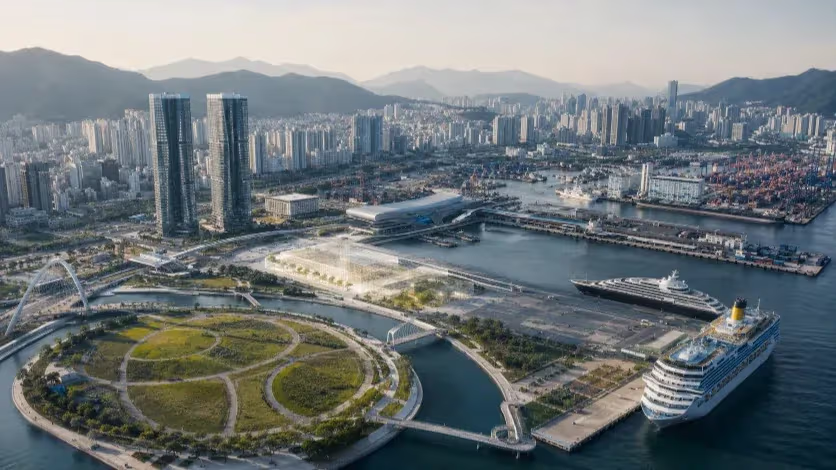
Busan Picked as Korea’s UNESCO 2026 Nominee
Busan has been selected as South Korea’s exclusive nominee to host the 2026 UNESCO World Heritage Committee meeting, following a final round of evaluation that saw the port city narrowly surpass Jeju.


Busan, South Korea - Busan has edged ahead of its rivals to become South Korea’s only nominee to host the 2026 UNESCO World Heritage Committee meeting. The decision, confirmed late on 30 June by the Korea Heritage Service, followed weeks of document checks, site inspections and behind-the-scenes persuasion that whittled a handful of provincial bids down to two—Busan and Jeju—before settling on the port city. The final choice of host nation rests with Committee members who gather in Paris on 15 July, but Seoul’s officials say Busan now carries the country’s hopes into that vote.
The yearly gathering is no small undertaking. Delegations from 21 countries file in, followed by archivists, conservators, a scattering of NGO staff and the interpreters who spend entire days behind glass panels turning every speech into half a dozen languages. Attendance hovers around 2,500. Debates range from which new sites merit inscription to how best to rescue landmarks that are already on the list but showing their age. Sorting out meeting rooms and shuttle timetables is tricky enough; keeping the diplomacy running smooth often proves trickier.
Busan argues that it offers more than meeting halls and hotel rooms. During the Korean War the city acted as a provisional capital, taking in ministries and hundreds of thousands of civilians on the run. Traces of that period linger in steep neighborhood stairways and in places such as the Provisional Government Memorial Hall. Local planners wove that history into their bid, saying a city that once provided refuge is well placed to talk about protecting heritage now.
The pitch also emphasized infrastructure—BEXCO’s exhibition halls, a dense hotel district and direct rail links—and it did not hurt that Busan has hosted large events before, including an APEC summit in 2005. Still, people involved in the selection say the deciding factor was tone: the application felt honest, grounded, light on salesmanship. During a June inspection, Mayor Park Heong-joon skipped the standard slide show and walked visitors through an alley near the UN Memorial Cemetery, pointing out an old classroom wall that survived the bombing raids. One inspector later remarked that the five-minute detour “did more than any brochure”.
Unusually for South Korean politics, support came from both sides of the aisle. Conservative and liberal lawmakers representing Busan districts signed the same letter urging the heritage ministry to back the bid. Local civic groups, often quick to criticize big construction plans, endorsed the idea too, arguing the meeting could steer fresh funds toward restoration projects rather than new concrete.
If the Paris vote goes South Korea’s way, the gathering is penciled in for July 2026. Eleven days of committee debate would be bracketed by youth and site-manager forums plus tours of modern-history landmarks across the southeast. Rough projections from the city’s tourism office point to about 2,200 overseas visitors and an economic lift in the tens of billions of won, though officials downplay the money and talk instead about reputation. South Korea has never hosted the Committee; pulling it off, they say, would nudge the country from diligent participant to recognized convener in heritage diplomacy.
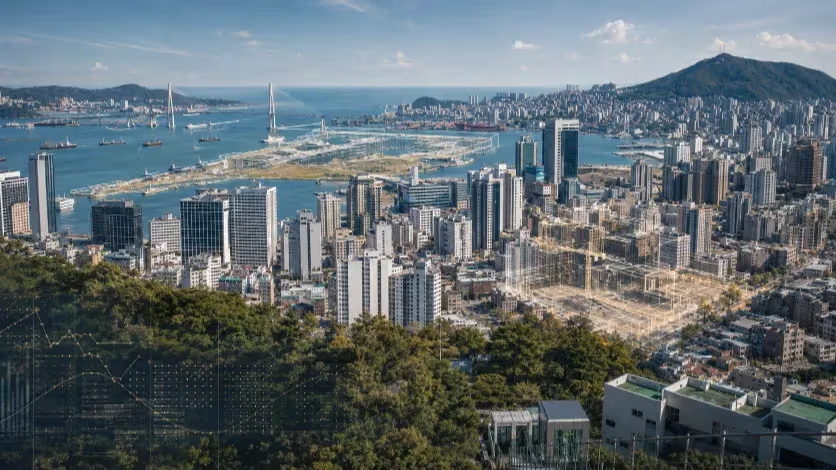
For now, Busan waits. Cargo cranes keep swinging over the harbour, commuters still rush for the last subway, and the wartime stone steps behind the museum remain exactly where they have been for seventy years. Whether the Committee’s vote recasts those ordinary scenes into the backdrop for a global conversation will be known in a matter of weeks—but the city has already made its case, and done so in its own understated way.
Editorial Context
"Independent journalism relies on radical transparency. View our full log of editorial notes, corrections, and project dispatches in the Newsroom Transparency Log."
Reader Pulse
The report's impact signal
Be the first to provide a reading pulse. These collective signals help our newsroom understand the impact of our reporting.
Join the discussion
A more thoughtful conversation, anchored to the story
Atlantic-style discussion for this article. One-level replies, editor prompts, and moderation-first participation are now powered directly by Prisma.
Discussion Status
Open
Please sign in to join the discussion.
The Weekly Breeze
Independent reporting and analysis on Busan,
Korea, and the broader regional economy.