Busan Concert Hall to Open with Immersive Beethoven Lecture Series
Before Busan’s new Concert Hall fills with sound, it invites its citizens to pause and think—with Beethoven as a guide, and a city learning to listen as its audience.

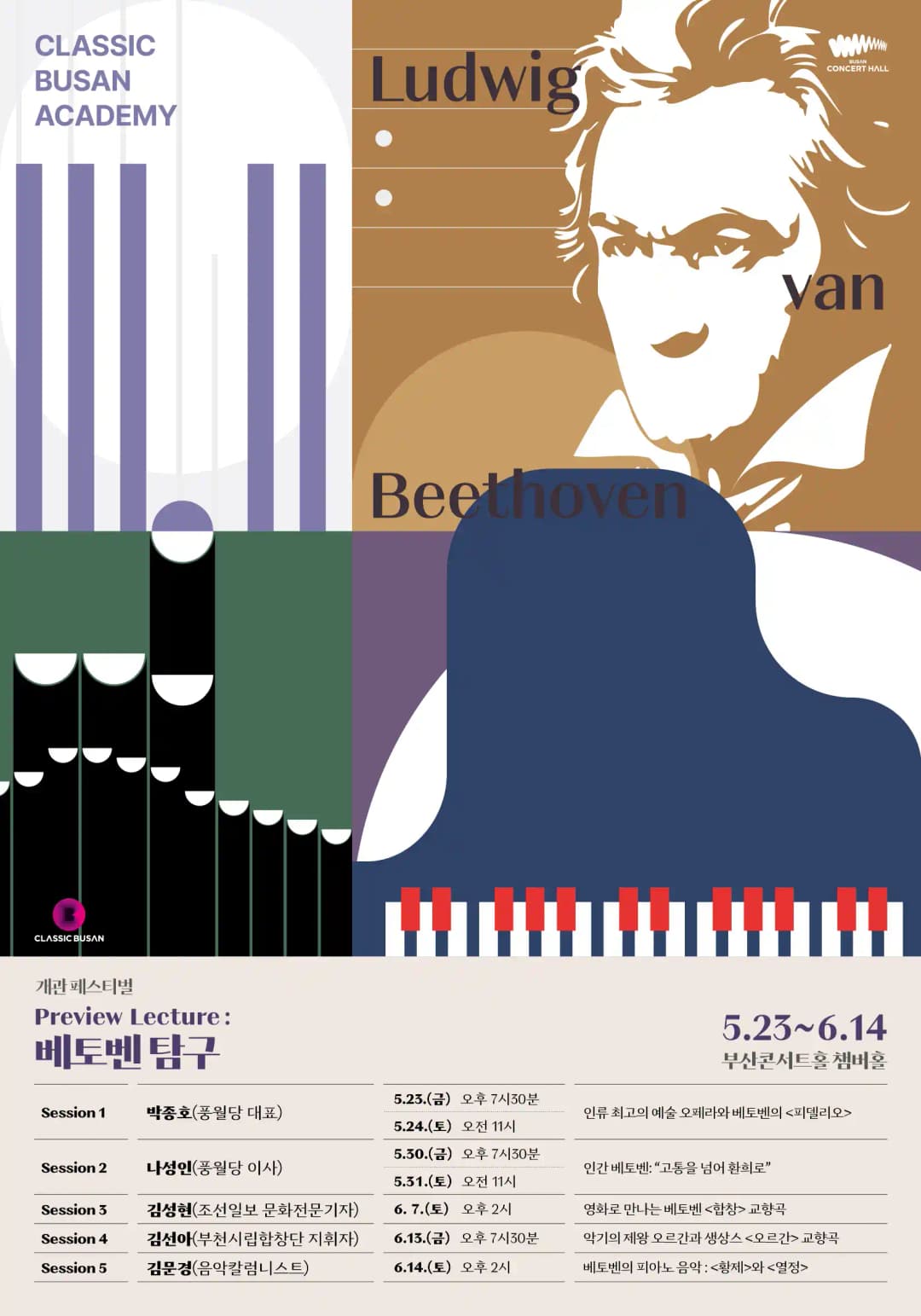
Busan, South Korea – A quiet transformation is taking place in Busan. Known for decades as a hub for film and seaside tourism, the city is now tuning itself to a different frequency—one of symphonies, reflection, and musical depth. With the launch of the Busan Concert Hall, the city is not only opening the doors of its first classical-dedicated venue, but also inviting its citizens to listen differently, and perhaps more deeply.
Ahead of the hall’s official debut on June 20, the city is already abuzz with anticipation. Tickets for the Beethoven-themed opening festival—which runs from June 21 to 28—have been almost entirely sold out. Performances conducted by artistic director Myung-Whun Chung and featuring internationally renowned pianist Cho Seong-jin were booked within minutes of going online. While a few seats remain for Beethoven’s only opera Fidelio, the overwhelming response has confirmed what many suspected: Busan has become Korea’s newest classical music hotspot.
Yet this transformation is more than just ticket sales. In the weeks leading up to the inaugural performances, the “Preview Lecture: Exploring Beethoven” series has drawn listeners into a quieter but no less powerful experience. Hosted by Pungwoldang, Korea’s premier classical music lecture institute, the talks unfold in the hall’s Chamber Hall, offering attendees not just historical background, but philosophical entry points into Beethoven’s world.
Here, audiences explore the themes of artistic struggle, human dignity, and moral courage through works such as Fidelio, Symphony No. 9 (“Choral”), and the Piano Sonata No. 23 (“Appassionata”). Each lecture peels back the layers of the music to reveal not only the mind of a genius, but the questions he continues to ask us today: What is freedom? What does it mean to create in the face of silence? Can beauty change how we live?
Through these talks, the concert hall is positioning itself as more than a performance venue—it is becoming a place for dialogue, for stillness, and for thought. Park Min-jung, director of Classic Busan, describes the vision as one of cultural deepening: “Before we fill the hall with sound, we want to prepare the minds and hearts of those who will listen.”
That spirit extends to the hall’s opening strategy. In a deliberate break from convention, no complimentary tickets have been offered, reinforcing the value of the experience and the integrity of the institution. At the same time, the city has planned a free performance on June 20, inviting 1,000 guests who contributed to the hall’s creation or represent the next generation of cultural supporters. The gesture reflects the city’s dual commitment: exclusivity through excellence, and inclusivity through gratitude.
Designed in the vineyard style and equipped with a full-scale pipe organ, the Busan Concert Hall is architecturally impressive. But its true ambition lies in how it changes the city's relationship to sound. No longer a passive backdrop, music is becoming a means of self-understanding and collective identity.
At the center of this shift is Beethoven—not just as a historical figure, but as a voice still speaking. His works, filled with both thunder and silence, defiance and tenderness, offer a mirror to a city searching for deeper cultural meaning.
As the first notes of Ode to Joy rise in the new hall, it will not only mark a new chapter in Busan’s cultural story—it will signal the arrival of a city that listens.
Continue this reporting
Reporting on the same issue
Related coverage selected from the article's desk, topics and newsroom relationships.
 NewsSep 28, 2026
Why Some Commercial Space in Busan Is Hard to Reuse
Two empty commercial spaces exposed to the same broader economy can have very...
 NewsSep 20, 2026
What It Takes for U.S. Navy Repair Work to Become a Busan Industry
HJ Shipbuilding has brought U.S. Navy maintenance work to Yeongdo. Whether it...
 NewsSep 17, 2026
Busan’s Finished Homes, Unfinished Projects
Busan’s unsold homes sit in one monthly total, but they belong to very differ...
More from the author
More from this byline
Stay with the same line of reporting through more work from this byline.
 NewsApr 23, 2026
Gaza photo exhibition opens at Busan’s Arise Art Space
 NewsNov 10, 2025
Busan Fireworks Festival Marks 20 Years With Expanded Show
Reader Signal
Community readWhat did this report leave you with?
Choose the signal that best reflects your reading. Select it again to remove it.
One response per article
No response selected
A moderated conversation about the reporting.
One-level replies and newsroom moderation keep the conversation anchored to this article.
Discussion Status
Open
Please sign in to join the discussion.
Newsletter
Weekly reporting and context from Busan and Korea.