Busan Approves 2025 Plan to Support Growing Foreign Resident Population
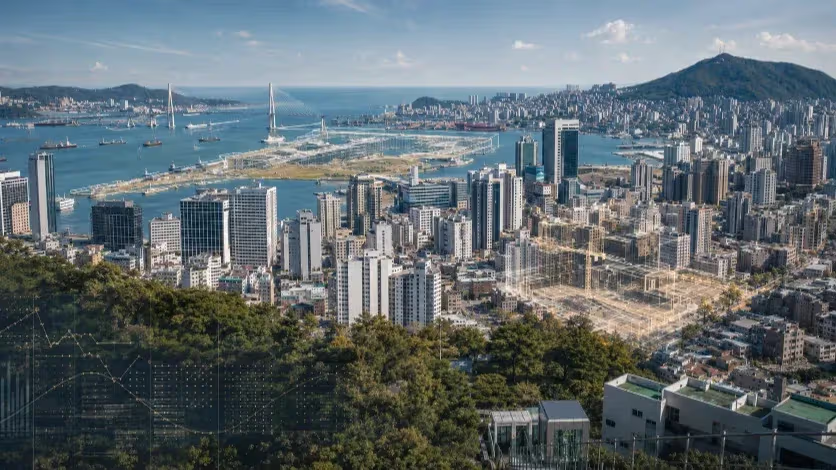
The city of Busan has finalized a new policy framework to support foreign residents, outlining 52 programs across settlement services, education, and community integration.

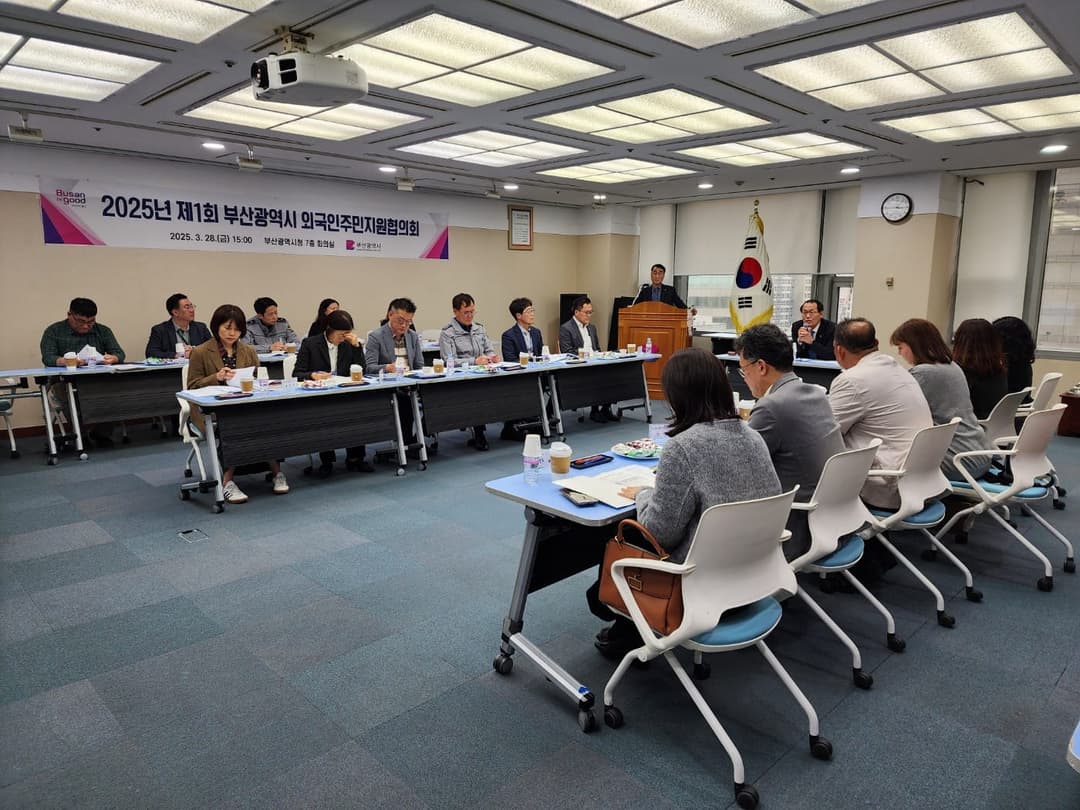
Busan, South Korea — The city of Busan has approved its 2025 policy framework aimed at supporting foreign residents, amid a steady increase in the city’s non-Korean population. The plan was discussed and finalized during a meeting of the Busan Foreign Resident Support Council on March 28 at City Hall, attended by municipal officials, public agencies, policy experts, and foreign resident representatives from various countries including the Philippines, Russia, Indonesia, Uzbekistan, and Nepal.
According to city officials, the initiative is intended to provide structured support for foreign residents living in Busan, with a focus on promoting stable settlement and integration into the local community. As of 2023, the number of foreign residents in Busan reached 83,401, accounting for approximately 2.5 percent of the city’s population. This figure has shown consistent growth over the past decade, while the city’s overall population has declined.
The 2025 plan outlines four strategic goals, fourteen key policy tasks, and a total of fifty-two related projects. These are allocated a combined budget of approximately 6.9 billion KRW. The plan includes programs targeting visa-related support, international student attraction strategies, multilingual service access, onboarding education, childcare, employment assistance, and housing support. Additional measures include initiatives to promote cultural understanding, citizen engagement, and social cohesion.
The city stated that the plan aligns with existing legal frameworks, such as the Framework Act on the Treatment of Foreigners in Korea and Busan’s municipal ordinance on foreign resident support. Specific programs include the creation of a multilingual call center, customized education programs, and expanded outreach to support foreign children and families.
Busan officials also indicated that the city would implement a new integrated service network and conduct regular surveys on the status of foreign residents to support data-driven policymaking. The administration emphasized the need for a transition from short-term attraction strategies to longer-term settlement and community-building efforts.
Vice Mayor for Administrative Affairs Lee Jun-seung, who chaired the meeting, noted that foreign residents contribute to the city’s demographic and economic landscape, and that a more inclusive policy approach is needed to address emerging challenges. “We will continue to collect feedback from various sectors to help build a more foreigner-friendly environment in Busan,” he said during the session.
Program rollout is expected to begin in the second quarter of 2025, with evaluation mechanisms to be introduced by the end of the year.
Editorial Context
"Independent journalism relies on radical transparency. View our full log of editorial notes, corrections, and project dispatches in the Newsroom Transparency Log."
Reader Pulse
The report's impact signal
Be the first to provide a reading pulse. These collective signals help our newsroom understand the impact of our reporting.
Join the discussion
A more thoughtful conversation, anchored to the story
Atlantic-style discussion for this article. One-level replies, editor prompts, and moderation-first participation are now powered directly by Prisma.
Discussion Status
Open
Please sign in to join the discussion.
The Weekly Breeze
Independent reporting and analysis on Busan,
Korea, and the broader regional economy.