The Discovery of Dark Electrons in Solid Matter
In a landmark discovery, Professor Geun-Su Kim and his team at Yonsei University have identified the presence of 'dark electrons' in solid materials, a finding that has been published in Nature Physics on July 29, 2024. This discovery has significant implications for the field of quantum physics and could provide insights into several unresolved issues, including the mechanisms behind high-temperature superconductivity. Dark states, where electrons neither absorb nor emit light, were previously

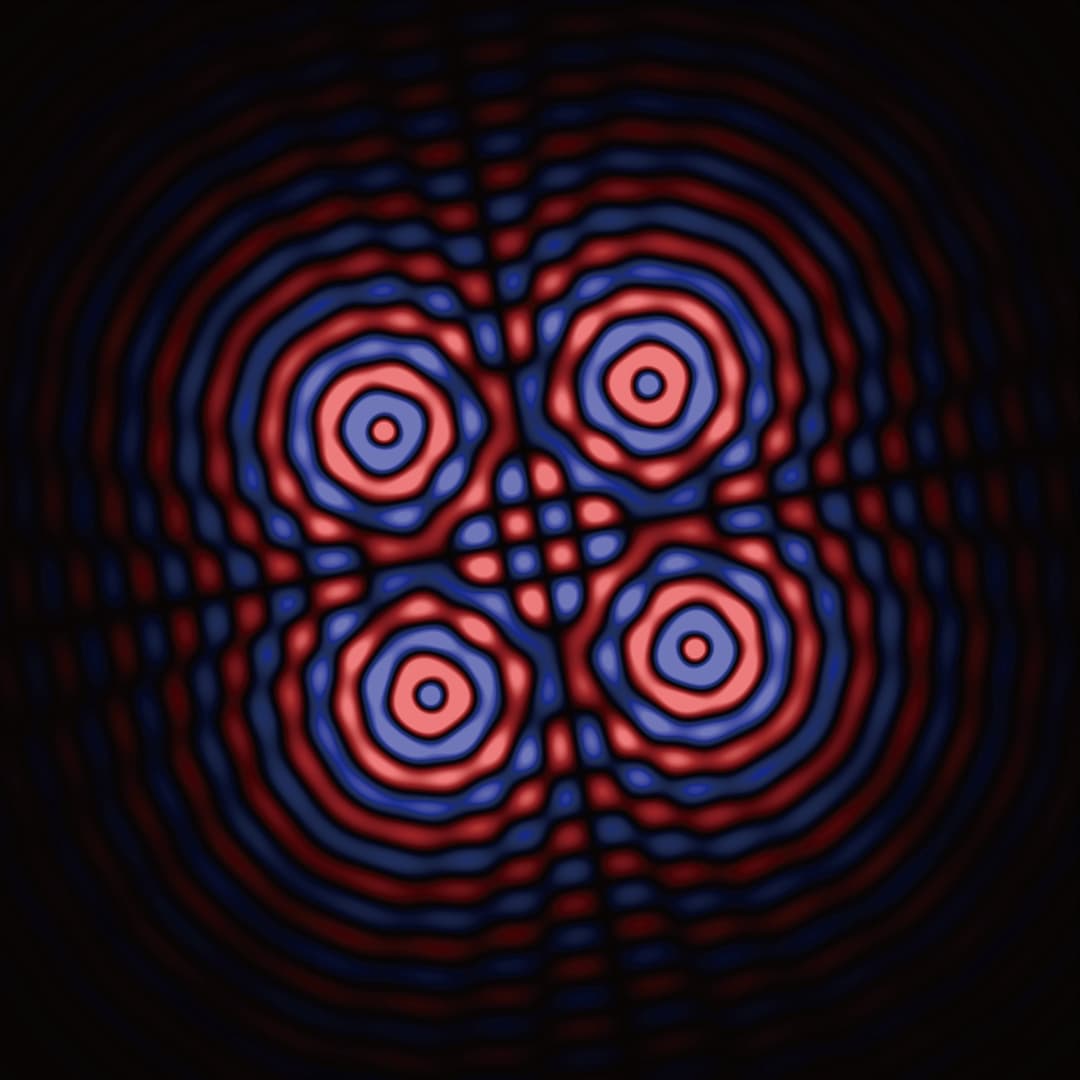
In a landmark discovery, Professor Geun-Su Kim and his team at Yonsei University have identified the presence of 'dark electrons' in solid materials, a finding that has been published in Nature Physics on July 29, 2024. This discovery has significant implications for the field of quantum physics and could provide insights into several unresolved issues, including the mechanisms behind high-temperature superconductivity.
Dark states, where electrons neither absorb nor emit light, were previously thought to be limited to isolated atoms and molecules. The prevailing belief was that such states could not exist within the structured environment of solid materials. However, this new research demonstrates that electrons can indeed exist in dark states within solids, under specific conditions.
The discovery is rooted in the phenomenon of quantum interference. When atoms within a solid material are symmetrically arranged in pairs of sublattices, unique quantum interference occurs. This interference leads to electron states that cancel each other out, making the electrons undetectable by conventional optical means. This effect was particularly observed in high-temperature superconducting cuprate materials using advanced synchrotron radiation facilities.
The research team, after four years of extensive study, developed a theoretical model predicting the conditions under which these dark states could exist. They validated their model through a series of experiments using a synchrotron radiation accelerator. These experiments confirmed that a symmetrical arrangement of atoms, forming two pairs, is essential for the dark states to occur. The resulting quantum interference ensures that the electrons remain invisible under all measurement conditions.
This discovery not only challenges existing beliefs about electron behavior in solid materials but also opens new avenues for research into quantum materials and technologies. Professor Kim and his team believe their findings will provide significant insights into other complex phenomena in physics, such as the secrets of high-temperature superconductors. Understanding and manipulating dark states in solids could lead to advancements in quantum computing and other technologies that rely on precise control of quantum states.
Professor Kim highlighted the broader implications of their findings: "Recognizing the existence of dark electrons in solid materials offers a crucial key to understanding previously inexplicable quantum phenomena." The research team plans to leverage this discovery to address other enduring mysteries in modern physics, potentially leading to practical applications that could transform various technological fields.
The Ministry of Science and ICT announced that this research was supported by the Basic Research Program (Global Leader Research) and involved collaboration with researchers from the United States, the United Kingdom, and Canada. This study provides crucial evidence for phenomena that have puzzled physicists for years and may solve several longstanding puzzles in physics.
The discovery that electrons in solid materials can exist in dark states was demonstrated through quantum interference from symmetrically arranged atomic pairs. This was confirmed using a synchrotron radiation accelerator, focusing on high-temperature superconducting cuprates.
Key factors contributing to this discovery include the unique atomic arrangement within the solid materials. When four atoms of the same kind are symmetrically paired, quantum interference occurs, leading to destructive interference that prevents the electrons from interacting with light. Over four years, the team developed a model explaining the dark state of electrons and verified their findings using high-temperature superconductors. This breakthrough confirms that such states can exist in solids, contrary to previous beliefs.
The implications of this discovery are vast. It could lead to significant advancements in understanding and potentially solving the mysteries of high-temperature superconductivity, a longstanding challenge in modern physics. Further research will explore the role of dark states in these materials, aiming to develop practical applications in quantum computing and beyond.
Continue this reporting
Reporting on the same issue
Related coverage selected from the article's desk, topics and newsroom relationships.
 NewsSep 26, 2026
South Korea’s 490 Regional Doctor Seats Begin a Longer Route to Care
South Korea’s first 490 regional-doctor seats tie medical-school admission to...
 NewsAug 30, 2026
The Hidden Economics of South Korea’s Public Transport
Busan’s latest transport review exposes a wider national problem: South Korea...
 NewsAug 11, 2026
Korea’s Innovation Cities Did Not Grow the Same Way
Nearly two decades after South Korea began relocating public institutions, th...
More from the author
More from this byline
Stay with the same line of reporting through more work from this byline.
 NewsOct 9, 2026
Why “Busan Is Good” Falls Short as a City Brand
 NewsSep 18, 2026
The Other AI Race Is for the Freedom to Change Course
Reader Signal
Community readWhat did this report leave you with?
Choose the signal that best reflects your reading. Select it again to remove it.
One response per article
No response selected
A moderated conversation about the reporting.
One-level replies and newsroom moderation keep the conversation anchored to this article.
Discussion Status
Open
Please sign in to join the discussion.
Newsletter
Weekly reporting and context from Busan and Korea.