South Korea's Constitutional Court upholds legislation limiting prosecutorial powers
South Korea's Constitutional Court has rejected petitions to nullify revisions to the Prosecutors' Office Act and the Criminal Procedure Act, which significantly reduce the prosecution's investigative powers. The legislation was designed to limit prosecution probes to only two types of crime: corruption and economic crime. Critics argue that these changes have led to the "complete deprivation of the prosecution's investigative power." The prosecution service in South Korea has a long history of
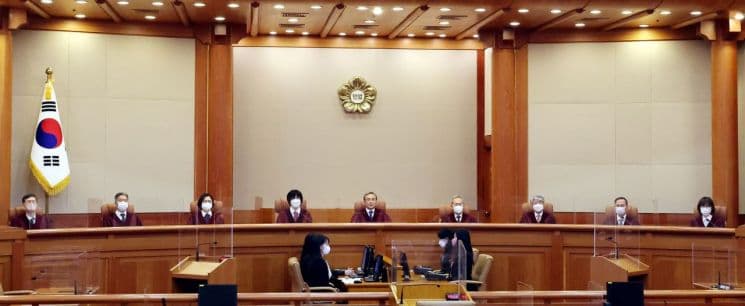
South Korea's Constitutional Court has rejected petitions to nullify revisions to the Prosecutors' Office Act and the Criminal Procedure Act, which significantly reduce the prosecution's investigative powers. The legislation was designed to limit prosecution probes to only two types of crime: corruption and economic crime. Critics argue that these changes have led to the "complete deprivation of the prosecution's investigative power."
The prosecution service in South Korea has a long history of being closely tied to the political establishment, often serving as a legal services provider for the regime. Over the years, the prosecution has taken on an increasingly powerful role, pushing aside competing law enforcement agencies and expanding its jurisdiction into various areas, such as narcotics, organized crime, and civil administration.
While the prosecution has occasionally sparked controversy due to its overreach, it has also played a significant role in holding previous administrations accountable. Notably, during the presidencies of Lee Myung-bak and Park Geun-hye, the prosecution was instrumental in investigating and ultimately incarcerating the presidents for their respective wrongdoings.
Despite the Constitutional Court's decision to uphold the revised legislation, concerns remain about the current state of the prosecution's powers in South Korea. Some argue that the country is now effectively ruled by career prosecutors, who are in charge of high-profile investigations involving both the ruling and opposition parties. This has led to public mistrust in the prosecution's actions, as investigations are subject to skepticism and criticism due to perceived political motivations.
In light of these concerns, it remains to be seen how the balance between the prosecution's powers and political influence will evolve in South Korea. As the nation grapples with the consequences of the Constitutional Court's decision, the question of whether the prosecution's rule will continue to dominate the justice system hangs in the balance. It is crucial for South Korea to strike a balance that ensures the independence and integrity of its justice system while preventing the undue influence of career prosecutors on the nation's political landscape.
Continue this reporting
Reporting on the same issue
Related coverage selected from the article's desk, topics and newsroom relationships.
 NewsSep 26, 2026
South Korea’s 490 Regional Doctor Seats Begin a Longer Route to Care
South Korea’s first 490 regional-doctor seats tie medical-school admission to...
 NewsAug 30, 2026
The Hidden Economics of South Korea’s Public Transport
Busan’s latest transport review exposes a wider national problem: South Korea...
 NewsAug 11, 2026
Korea’s Innovation Cities Did Not Grow the Same Way
Nearly two decades after South Korea began relocating public institutions, th...
More from the author
More from this byline
Stay with the same line of reporting through more work from this byline.
 NewsOct 9, 2026
Why “Busan Is Good” Falls Short as a City Brand
 NewsSep 18, 2026
The Other AI Race Is for the Freedom to Change Course
Reader Signal
Community readWhat did this report leave you with?
Choose the signal that best reflects your reading. Select it again to remove it.
One response per article
No response selected
A moderated conversation about the reporting.
One-level replies and newsroom moderation keep the conversation anchored to this article.
Discussion Status
Open
Please sign in to join the discussion.
Newsletter
Weekly reporting and context from Busan and Korea.