South Korea Introduces Stricter Controls on Political Banners to Reduce Public Inconvenience
In a move to reduce clutter and enhance public safety, South Korea's Ministry of the Interior and Safety announced new regulations, effective from January 12, 2024, to limit the proliferation of political banners across neighborhoods. For years, the streets of South Korea have been inundated with political banners, often leading to visual clutter and safety concerns. In response to public outcry over the unsightly proliferation of these banners and the potential hazards they pose, particularly

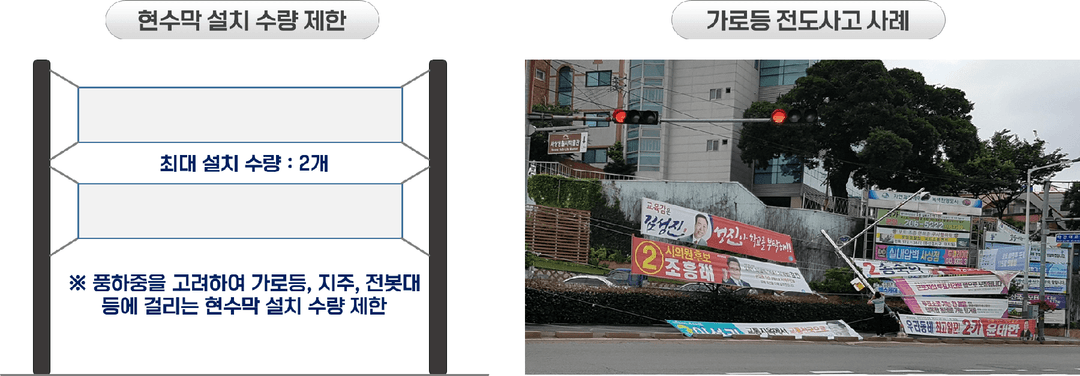
In a move to reduce clutter and enhance public safety, South Korea's Ministry of the Interior and Safety announced new regulations, effective from January 12, 2024, to limit the proliferation of political banners across neighborhoods.
For years, the streets of South Korea have been inundated with political banners, often leading to visual clutter and safety concerns. In response to public outcry over the unsightly proliferation of these banners and the potential hazards they pose, particularly in densely populated urban areas, the government has decided to take action.
The newly amended Outdoor Advertising Control Act, ratified in a cabinet meeting on January 9, 2024, introduces stringent measures to regulate the number and placement of political banners. Key changes include limiting the number of banners to two per neighborhood, with an exception for larger areas where one additional banner can be installed. Furthermore, installation of banners in child protection zones and near fire stations is strictly prohibited to ensure public safety.
The press release highlights the experiences of various citizens affected by the overabundance of political banners. A parent, referred to as A, expressed relief at the new rule prohibiting banners in child protection zones, citing past embarrassments while walking with their child. Similarly, a university student, B, and a truck driver, C, shared their concerns over safety hazards posed by inappropriately placed banners, which often obstructed traffic signals and pedestrian views.
The revision specifies that banners should not exceed 10 square meters and must clearly display the period of display, contact information of the political party, and installation company. Additionally, the placement of banners should not obstruct other public signage or cause hazards to pedestrians and drivers. The enforcement decree further stipulates that banners in violation can be removed by local authorities.
Deputy Minister of the Interior and Safety, Mr. Go Ki-dong, emphasized the government's commitment to ensuring that the new regulations are effectively implemented in collaboration with political parties and local governments. He expressed hope that these changes will be actively felt by the citizens, enhancing their daily commutes and general urban experience.
The introduction of these regulations marks a shift in the approach to political advertising in South Korea. While ensuring freedom of political expression, the government aims to balance this with the public's right to a safe and visually pleasant urban environment. The changes are expected to not only improve public safety but also enhance the aesthetic quality of South Korean cities and towns.
With these new regulations, South Korea takes a firm step toward addressing the long-standing issue of visual pollution and safety hazards caused by excessive political banners. As these changes roll out, the effectiveness of the new measures in creating a more orderly and safer public space will be closely watched by citizens and policymakers alike.
Continue this reporting
Reporting on the same issue
Related coverage selected from the article's desk, topics and newsroom relationships.
 NewsSep 26, 2026
South Korea’s 490 Regional Doctor Seats Begin a Longer Route to Care
South Korea’s first 490 regional-doctor seats tie medical-school admission to...
 NewsAug 30, 2026
The Hidden Economics of South Korea’s Public Transport
Busan’s latest transport review exposes a wider national problem: South Korea...
 NewsAug 11, 2026
Korea’s Innovation Cities Did Not Grow the Same Way
Nearly two decades after South Korea began relocating public institutions, th...
More from the author
More from this byline
Stay with the same line of reporting through more work from this byline.
 NewsOct 9, 2026
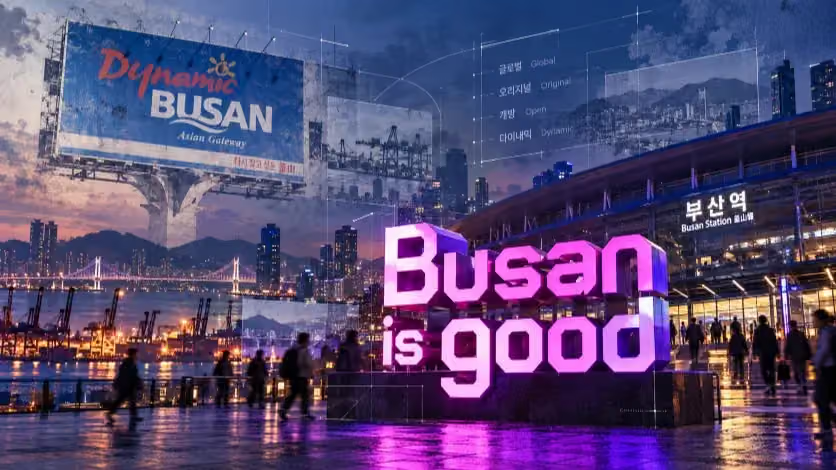
Why “Busan Is Good” Falls Short as a City Brand
 NewsSep 18, 2026
The Other AI Race Is for the Freedom to Change Course
Reader Signal
Community readWhat did this report leave you with?
Choose the signal that best reflects your reading. Select it again to remove it.
One response per article
No response selected
A moderated conversation about the reporting.
One-level replies and newsroom moderation keep the conversation anchored to this article.
Discussion Status
Open
Please sign in to join the discussion.
Newsletter
Weekly reporting and context from Busan and Korea.