South Korea Eases Redevelopment Rules Amid Deepening Housing Slump
The Ministry of Land, Infrastructure and Transport is expanding criteria for aging buildings and easing regulatory hurdles — a move that could accelerate long-stalled neighborhood overhauls, but also raises concerns about long-term housing equity and planning.

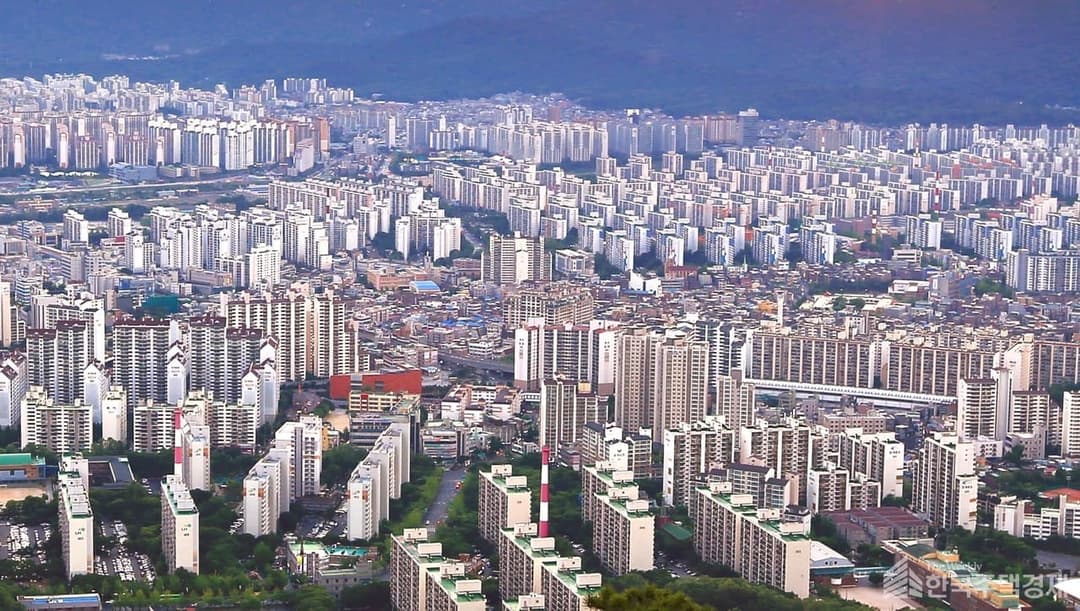
Sejong, South Korea — South Korea is facing its most prolonged real estate slump in over a decade. With home prices falling across much of the country, unsold apartment inventories rising, and buyer sentiment frozen by high interest rates, the real estate market shows few signs of near-term recovery. In this context, the government is shifting its attention to one of the most structurally inert parts of the system: the approval process for redevelopment and reconstruction projects.
On April 17, the Ministry of Land, Infrastructure and Transport (MOLIT) unveiled a sweeping revision to existing standards for initiating urban renewal. These reforms, long demanded by municipalities and residents in aging apartment complexes, aim to lower the threshold for qualifying as a "renewal zone" and to accelerate long-stalled projects. At their core, the revisions are not merely bureaucratic tweaks but signal a philosophical shift in how livability and decay are defined in Korean urban policy.
A key element of the reform is the inclusion of unauthorized buildings — specifically, those constructed before January 1989 — in the official deterioration calculations for redevelopment eligibility. Previously excluded, such structures have long been a blind spot in official statistics, even as they contribute visibly to urban blight and resident discomfort. Their inclusion could tip the balance for many districts that previously fell short of the redevelopment criteria.
The second major change involves the criteria for determining whether a residential complex qualifies for reconstruction. Under the revised framework, the traditional focus on structural safety and cost-efficiency is broadened to include a wider range of indicators related to resident quality of life. Seven new categories — including access to underground parking, green space, ventilation, elevators, and shared community facilities — have been added to the evaluation rubric, expanding the number of assessment items from 9 to 15. The scoring weight of residential environment has also been raised from 30% to 40%, while the contentious “cost analysis” metric can now be excluded unless residents specifically request it.
On paper, these changes appear both timely and reasonable. They recognize that the lived experience of residents — particularly the elderly and families with limited mobility — cannot be reduced to structural engineering checklists or economic efficiency calculations. The government is, in effect, acknowledging that a deteriorated living environment can exist long before a building becomes physically unsafe.
However, whether these reforms will succeed in reviving urban renewal — or even the broader housing market — remains uncertain. Many of the underlying conditions that sparked the housing crisis persist. High construction costs, elevated loan rates, and an aging population mean that even if more districts become eligible for redevelopment, the appetite among developers and investors may remain tepid. For cash-strapped local governments, the prospect of additional renewal zones without guaranteed private participation could stretch budgets and planning capacities.
Critics also warn that the changes may exacerbate regional disparities. While Seoul and some high-demand cities may benefit from a relaxation of regulations, smaller cities and towns — where housing demand remains weak — may struggle to attract the private capital needed to launch full-scale redevelopment. Without a complementary public housing strategy or regional infrastructure investment, the policy could unintentionally deepen the urban divide.
Moreover, the focus on regulatory easing may reflect a deeper impasse in national housing policy. For years, Korea has cycled between boom-and-bust dynamics, with successive administrations toggling between deregulation and supply control. Yet the structural issues — affordability for youth, livability for seniors, spatial inequality between capital and provinces — remain unresolved.
Seen in this light, the latest reform may be less a reset than a temporary release valve. It provides short-term flexibility in a system under stress, but without a broader strategy for demographic change, economic diversification, and sustainable land use, the benefits may prove uneven and short-lived.
Still, the political logic is clear. With economic sentiment waning and construction activity stalling, the government needs visible policy action. Redevelopment, with its promise of tangible transformation and local stimulus, offers a politically attractive target. By adjusting how decay is measured and livability is scored, the state is trying to translate resident discomfort into bureaucratic momentum.
Whether that momentum translates into meaningful change — or merely shifts the burden downstream — is a question that will unfold block by block, district by district, in the coming years.
Continue this reporting
Reporting on the same issue
Related coverage selected from the article's desk, topics and newsroom relationships.
 NewsSep 26, 2026
South Korea’s 490 Regional Doctor Seats Begin a Longer Route to Care
South Korea’s first 490 regional-doctor seats tie medical-school admission to...
 NewsAug 30, 2026
The Hidden Economics of South Korea’s Public Transport
Busan’s latest transport review exposes a wider national problem: South Korea...
 NewsAug 11, 2026
Korea’s Innovation Cities Did Not Grow the Same Way
Nearly two decades after South Korea began relocating public institutions, th...
More from the author
More from this byline
Stay with the same line of reporting through more work from this byline.
 NewsOct 9, 2026
Why “Busan Is Good” Falls Short as a City Brand
 NewsSep 18, 2026
The Other AI Race Is for the Freedom to Change Course
Reader Signal
Community readWhat did this report leave you with?
Choose the signal that best reflects your reading. Select it again to remove it.
One response per article
No response selected
A moderated conversation about the reporting.
One-level replies and newsroom moderation keep the conversation anchored to this article.
Discussion Status
Open
Please sign in to join the discussion.
Newsletter
Weekly reporting and context from Busan and Korea.