Martial Law Sparks Political Turmoil: South Korea’s Battle for Constitutional Integrity
South Korea is navigating a severe constitutional crisis after President Yoon Suk-yeol’s controversial proclamation of martial law, a move that opposition parties have described as unconstitutional and tantamount to treason. The Democratic Party of Korea (DPK) has escalated its push for impeachment, while the ruling People Power Party (PPP) has floated alternative measures, leading to fierce political debate over the future of the presidency. The DPK has taken a clear stance on the need for imp
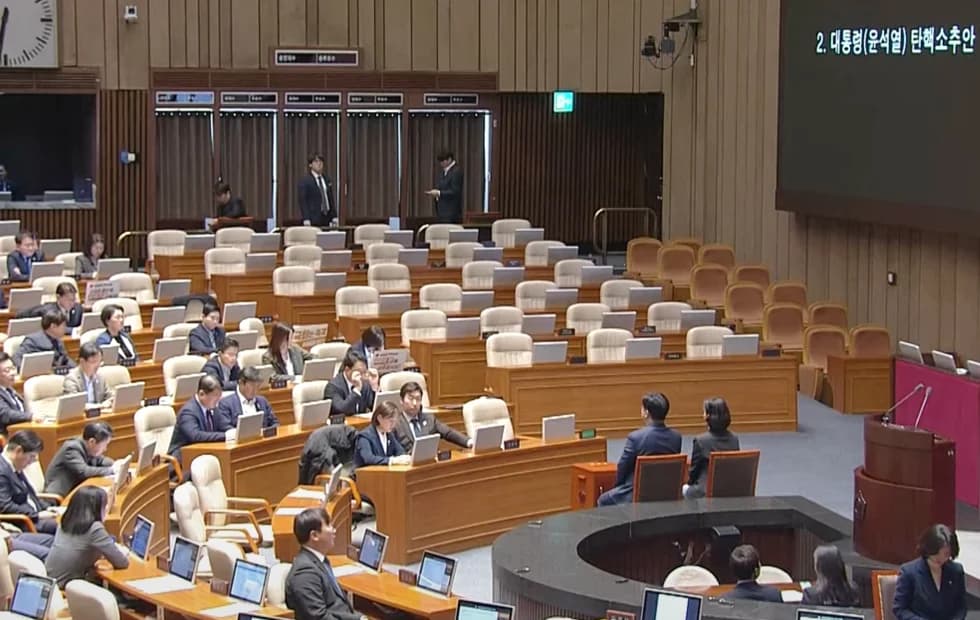
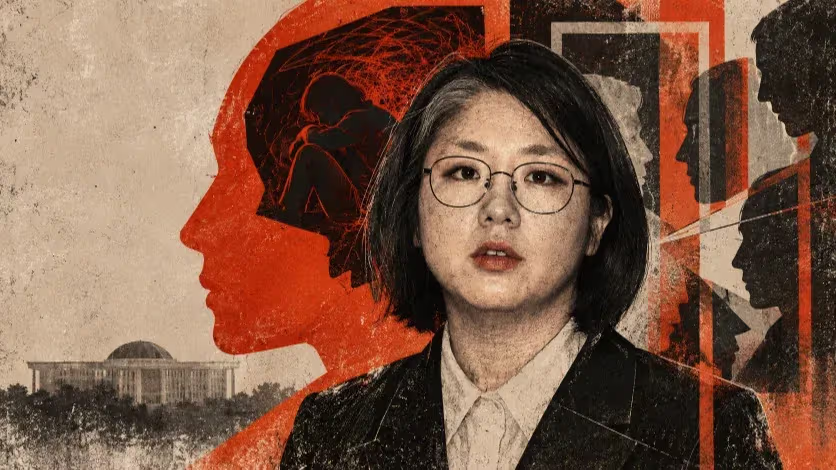
South Korea is navigating a severe constitutional crisis after President Yoon Suk-yeol’s controversial proclamation of martial law, a move that opposition parties have described as unconstitutional and tantamount to treason. The Democratic Party of Korea (DPK) has escalated its push for impeachment, while the ruling People Power Party (PPP) has floated alternative measures, leading to fierce political debate over the future of the presidency.
The DPK has taken a clear stance on the need for impeachment. Following the president’s declaration of martial law and deployment of military forces to the National Assembly, the DPK issued a resolution on December 4, stating, “President Yoon has violated the Constitution and must step down immediately. If he refuses, we will proceed with impeachment.” This statement highlights the opposition’s focus on constitutional accountability.
In contrast, the PPP has taken a markedly different approach. During yesterday’s impeachment proceedings, PPP lawmakers walked out of the National Assembly, refusing to participate in the vote. Their boycott has drawn criticism from opposition leaders, who accuse the ruling party of shirking its constitutional responsibilities. Critics argue that the PPP’s actions undermine efforts to hold the president accountable and delay a resolution to the ongoing crisis.
Instead of engaging in the impeachment process, the PPP has proposed a series of alternative measures, including the dismissal of key officials and a voluntary resignation by the president. PPP leader Han Dong-hoon has suggested that President Yoon consider leaving the party and allowing a structured transition to minimize national disruption. The PPP’s proposals, discussed during an emergency meeting, were framed as efforts to prevent prolonged political instability.
Legal experts widely agree that impeachment is the only constitutionally sanctioned mechanism to address allegations of presidential misconduct. South Korea’s Constitution explicitly outlines impeachment as the proper process for holding a sitting president accountable for serious offenses, such as treason or significant violations of constitutional law. This ensures that any removal from office adheres to democratic principles and the rule of law.
Proposals to amend the Constitution to shorten the president’s term have also drawn criticism from legal scholars. Constitutional amendments require a two-thirds majority in the National Assembly and a national referendum, making the process lengthy and politically complex. Experts emphasize that such a course of action would take significant time and resources, potentially prolonging political instability. During this extended period, national governance could be severely disrupted, hindering the government’s ability to address pressing domestic and international issues.
The societal and economic costs of pursuing a constitutional amendment are another area of concern. Prolonged uncertainty could deepen existing economic instability, discourage foreign investment, and tarnish South Korea’s global reputation. Additionally, the extensive public debate required for constitutional amendments could polarize society further, exacerbating divisions and undermining social cohesion.
Experts stress that adhering to the Constitution’s impeachment process is crucial to preserving public trust in democratic institutions. Alternative approaches, such as constitutional amendments or structured resignation proposals, lack clarity and constitutional grounding. These measures risk setting harmful precedents that could weaken South Korea’s commitment to democratic governance and the rule of law.
Impeachment, while constitutionally valid, faces significant political obstacles. The process requires a two-thirds majority vote in the National Assembly, a daunting threshold given the PPP’s refusal to participate in impeachment discussions.
Public frustration with the political deadlock is growing. Protests have erupted across the country, with demonstrators urging lawmakers to take decisive action. A recent poll revealed that over 70% of South Koreans support impeachment, reflecting widespread dissatisfaction with the president’s actions and the ruling party’s response.
The political turmoil is also having significant repercussions beyond South Korea’s borders. Economically, the crisis has unsettled markets, with the Korean won showing signs of instability. On the international stage, South Korea’s allies, including the United States, have expressed concerns about the implications for regional stability.
At the same time, domestic protests have highlighted the urgency of resolving the crisis. In Seoul’s Gwanghwamun Square, thousands of demonstrators called for immediate impeachment, chanting slogans like “Uphold democracy!” and “No excuses for treason!”
South Korea faces a defining moment in its democratic history, as it grapples with the fallout of unprecedented allegations against a sitting president. The DPK’s impeachment initiative stands as a constitutionally mandated pathway to address accusations of treason and gross misconduct. Legal experts and opposition leaders argue that impeachment is not only the most lawful course of action but also a crucial step in restoring public trust in democratic institutions.
In contrast, the PPP’s alternative proposals, including calls for voluntary resignation and structured transitions, have come under scrutiny for their lack of constitutional grounding. Critics warn that these measures risk undermining the principles of accountability and transparency that underpin South Korea’s democratic framework. By walking out of impeachment proceedings and sidestepping legal mechanisms, the ruling party has sparked concerns about its commitment to upholding the rule of law.
The coming weeks will be pivotal in shaping South Korea’s democratic trajectory. Decisions made during this crisis will not only determine the immediate political future but also set lasting precedents for how the nation addresses constitutional challenges. As domestic and international observers closely monitor the situation, South Korea’s leaders face an urgent imperative: to act with integrity, prioritize constitutional adherence, and reaffirm the nation’s dedication to the principles of justice and democracy.
Continue this reporting
Reporting on the same issue
Related coverage selected from the article's desk, topics and newsroom relationships.
 NewsSep 26, 2026
South Korea’s 490 Regional Doctor Seats Begin a Longer Route to Care
South Korea’s first 490 regional-doctor seats tie medical-school admission to...
 NewsAug 30, 2026
The Hidden Economics of South Korea’s Public Transport
Busan’s latest transport review exposes a wider national problem: South Korea...
 NewsAug 11, 2026
Korea’s Innovation Cities Did Not Grow the Same Way
Nearly two decades after South Korea began relocating public institutions, th...
More from the author
More from this byline
Stay with the same line of reporting through more work from this byline.
 NewsSep 18, 2026
The Other AI Race Is for the Freedom to Change Course
 NewsSep 5, 2026
How a Political Appointment Becomes a Judgment of Character
Reader Signal
Community readWhat did this report leave you with?
Choose the signal that best reflects your reading. Select it again to remove it.
One response per article
No response selected
A moderated conversation about the reporting.
One-level replies and newsroom moderation keep the conversation anchored to this article.
Discussion Status
Open
Please sign in to join the discussion.
Newsletter
Weekly reporting and context from Busan and Korea.