Gyeongnam Province Establishes South Korea’s First LNG Bunkering Offshore Testbed
Changwon, Gyeongnam -Gyeongnam Province in South Korea has completed the nation’s first offshore testbed for LNG (liquefied natural gas) bunkering transfer systems, a landmark achievement that underscores the country's commitment to sustainable maritime innovation. The facility, which began operational testing on December 19, 2024, provides an essential platform for supporting domestic companies seeking to develop and commercialize LNG bunkering equipment for global markets. LNG bunkering is th

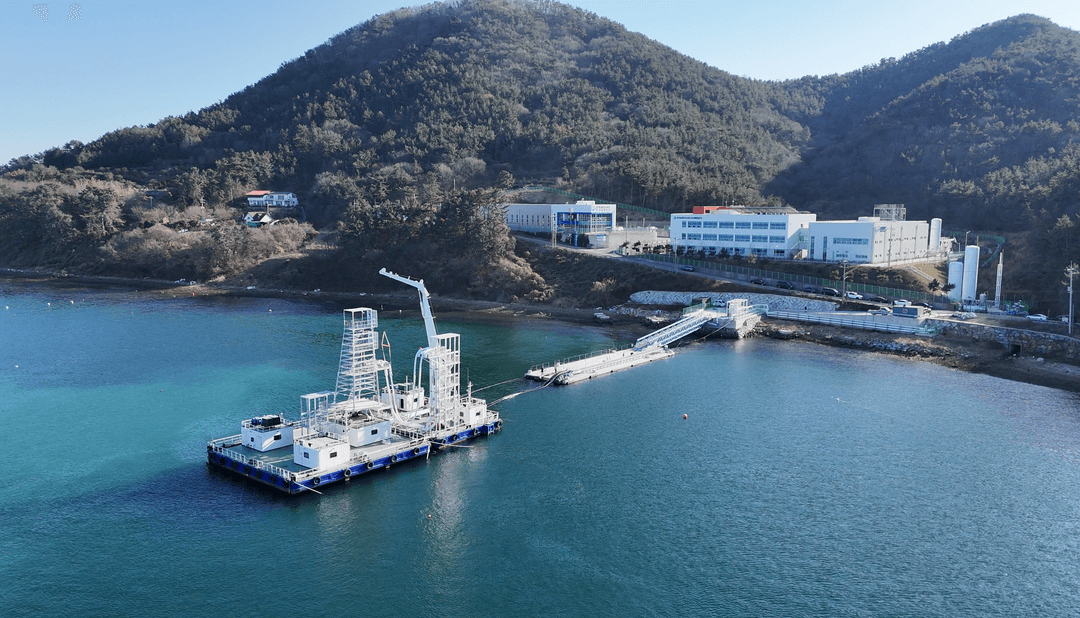
Changwon, Gyeongnam -Gyeongnam Province in South Korea has completed the nation’s first offshore testbed for LNG (liquefied natural gas) bunkering transfer systems, a landmark achievement that underscores the country's commitment to sustainable maritime innovation. The facility, which began operational testing on December 19, 2024, provides an essential platform for supporting domestic companies seeking to develop and commercialize LNG bunkering equipment for global markets.
LNG bunkering is the process of supplying liquefied natural gas as a cleaner alternative to traditional heavy fuel oils for ships. This technology has gained traction due to increasingly stringent environmental regulations from the International Maritime Organization (IMO), which target reductions in greenhouse gas emissions from the shipping industry. LNG is currently viewed as a transitional fuel, bridging the gap until zero-carbon alternatives like ammonia and hydrogen become more widely feasible.
The LNG Bunkering Offshore Testbed stands as a transformative development in South Korea’s efforts to modernize its maritime fueling infrastructure. Designed to replicate the intricate and demanding conditions of real-world LNG fuel transfers between ships, this facility offers a critical platform for testing, refining, and validating the technology needed for this rapidly evolving sector.
At the heart of the testbed are advanced storage systems for LNG and Liquid Nitrogen (LN2), which ensure the cryogenic conditions essential for LNG operations. These systems are meticulously engineered to handle the extreme temperatures required to maintain LNG in its liquid state, forming the backbone of the entire operation.
Complementing the storage systems are mock vessels that simulate both LNG bunkering and LNG fuel-powered ships. These life-size replicas replicate the complex ship-to-ship bunkering process, allowing for rigorous trials under realistic conditions. By recreating these scenarios, the testbed enables the precise evaluation of equipment performance, efficiency, and safety standards.
Additionally, the facility includes specialized cryogenic floating equipment designed to withstand the challenging conditions of offshore operations. These components are integral to ensuring the safety and reliability of LNG transfers, addressing potential risks associated with extreme temperatures and high-pressure environments.
Together, these features position the Gyeongnam LNG Bunkering Offshore Testbed as a vital resource for advancing the domestic LNG industry. By providing a controlled yet realistic environment for testing, it empowers South Korean companies to develop and perfect the technologies necessary to compete on a global stage, all while adhering to the highest safety and performance standards.
South Korea's domestic maritime equipment industry has faced significant hurdles in breaking into the LNG bunkering market. Despite advancements in technology and safety certifications, the absence of a dedicated offshore testing platform has made it difficult for local companies to commercialize their products. This gap has historically forced South Korean operators to rely heavily on imported equipment.
The completion of the testbed changes this dynamic, offering a critical resource for testing and certifying domestic equipment. It also supports South Korea’s broader goal of increasing localization within the maritime supply chain, reducing dependence on foreign suppliers while enhancing competitiveness.
Gyeongnam Province is uniquely positioned to lead South Korea’s efforts in LNG technology. The region has long been a hub for the nation’s shipbuilding industry, hosting major shipyards and maritime equipment manufacturers. With the addition of the LNG bunkering testbed, Gyeongnam is expected to play a pivotal role in advancing cryogenic technologies and supporting the global shift towards sustainable shipping.
This development aligns with recent achievements in South Korea’s LNG infrastructure. For example, the country recently conducted its first simultaneous ship-to-ship LNG bunkering operation, marking a significant step forward in its capabilities. These advancements underscore South Korea’s ambition to establish itself as a key player in the global LNG bunkering market.
LNG is increasingly seen as a transitional fuel that can help the shipping industry achieve substantial emission reductions while paving the way for zero-carbon alternatives. The testbed provides an essential platform for refining technologies and ensuring their safety and reliability, contributing to global efforts to decarbonize maritime transport.
South Korea’s focus on LNG aligns with broader international trends, as ports and shipping companies worldwide invest in infrastructure to accommodate LNG-powered vessels. With the Gyeongnam testbed now operational, South Korean companies are better positioned to meet the growing demand for LNG bunkering equipment, strengthening their presence in global markets.
Continue this reporting
Reporting on the same issue
Related coverage selected from the article's desk, topics and newsroom relationships.
 NewsSep 26, 2026
South Korea’s 490 Regional Doctor Seats Begin a Longer Route to Care
South Korea’s first 490 regional-doctor seats tie medical-school admission to...
 NewsAug 30, 2026
The Hidden Economics of South Korea’s Public Transport
Busan’s latest transport review exposes a wider national problem: South Korea...
 NewsAug 11, 2026
Korea’s Innovation Cities Did Not Grow the Same Way
Nearly two decades after South Korea began relocating public institutions, th...
More from the author
More from this byline
Stay with the same line of reporting through more work from this byline.
 NewsSep 18, 2026
The Other AI Race Is for the Freedom to Change Course
 NewsSep 5, 2026
How a Political Appointment Becomes a Judgment of Character
Reader Signal
Community readWhat did this report leave you with?
Choose the signal that best reflects your reading. Select it again to remove it.
One response per article
No response selected
A moderated conversation about the reporting.
One-level replies and newsroom moderation keep the conversation anchored to this article.
Discussion Status
Open
Please sign in to join the discussion.
Newsletter
Weekly reporting and context from Busan and Korea.