Diverging Views on US-South Korea Summit: Strengthening Alliance or Empty Promises?
The US-South Korea summit has resulted in mixed assessments from Korean newspapers, with conservative and progressive press taking opposing stances. The joint announcement of the 'Washington Declaration' and the agreement on expanding deterrence measures against North Korea led conservative newspapers to view the summit as a positive step in reinforcing the "ironclad alliance." However, progressive newspapers criticized the lack of tangible outcomes and expressed concerns over heightening tensio

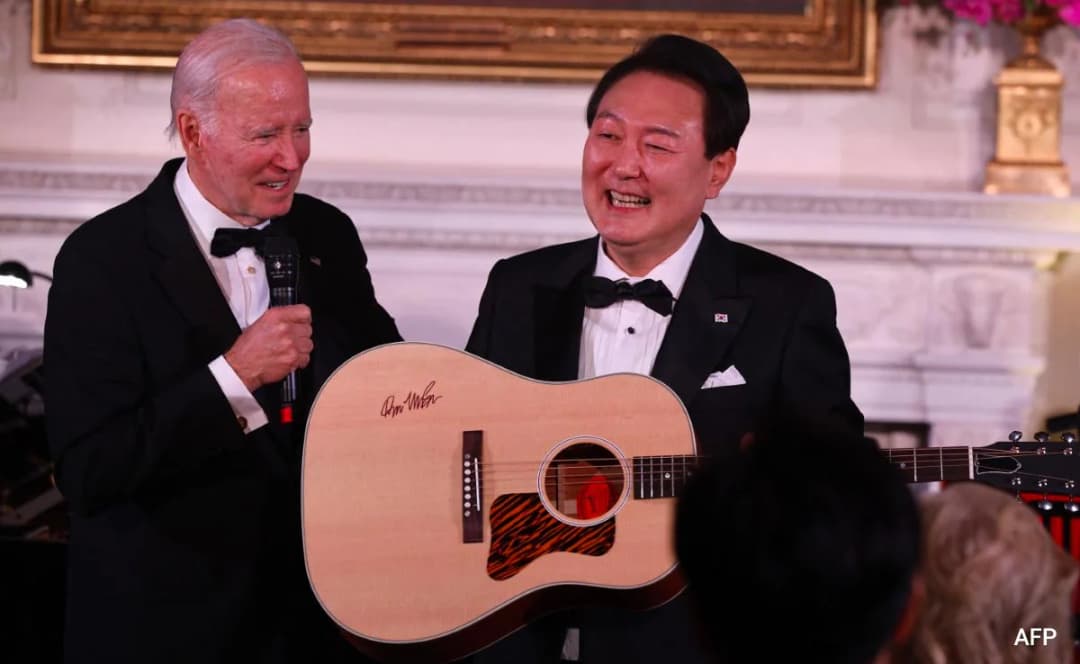
The US-South Korea summit has resulted in mixed assessments from Korean newspapers, with conservative and progressive press taking opposing stances. The joint announcement of the 'Washington Declaration' and the agreement on expanding deterrence measures against North Korea led conservative newspapers to view the summit as a positive step in reinforcing the "ironclad alliance." However, progressive newspapers criticized the lack of tangible outcomes and expressed concerns over heightening tensions and a new Cold War in the region.
During a joint press conference at the White House on April 26, President Joe Biden stated that a nuclear attack from North Korea would mean the end of the regime. For the first time, a president directly mentioned the potential for regime collapse, and numerous newspapers, including Kukmin Daily, Seoul Newspaper, Segye Times, and Korea Times, quoted Biden's remarks in their headlines.
Experts pointed out that the summit did not produce any concrete economic outcomes. The inflation Reduction Act (IRA) and the Cheap and Science Act, which have troubled South Korean companies, did not receive any specific resolution. However, most morning newspapers focused more on South Korean President Yoon Suk Yeol's performance of "American Pie" rather than addressing these concerns.
The morning newspapers of April 28 covered various aspects of the summit's outcomes. The most notable was the nuclear cooperation, which Kim Tae-hyo, the first deputy director of the National Security Office, described as "practically nuclear sharing." The newly established Nuclear Consultative Group (NCG) will hold quarterly meetings and can provide the US nuclear umbrella through the NCG. The agreement also expands the deployment of strategic assets, such as strategic nuclear submarines (SSBN), allowing for more significant US involvement in extended deterrence.
Conservative newspapers positively evaluated the expansion of nuclear cooperation. Chosun Ilbo compared NATO and the NCG, noting that while over 150 tactical nuclear weapons are deployed in NATO, South Korea has none. However, the newspaper acknowledged the symbolic significance of the agreement. Chosun Ilbo also quoted Shin Won-sik, a lawmaker from the People Power Party, who said the Washington Declaration could be considered as the "second US-South Korea Mutual Defense Treaty."
Progressive newspapers expressed skepticism and concerns about the NCG. Hankyoreh questioned its effectiveness in deterring North Korea's nuclear and missile capabilities. The newspaper cited experts who expressed doubts about the actual operation of the nuclear umbrella, given that the final decision-making power lies with the US. Andrew Yeo from the Brookings Institution also argued that the NCG might not be effective in stopping North Korea's relentless pursuit of advanced weaponry.
In its editorial, Hankyoreh emphasized the need for South Korea to strengthen security cooperation with the US but warned against exacerbating tensions with North Korea, China, and Russia, and putting the country at the forefront of conflict. Kyunghyang Shinmun regarded the NCG as a "flashy but empty diplomatic maneuver" and criticized the lack of commitment to denuclearization on the Korean Peninsula. The newspaper also raised concerns about South Korea's increasing dependence on the US.
Regarding the lack of economic outcomes, conservative newspapers also expressed disappointment. The Inflation Reduction Act (IRA) and the Cheap and Science Act, which have caused issues for Korean companies, were not addressed in any concrete manner during the summit. Korea Times criticized the US for not demonstrating a willingness to resolve these matters, while JoongAng Ilbo only mentioned the lack of progress in a small article on the fourth page.
Thus, the US-South Korea summit has garnered mixed reactions from the Korean press. While conservative newspapers focused on the potential strengthening of the alliance, progressive newspapers criticized the lack of tangible outcomes and the increased risk of regional tensions. The divergent perspectives demonstrate the complexity of the situation and the challenges that both countries face in achieving their goals.
As the US and South Korea continue to work on their alliance, it remains to be seen whether the agreements made during the summit will have a lasting and positive impact on regional stability, or whether the concerns raised by progressive newspapers will materialize in the form of a more volatile geopolitical landscape. It is vital for both nations to maintain open channels of communication and strive for a collaborative approach to address the issues facing the Korean Peninsula.
Overall, the US-South Korea summit has revealed the contrasting views of the Korean press and public, highlighting the necessity for a nuanced and balanced approach to regional security and economic cooperation. The coming months will be crucial for both countries as they navigate the complex political landscape, seeking to strengthen their alliance while minimizing potential negative consequences.
Continue this reporting
Reporting on the same issue
Related coverage selected from the article's desk, topics and newsroom relationships.
 NewsSep 26, 2026
South Korea’s 490 Regional Doctor Seats Begin a Longer Route to Care
South Korea’s first 490 regional-doctor seats tie medical-school admission to...
 NewsAug 30, 2026
The Hidden Economics of South Korea’s Public Transport
Busan’s latest transport review exposes a wider national problem: South Korea...
 NewsAug 11, 2026
Korea’s Innovation Cities Did Not Grow the Same Way
Nearly two decades after South Korea began relocating public institutions, th...
More from the author
More from this byline
Stay with the same line of reporting through more work from this byline.
 NewsOct 9, 2026
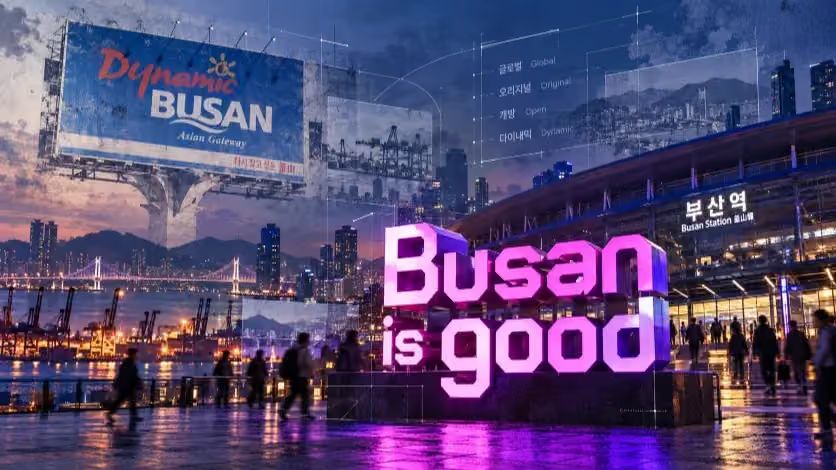
Why “Busan Is Good” Falls Short as a City Brand
 NewsSep 18, 2026
The Other AI Race Is for the Freedom to Change Course
Reader Signal
Community readWhat did this report leave you with?
Choose the signal that best reflects your reading. Select it again to remove it.
One response per article
No response selected
A moderated conversation about the reporting.
One-level replies and newsroom moderation keep the conversation anchored to this article.
Discussion Status
Open
Please sign in to join the discussion.
Newsletter
Weekly reporting and context from Busan and Korea.