South Korea's Growing Employment Crisis: Record Youth Unemployment and Overwork Issues
South Korea is currently facing two alarming trends among its younger population: a record-high number of young adults not seeking work and a highly debated proposal to increase the workweek cap. Nearly half a million young adults aged 15-29 report being "off" work and not actively seeking employment, marking the highest number in the history of this statistic. Meanwhile, the government's recent proposal to increase the workweek cap from 52 to 69 hours has sparked strong opposition from Millenni

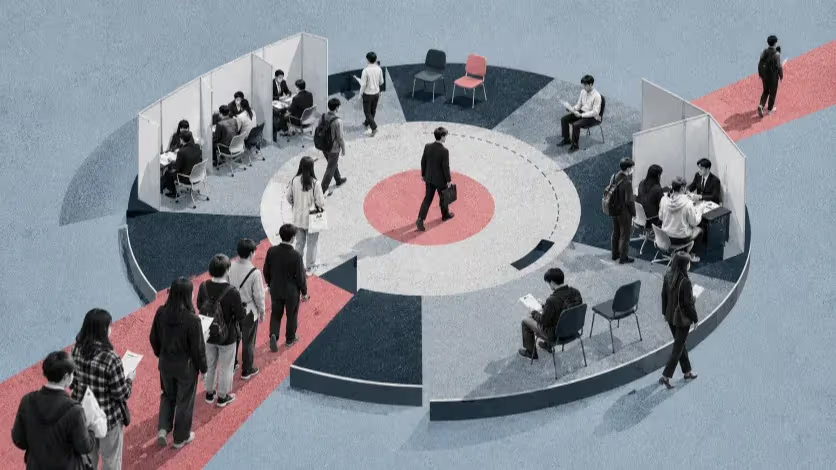
South Korea is currently facing two alarming trends among its younger population: a record-high number of young adults not seeking work and a highly debated proposal to increase the workweek cap. Nearly half a million young adults aged 15-29 report being "off" work and not actively seeking employment, marking the highest number in the history of this statistic. Meanwhile, the government's recent proposal to increase the workweek cap from 52 to 69 hours has sparked strong opposition from Millennials, Generation Z workers, and labor unions.
According to Statistics Korea's National Statistics Portal (KOSIS), there were 497,000 young people in the non-economically active population (those who are neither employed nor unemployed) who reported their activity status as "rested" in February. This figure has steadily increased from 386,000 in February 2019. Youth employment also decreased by 125,000 compared to the previous year, marking the largest drop in two years. The youth employment rate declined to 45.5%, the first decrease in two years.
The South Korean government has since decided to rethink the plan to increase the workweek cap in response to the opposition. South Korea already ranks fourth in the world for the longest work hours, according to the OECD, with an average of 1,915 hours worked in 2021. This is significantly higher than the OECD average of 1,716 hours and the American average of 1,767 hours. Cases of "gwarosa," or death by overwork, continue to make headlines and raise concerns about the well-being of the workforce.
In 2018, South Korea had lowered the workweek limit from 68 to the current 52 hours due to popular demand. Critics argue that further tightening the work hours could exacerbate the country's demographic problems, as demanding work culture and rising disillusionment among younger generations are often cited as driving factors in South Korea's declining fertility rate and aging population.
These concerning employment trends pose challenges for the younger generations in South Korea. The government and society must address the dual issues of high unemployment among young adults and the potential exacerbation of overwork to ensure a sustainable and inclusive workforce for the future. Strategies to tackle these issues could include promoting work-life balance, supporting youth skill development, and creating more opportunities for young adults to enter the job market.
Continue this reporting
Reporting on the same issue
Related coverage selected from the article's desk, topics and newsroom relationships.
 NewsSep 24, 2026
Taiwan’s AI Boom Is Surging, but Wealth Follows a Different Map
Taiwan’s semiconductor boom is lifting output and incomes at extraordinary sp...
 NewsSep 10, 2026
Busan Records 1.3 Percent Unemployment as Male and Female Employment Diverge
Busan’s 1.3 percent unemployment rate reflects real job growth, but not a bro...
 NewsSep 4, 2026
Korea Moves Deeper Into the Global Market for Long-Term Capital
Japanese yields are rising, Korean bonds are entering the WGBI and American p...
More from the author
More from this byline
Stay with the same line of reporting through more work from this byline.
 NewsOct 9, 2026
Why “Busan Is Good” Falls Short as a City Brand
 NewsSep 18, 2026
The Other AI Race Is for the Freedom to Change Course
Reader Signal
Community readWhat did this report leave you with?
Choose the signal that best reflects your reading. Select it again to remove it.
One response per article
No response selected
A moderated conversation about the reporting.
One-level replies and newsroom moderation keep the conversation anchored to this article.
Discussion Status
Open
Please sign in to join the discussion.
Newsletter
Weekly reporting and context from Busan and Korea.