Economic Turmoil Deepens: Rising Foreclosures and Political Unrest Shake Markets
South Korea is navigating a perfect storm of economic and political instability as a surge in property foreclosures coincides with rising financial market volatility. November 2024 saw a record-breaking 4,865 foreclosure filings, the highest in over three years, while political unrest has driven the won-dollar exchange rate to its highest level in 15 years. With households and investors alike grappling with the fallout, the country faces mounting pressure to stabilize its economy. The number of

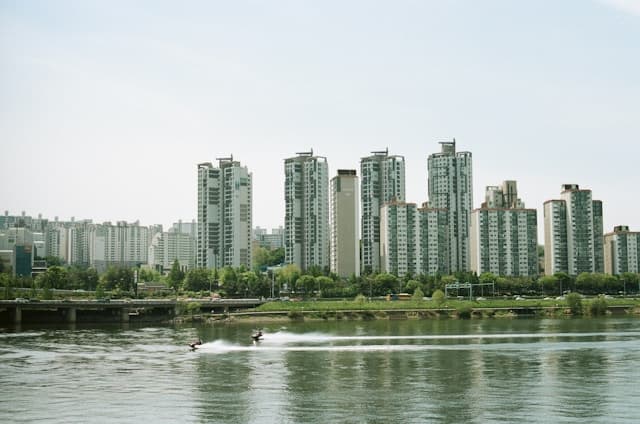
South Korea is navigating a perfect storm of economic and political instability as a surge in property foreclosures coincides with rising financial market volatility. November 2024 saw a record-breaking 4,865 foreclosure filings, the highest in over three years, while political unrest has driven the won-dollar exchange rate to its highest level in 15 years. With households and investors alike grappling with the fallout, the country faces mounting pressure to stabilize its economy.
The number of properties entering foreclosure auctions in November 2024 reached its highest level since June 2021. Among these, collective buildings—including apartments, office buildings, and multi-unit housing—saw a staggering 63% year-over-year increase. Gyeonggi Province led the nation with 524 filings, followed by Seoul with 219 and Busan with 209.
This spike can be traced back to prolonged high-interest rates, which have made loan repayments unsustainable for many households. Regulatory measures, such as stricter total debt service ratio (DSR) rules, have compounded the difficulties by limiting refinancing options. At the same time, property values in non-prime areas have stagnated, making it harder for indebted homeowners to sell assets and repay loans.
In Seoul, districts like Gangseo, Gwanak, and Nowon have recorded disproportionately high foreclosure rates. These areas, which saw property prices rise rapidly during the real estate boom, have struggled to recover in the current down market.
Adding to the economic challenges is a wave of political uncertainty. The impeachment of President Yoon Suk-yeol and subsequent declaration of martial law in December disrupted financial markets, driving investors to seek safer assets overseas. Though martial law was quickly lifted, the political instability left a lasting mark on market confidence.
The won-dollar exchange rate surged to 1,446 KRW/USD—the highest level in 15 years—before stabilizing around 1,415 KRW after government intervention. The stock market also felt the impact, with the KOSPI index dropping by 2% as foreign investors withdrew capital amid fears of prolonged instability.
The rise in foreclosures risks creating a feedback loop in the housing market: increased auction inventory could depress property prices further, eroding household wealth. Meanwhile, the surge in the won-dollar exchange rate raises import costs, adding inflationary pressure to an already strained economy.
Indebted homeowners are bearing the brunt of the crisis. Many who borrowed heavily during the housing boom—popularly known as "youngkkuljok" (households leveraging debt)—now face insurmountable repayment burdens. This financial distress is fueling public discontent, as families struggle to keep their homes.
The government has pledged to monitor markets closely, with the Bank of Korea signaling readiness to intervene further in the foreign exchange market. Discussions are also underway to implement relief programs for struggling homeowners, though details remain sparse.
South Korea faces a challenging road ahead as it contends with the dual pressures of a foreclosure surge and political uncertainty. With financial markets still reeling from recent events, the government is under mounting pressure to restore stability and reassure investors. The coming months will be critical in determining whether the nation can weather these interconnected crises and emerge with its economic and social fabric intact.
Continue this reporting
Reporting on the same issue
Related coverage selected from the article's desk, topics and newsroom relationships.
 NewsSep 24, 2026
Taiwan’s AI Boom Is Surging, but Wealth Follows a Different Map
Taiwan’s semiconductor boom is lifting output and incomes at extraordinary sp...
 NewsSep 10, 2026
Busan Records 1.3 Percent Unemployment as Male and Female Employment Diverge
Busan’s 1.3 percent unemployment rate reflects real job growth, but not a bro...
 NewsSep 4, 2026
Korea Moves Deeper Into the Global Market for Long-Term Capital
Japanese yields are rising, Korean bonds are entering the WGBI and American p...
More from the author
More from this byline
Stay with the same line of reporting through more work from this byline.
 NewsOct 9, 2026
Why “Busan Is Good” Falls Short as a City Brand
 NewsSep 18, 2026
The Other AI Race Is for the Freedom to Change Course
Reader Signal
Community readWhat did this report leave you with?
Choose the signal that best reflects your reading. Select it again to remove it.
One response per article
No response selected
A moderated conversation about the reporting.
One-level replies and newsroom moderation keep the conversation anchored to this article.
Discussion Status
Open
Please sign in to join the discussion.
Newsletter
Weekly reporting and context from Busan and Korea.