Why Busan’s ‘Local Creator’ Strategy May Be Doomed to Fail
Busan's college town revival plan, relying on "local creators" and subsidies, risks repeating past mistakes.


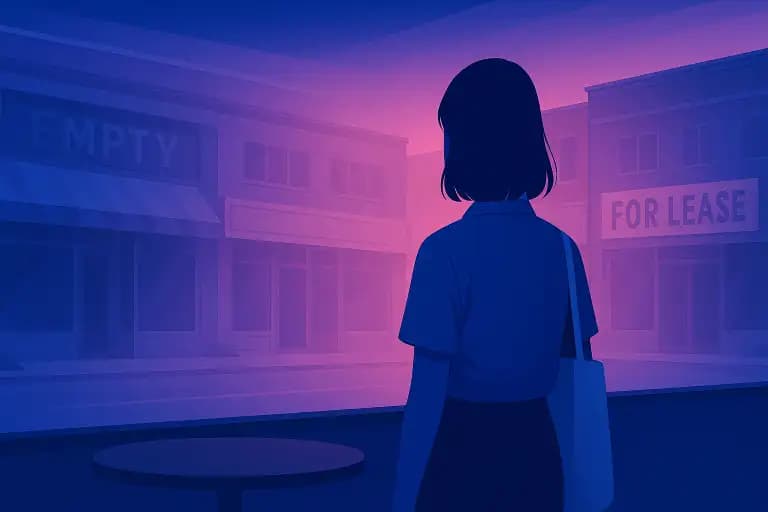
Buan, South Korea — Once celebrated as a symbol of youth culture in Busan, the streets surrounding Pusan National University (PNU) no longer echo with the same vitality they once did. Cafés that once overflowed with students now stand quiet, some shuttered entirely. Clothing shops that used to draw crowds are either boarded up or bear fading “for lease” signs. Once a nexus of social life for students, locals, and visitors alike, the area has begun to mirror a deeper pattern taking shape across urban Korea: the slow, visible erosion of traditional college-town economies.
In response to this decline, national and municipal governments have announced an ambitious plan to revive the area’s commercial ecosystem. Backed by ₩8 billion in combined funding from city and state, the project centers on revitalizing the district through the “local creator” model — a concept rooted in the belief that young entrepreneurs, artists, and culture-makers can breathe new life into fading neighborhoods by setting up shops, cafés, and creative businesses. It’s a hopeful vision, and one that comes dressed in the language of innovation and community-building.
But behind the optimism lies a growing skepticism, voiced quietly by urban researchers, local merchants, and even some of the very youth the policy seeks to empower. Critics argue that this model may not only be mismatched to the economic realities of the district but could in fact repeat the very patterns of failure seen in similar initiatives elsewhere in the country. They raise questions not about the intentions of the program, but about its design — and whether it mistakes creative rebranding for structural regeneration.
At the heart of the matter is a tension between policy and place, between the idea of revitalization and the stubborn realities of urban transformation. As the Pusan National University(PNU) district becomes a testing ground for this renewed push toward “local creation,” a deeper question looms:
Who truly benefits from this kind of revival — and who, in the end, bears the risk when it fails?
Local Creators as Urban Saviors?
The notion of revitalizing declining neighborhoods by empowering young entrepreneurs is not new. In recent years, South Korea has increasingly turned to this model under the banner of "local creators," a term that encapsulates a wide range of youthful changemakers — from baristas and ceramicists to app developers and brand designers — all imagined as the vanguard of a new, community-centered economy. In a country where both rural and urban areas are facing demographic and commercial contraction, these individuals have come to symbolize more than small business hope; they have been cast as agents of cultural renewal.
The policy framework behind the “local creator” initiative emerged from government efforts to address regional population decline. Its early applications focused on rural towns emptied by urban migration, where a single creative business could become a beacon of change. In these settings, a bakery, a gallery, or a local workshop could attract attention not because of its scale, but because of its novelty and community relevance. Encouraged by these experiments, the central government expanded the model into urban contexts — including university towns like Busan’s.
Under the latest funding scheme, the district around PNU has been selected as one of two national flagship projects in the Ministry of SMEs and Startups’ regional vitality program. The project promises ₩2 billion in state funds over two years, layered atop ₩6 billion in city-led urban activation budgets. The money will be used to subsidize rental costs, finance pop-up spaces, fund youth-led pilot projects, and, perhaps most importantly, change the atmosphere of a once-thriving area now marked by commercial emptiness.
On paper, the model is appealing. It gestures toward decentralization, youth empowerment, and cultural revitalization — all wrapped in the language of creative autonomy and local identity. But the enthusiasm surrounding the project often overlooks one crucial fact: the environments these programs are being dropped into are not empty shells waiting to be animated. They are complex, living systems — with landlords, long-term residents, failing infrastructure, and deeply rooted economic inertia.
Injecting young entrepreneurs into these spaces without tackling the underlying issues risks turning bold policies into mere cosmetic changes. In the case of the PNU commercial area, it remains uncertain whether this approach will be a genuine solution or just another failed attempt.
Copy-Paste Policy in a Collapsing Ecosystem
The appeal of replicating success is understandable. In a policy landscape driven by limited timeframes, public accountability, and the pressure to show visible outcomes, it is often easier to borrow what has worked — or seemed to work — elsewhere. In South Korea, the “local creator” initiative emerged as one such transferable solution. It was first framed as a rural revitalization strategy, one that found traction in towns where even a single, creative storefront could draw attention, generate foot traffic, and inspire media stories of rebirth. These narratives resonated strongly with a national desire to stem population decline and cultural stagnation in the countryside.
But what began as a promising experiment soon hardened into formula. As the model traveled from depopulated villages to declining city blocks, its underlying assumptions remained largely intact. It imagined that creativity, when placed into physical space, would radiate regeneration — that injecting youth, design, and pop-up vitality into an aging street would reverse years of structural decay.
In cities like Busan, this optimism collided with a more entrenched economic reality. Commercial districts here are not suffering from abandonment in the same way rural towns are. They are overwhelmed instead by oversupply — of storefronts, of brands, of competition — and undercut by the invisible force of online consumption that has redrawn the geography of urban retail.
In the Pusan National University area, the symptoms are not unfamiliar. Students, the primary demographic once anchoring the local economy, still attend classes but rarely linger. Many live in dormitories or commute from farther afield, and those who stay are more likely to order coffee by app than visit the café next door.
Retail spaces remain vacant not because there are no entrepreneurs, but because those entrepreneurs cannot compete with the low-margin, high-volume logic of digital platforms or afford rising rents tied to speculative real estate ownership. The fabric of the area is not frayed simply from neglect — it is held hostage by larger economic forces that cannot be stitched back together with decoration or goodwill.
By applying a rural-rooted concept like the local creator model to a deeply saturated, structurally unstable urban environment, policymakers risk confusing surface change with transformation.
What may appear like progress — a new pop-up store, a cultural event, a mural commissioned to brighten a side street — may in fact be a policy performance, designed more for reports and ribbon-cuttings than for long-term recovery. The local creator becomes, in this setting, not a builder of ecosystems but a tenant of last resort — an expendable figure asked to revive a place they did not shape and cannot afford to remain in.
What is left behind, after the grants expire and the pop-ups close, is often not a more vibrant neighborhood, but a more disappointed one — a district that has tasted the promise of change but was denied the infrastructure to sustain it.
Voices from the Ground
Walk through the streets surrounding PNU and the silence speaks first. The chatter that once spilled out of narrow eateries has been replaced by the faint flutter of real estate banners flapping in the wind. “For Lease” signs line entire blocks. In the early evening, when the streets should hum with life, the district often feels like a set from which the actors have quietly exited.
For merchants who have remained, the sense of waiting has turned into fatigue. One café owner, whose family has run a shop near the university’s main gate since the 1990s, recalls the days when students lined up before class and stayed late into the night. “It’s not that they’re gone,” he says, “it’s that they don’t come here anymore.” When asked about the government’s local creator project, he offers a polite smile. “They come, set up something trendy, and a few months later the space is empty again.”
For young entrepreneurs who have participated in previous urban regeneration programs, the experience has often felt transactional. One former “local creator” who opened a small clothing store through a similar initiative in another city describes the trajectory plainly. “You get rent support for a year. They take photos, hold an opening ceremony, maybe even a video for the city’s YouTube channel. But when the subsidy ends, so does the store — unless you’re independently wealthy, which most of us are not.” In her words, “it felt like we were part of someone else’s success story, not our own.”
Even among policy experts and urban planners, disillusionment is growing. A professor of urban studies at a national university describes the current model as a form of creative displacement. “Instead of supporting rooted communities, these programs import temporary actors into unstable markets. The creators are not the problem — it’s the structure they’re placed in. We’re asking people to innovate in environments built to extract value from them.”
What emerges from these conversations is not cynicism, but a quiet insistence on realism. There is a deep desire for change, for streets that once again feel lived in and alive. But there is also a recognition that policies built around visibility — short-term activation, aesthetic rebranding, curated youth entrepreneurship — do little to alter the deeper forces hollowing out urban districts like this one. If anything, they risk using the energy and optimism of young people as a kind of human wallpaper — a decorative flourish masking structural neglect.
Why This Model Fails in Urban Settings
What the local creator model overlooks — and what the streets around PNU make so visibly clear — is that urban decline is rarely just a matter of underuse. It is not the absence of life or creativity that hollows out neighborhoods, but the presence of forces that push it away.
At the center of the crisis is real estate — not just as property, but as a speculative system. In districts like this, commercial rents are often disconnected from actual sales or community need. Instead, they reflect inflated expectations built over years of asset speculation, franchise expansion, and proximity to institutions like universities, which once guaranteed foot traffic. Even as storefronts sit empty, landlords resist lowering rents. They wait. Not for tenants, but for subsidies — for the next program, the next round of government support that will temporarily insulate them from adjusting to market realities.
This system creates a trap for aspiring entrepreneurs. The very act of stepping into these vacant spaces becomes a calculated risk. Even with government support, most young business owners face steep operating costs and minimal security. When the rent subsidies end, they are left to absorb the full weight of a model designed to extract value from their labor, brand, and energy. In such a context, failure is not the result of poor execution, but of entering a game rigged to consume novelty without ever sustaining it.
Meanwhile, consumption itself has changed. The students who once anchored the district no longer behave like a captive market. Their social and economic lives extend across the city and online, where convenience, price, and cultural currency align far more fluidly than in the fixed geography of a university commercial strip. The cafes, bookstores, and boutiques that once flourished here now compete not with each other, but with platform apps and digital experiences. Against this backdrop, revitalization that centers on foot traffic and physical visibility feels increasingly misaligned with how this generation moves through the world.
Compounding the problem is the fragmented governance surrounding these initiatives. Local governments, central agencies, and private property owners often operate in silos, each with their own timelines, incentives, and political optics. The result is a landscape of short-term pilot projects — each launched with fanfare, few followed through with stewardship. Without coordination, without long-term oversight, the infrastructure of revitalization becomes just as brittle as the buildings it seeks to fill.
What is often misunderstood is that successful regeneration is not about creativity alone — it is about systems. It is about ensuring that the environment into which young people are invited has the capacity to support them, to protect their investment, and to reward their contribution. Without that scaffolding, the very policies intended to revive a neighborhood may instead become instruments of exploitation — hollowing out not only the place, but the hopes of those asked to reanimate it.
What Could Work Instead?
Reviving a commercial district like the one near PNU is not an act of invention, but one of reconstruction. It requires rebuilding not only physical spaces but the relationships and infrastructures that make those spaces function. The mistake of recent revitalization efforts has been to treat decline as a branding problem — something that can be solved through decoration, cultural programming, or the temporary occupation of empty storefronts. But if a place is broken structurally, it cannot be repaired cosmetically.
What is needed instead is a shift from temporary occupation to long-term stewardship. Rather than subsidizing rents for pop-up businesses, the city and state could invest in acquiring or managing key properties directly. A publicly owned commercial portfolio — even on a small scale — could provide a buffer against market volatility and speculative pressure. Spaces could be leased affordably and predictably to cooperatives, community-run enterprises, or early-stage entrepreneurs, not because these models guarantee profit, but because they guarantee presence.
Equally important is the structure of support itself. Rather than simply lowering barriers to entry, a meaningful revitalization strategy would offer pathways to stay — to grow, adapt, and belong. This might include tiered leasing systems that evolve alongside a business’s revenue, shared services for accounting and logistics, or legal assistance for negotiating longer leases. Support for creative workers should not end at the lease agreement; it should begin there.
But spaces and subsidies alone are not enough. If a neighborhood is to survive — and not simply perform vitality for the duration of a policy cycle — it must become a place people choose to remain in. That means investing in the connective tissue: safe pedestrian infrastructure, public space, late-night transit, child-friendly amenities, and access to basic services. It means making the neighborhood useful to the people who live and study there, not just marketable to the people who write about it.
Perhaps most radically, the work of regeneration must center those already embedded in the area — the long-time shopkeepers, the older residents, the student cooperatives, the part-time workers who know the rhythms of the street. If there is to be a “local creator” model, it must be local in more than name. It must reflect an ethic of co-creation rather than importation. That is a slower, less glamorous process, but it is the only one that offers a chance at permanence.
There is no shortage of creativity in Busan. What has been in shorter supply is the infrastructure to hold it, the governance to guide it, and the patience to let it take root. Rebuilding the life of a place is not about launching another program — it’s about staying long enough to outlast one.
A Crisis of Imagination, Not Just Policy
It is tempting, in the face of visible urban decline, to reach for the fastest answer that looks like progress. A mural painted on a shuttered storefront. A weekend market. A ribbon-cutting ceremony for a new “local creator” shop. These gestures promise transformation without demanding too much time. They photograph well. They offer optimism. But they do not last.
The problem facing places like the PNU district is not a lack of ideas, nor a lack of willing participants. It is a deeper absence — not of policy, but of imagination. What is missing is the willingness to envision a system in which small businesses are not just guests but stakeholders, where creativity is not extracted and discarded, and where revitalization is not a performance but a commitment.
This crisis is not unique to Busan. Across South Korea, and indeed across much of the world, cities are struggling to repopulate the shells of commercial districts built for different times. Policymakers reach for models that have already been tried elsewhere, hoping they will bend to new realities. But in the process, they often reproduce the very conditions that emptied these places out to begin with.
The lesson, if there is one, may lie not in innovation, but in refusal — the refusal to accept aesthetics in place of equity, activation in place of access, short-term presence in place of long-term belonging. To truly regenerate a place requires more than attracting people to it. It requires building conditions in which they can stay.
The future of Busan’s college town will not be determined by how many new shops open this year. It will be written in who is still here five years from now, who has made a life in the in-between. If we want streets to come alive again, we must begin by asking what they were built for — and who they now serve.
Continue this reporting
Reporting on the same issue
Related coverage selected from the article's desk, topics and newsroom relationships.
 NewsSep 20, 2026
What It Takes for U.S. Navy Repair Work to Become a Busan Industry
HJ Shipbuilding has brought U.S. Navy maintenance work to Yeongdo. Whether it...
 NewsSep 17, 2026
Busan’s Finished Homes, Unfinished Projects
Busan’s unsold homes sit in one monthly total, but they belong to very differ...
 NewsSep 16, 2026
Busan’s Young-Adult Migration Turns Sharply at 25–29
Busan can still draw young adults into the city, but keeping them becomes far...
More from the author
More from this byline
Stay with the same line of reporting through more work from this byline.
 NewsSep 18, 2026
The Other AI Race Is for the Freedom to Change Course
 NewsSep 5, 2026
How a Political Appointment Becomes a Judgment of Character
Editorial Record
Corrections, sourcing notes and newsroom disclosures remain part of the published record. View Newsroom Notes →
Reader Signal
Community readWhat did this report leave you with?
Choose the signal that best reflects your reading. Select it again to remove it.
One response per article
No response selected
A moderated conversation about the reporting.
One-level replies and newsroom moderation keep the conversation anchored to this article.
Discussion Status
Open
Please sign in to join the discussion.
Newsletter
Weekly reporting and context from Busan and Korea.