What Busan’s BRT Expansion Means for the City
Busan, South Korea - Busan Metropolitan City, a dynamic port city known for its stunning coastlines and bustling urban centers, is taking bold strides toward a more sustainable and connected future. At the heart of this transformation lies the expansion of its Bus Rapid Transit (BRT) system—a visionary project that promises to revolutionize the way residents and visitors navigate the city. Far more than just a transportation upgrade, the BRT expansion symbolizes a shift in priorities: fewer car

Busan, South Korea - Busan Metropolitan City, a dynamic port city known for its stunning coastlines and bustling urban centers, is taking bold strides toward a more sustainable and connected future. At the heart of this transformation lies the expansion of its Bus Rapid Transit (BRT) system—a visionary project that promises to revolutionize the way residents and visitors navigate the city.
Far more than just a transportation upgrade, the BRT expansion symbolizes a shift in priorities: fewer cars on the road, safer spaces for pedestrians, and a cleaner, greener environment for all. With new routes set to link neighborhoods and regions like never before, Busan is not just moving forward—it’s paving the way for a smarter, more sustainable urban lifestyle.
The question is no longer if BRT can transform the city, but how far its impact will reach. From reducing traffic congestion to revitalizing local economies, this ambitious initiative is poised to become a game-changer in Busan’s evolution.
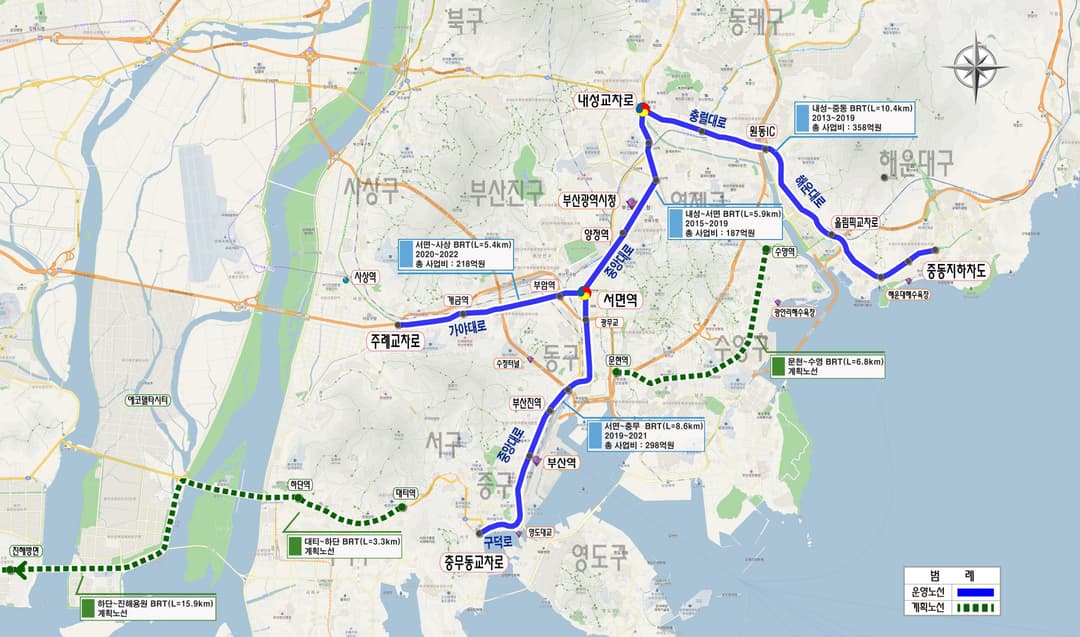
Since its initial rollout in 2016, Busan’s BRT network has proven its worth. Spanning 30.3 kilometers and linking key areas such as Seomyeon and Haeundae, the system has significantly improved urban mobility.
The dedicated lanes allow buses to bypass regular traffic, ensuring punctuality and speed. Surveys indicate that over 60% of Busan residents are satisfied with the BRT, with many calling for its expansion. This positive feedback is backed by measurable improvements: bus speeds have increased by 6%, and ridership on BRT-enabled routes has surged, reducing reliance on private vehicles.
Planned Expansions: Bridging Communities and Building a Connected Future
Busan’s ambitious plans for the expansion of its Bus Rapid Transit (BRT) system are set to bridge vital districts, reduce congestion, and create a citywide public transportation network that seamlessly connects neighborhoods, commercial hubs, and even neighboring cities. The outlined projects reflect not just a vision for better mobility but a commitment to sustainable growth and regional connectivity.
Munhyeon to Suyeong (6.8 km): Unlocking Key Urban Corridors
The Munhyeon to Suyeong BRT extension is poised to become a lifeline for two of Busan's busiest districts. Munhyeon, a hub of administrative and business activity, and Suyeong, a high-density residential and cultural area, are currently plagued by traffic bottlenecks during peak hours.
By dedicating exclusive lanes to the BRT system, this route will provide a faster, more reliable alternative for commuters traveling between these vibrant centers. Urban planners anticipate that the extension will significantly reduce travel times, particularly for daily office workers and students, while encouraging car users to shift toward public transportation.
Daeti to Hadan (3.3 km): A Strategic Step for Western Busan
The Daeti to Hadan segment, while shorter in distance, plays a critical role in improving mobility for western Busan, an area often overlooked in earlier transportation initiatives. This extension is designed to better serve residential neighborhoods and small business districts, where traffic congestion and limited transit options have long been a concern.
The route will directly benefit the growing population in this part of the city, offering a faster and more dependable commuting option. By integrating with existing transit systems, including subway stations and local bus routes, the Daeti-Hadan BRT will provide smoother transfers for thousands of daily passengers.
Beyond mobility, this expansion is expected to breathe new life into local economies. Improved accessibility can attract investment, encourage small business growth, and enhance the overall quality of life for residents in western Busan.
Hadan to Jinhae (15.9 km): A Gateway to Regional Connectivity
The Hadan to Jinhae route represents a bold step toward regional integration, linking Busan with the neighboring city of Changwon's Jinhae district. Spanning nearly 16 kilometers, this cross-regional extension is particularly significant as it lays the groundwork for addressing future transit demands brought by the development of Gadeokdo New Airport.
With the airport expected to become a major transportation hub for both domestic and international travelers, the Hadan-Jinhae BRT line will serve as a vital connector. It will provide an efficient public transit option for workers, tourists, and residents traveling between Busan and the greater Gyeongnam region.
How BRT is Transforming Busan
The expansion of Busan’s Bus Rapid Transit (BRT) system marks a significant turning point in the city’s approach to transportation, sustainability, and urban design. More than simply adding new bus routes, the BRT represents a transformative shift—one that prioritizes efficient mobility, environmental responsibility, and the revitalization of local communities.
Traffic congestion has long been one of Busan’s most pressing challenges. During peak hours, gridlock dominates major corridors, increasing commute times and reducing productivity. The BRT system addresses this issue head-on by introducing dedicated bus lanes that allow buses to bypass congestion and operate on schedule, regardless of surrounding traffic conditions. By improving reliability and speed, the BRT provides a competitive alternative to private vehicles. This shift encourages more commuters to use public transit, ultimately easing the strain on the city’s roads and fostering a more efficient, balanced transportation ecosystem.
Busan’s investment in BRT is also a commitment to environmental sustainability. Recognizing the urgency of reducing carbon emissions, the city is positioning public transit as a key tool in achieving its green goals. Fewer cars on the road mean cleaner air, lower greenhouse gas emissions, and a healthier urban environment. Adding to this commitment, Busan is actively modernizing its BRT fleet with low-emission buses and has plans to adopt electric and hybrid vehicles in the near future. This alignment with global trends in sustainable transportation places Busan at the forefront of eco-friendly urban development.
However, the BRT expansion extends beyond transportation—it is fundamentally reshaping Busan’s urban landscape for the better. Roadway redesigns accompanying the BRT construction are prioritizing pedestrian safety and accessibility. Wider sidewalks, improved crosswalks, and traffic signal upgrades are making streets safer and more accommodating for walkers. These improvements are encouraging residents to embrace healthier, more active lifestyles, while fostering stronger community connections in areas where walking becomes a practical and enjoyable option. By reducing the dominance of vehicles and creating people-centered spaces, Busan is moving closer to its goal of becoming a truly walkable city where pedestrians and public transit coexist seamlessly.
The economic impact of the BRT expansion cannot be overstated. Transit hubs often become magnets for foot traffic, creating opportunities for local businesses to thrive. Cafés, shops, and service providers located near BRT stations stand to benefit from the influx of commuters and pedestrians. In neighborhoods that have long been underserved or overlooked, improved accessibility and connectivity can attract new investments, revitalize commercial zones, and boost property values. With a reliable and accessible transportation system in place, residents will find it easier to commute to work, attend school, or access essential services, leading to a ripple effect of economic growth that strengthens the city as a whole.
Ultimately, Busan’s BRT expansion is not just about improving mobility—it is a catalyst for urban regeneration. By addressing traffic congestion, promoting a cleaner environment, enhancing pedestrian experiences, and revitalizing local economies, the BRT is breathing new life into the city’s infrastructure and communities. This ambitious project demonstrates what modern urban planning can achieve: a sustainable, connected, and thriving Busan for generations to come.
Addressing the Roadblocks to Progress
While Busan’s BRT expansion promises transformative benefits, the road to success is not without its challenges. From managing disruptions to gaining public trust, the project requires careful planning, clear communication, and innovative solutions to overcome potential hurdles.
One of the key concerns raised by critics centers around the reallocation of road space for BRT lanes. In a city already grappling with traffic congestion, reducing lanes for private vehicles has sparked worries about worsening gridlock, particularly in densely populated areas. To mitigate these fears, Busan is exploring dynamic traffic management systems that optimize traffic signals to improve vehicle flow and minimize delays. Additionally, smart monitoring technologies are being considered to analyze real-time congestion and adjust lane usage accordingly, ensuring smoother operations.
However, the success of these strategies hinges on meticulous planning and coordination, particularly during peak hours when the demand for road space is at its highest. Without effective implementation, traffic disruptions could undermine public confidence in the project before its long-term benefits are fully realized.
Busan’s western districts, such as the Daeti-Hadan corridor, will face particular challenges during the construction phase. Road work, lane closures, and detours are likely to create temporary traffic congestion and inconvenience for residents and commuters. Recognizing these short-term disruptions, the city is implementing measures to minimize discomfort, including phased construction schedules, proactive communication of detour plans, and encouragement of alternative transportation options like carpooling or subway use. While temporary, these inconveniences require patience and cooperation from the public to ensure the project's eventual success.
Gaining public support remains one of the project’s most critical tasks. Large-scale infrastructure changes often face skepticism, particularly from car users concerned about increased congestion or inconvenience. To address these concerns, Busan is prioritizing transparent communication and citizen engagement. By holding public forums, providing regular updates, and clearly outlining the long-term benefits—such as reduced travel times, improved air quality, and safer pedestrian infrastructure—city officials aim to build trust and foster understanding.
Ultimately, the BRT expansion represents a vision for a more connected, sustainable Busan. While challenges are inevitable, the city’s proactive approach to traffic management, construction planning, and community engagement sets a strong foundation for overcoming these obstacles. With careful execution, the temporary difficulties will give way to a cleaner, faster, and more efficient transportation network that benefits all residents.
Continue this reporting
Reporting on the same issue
Related coverage selected from the article's desk, topics and newsroom relationships.
 NewsOct 6, 2026
Busan’s Water System Is Entering a Harder Era of Renewal
Busan spent decades building a water system that can absorb major failures. N...
 NewsSep 28, 2026
Why Some Commercial Space in Busan Is Hard to Reuse
Two empty commercial spaces exposed to the same broader economy can have very...
 NewsSep 20, 2026
What It Takes for U.S. Navy Repair Work to Become a Busan Industry
HJ Shipbuilding has brought U.S. Navy maintenance work to Yeongdo. Whether it...
More from the author
More from this byline
Stay with the same line of reporting through more work from this byline.
 NewsSep 18, 2026
The Other AI Race Is for the Freedom to Change Course
 NewsSep 5, 2026
How a Political Appointment Becomes a Judgment of Character
Reader Signal
Community readWhat did this report leave you with?
Choose the signal that best reflects your reading. Select it again to remove it.
One response per article
No response selected
A moderated conversation about the reporting.
One-level replies and newsroom moderation keep the conversation anchored to this article.
Discussion Status
Open
Please sign in to join the discussion.
Newsletter
Weekly reporting and context from Busan and Korea.