The New M-Bus Route Between Busan and Geoje
Busan, South Korea - For years, the journey between Busan’s bustling cityscape and Geoje’s serene coastline has been one of patience and perseverance. Commuters, tourists, and workers navigating the winding routes and crowded highways have long sought a faster, more efficient connection between the two regions. Now, a new chapter is set to begin, as the Ministry of Land, Infrastructure, and Transport announces the introduction of a high-speed M-Bus service linking Busan and Geoje. This developme

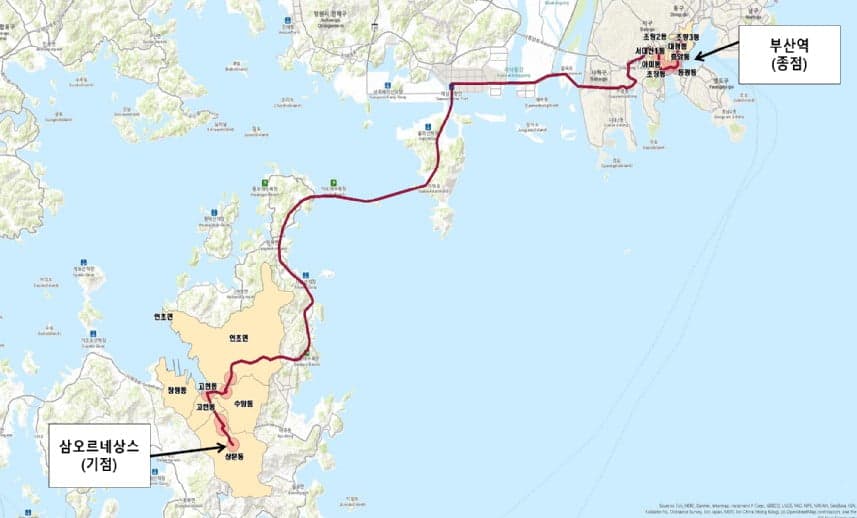
Busan, South Korea - For years, the journey between Busan’s bustling cityscape and Geoje’s serene coastline has been one of patience and perseverance. Commuters, tourists, and workers navigating the winding routes and crowded highways have long sought a faster, more efficient connection between the two regions. Now, a new chapter is set to begin, as the Ministry of Land, Infrastructure, and Transport announces the introduction of a high-speed M-Bus service linking Busan and Geoje. This development promises to transform daily travel and strengthen ties between these vibrant areas.
The M-Bus, known for its rapid and streamlined service, is a metropolitan express bus designed to connect key urban hubs. Unlike conventional bus services, the M-Bus limits its stops to six within a 7.5-kilometer radius at both ends of its route, ensuring swift transit between major destinations. For the new Busan-Geoje route, the starting point will be Geoje’s Samo Renaissance Complex in Sangmundong, with the final stop at Busan Station, a gateway to the city’s heart.
The route will pass through key locations, including Geoje’s Gohyeon-dong, Suyang-dong, and Yeoncho-myeon, before making its way to stops near tourist attractions like Deokpo Beach and Jodo Beach. On the Busan side, the M-Bus will traverse areas such as Gadeokdo, Eulsukdo, and Saha-gu, culminating at Busan Station. This strategic layout caters to commuters, industrial workers, and leisure travelers alike, balancing utility with accessibility.
“This new M-Bus route is expected to significantly enhance daily commutes and open up new opportunities for economic and cultural exchange between Busan and Geoje,” said Chair of the National Urban Transport Committee. “It’s a step forward in providing faster, more efficient transportation for citizens.”
For the thousands of commuters who travel daily between Geoje and Busan, the M-Bus represents more than just a mode of transportation—it’s a lifeline. The improved connection will make it easier for workers in Geoje’s shipbuilding and industrial zones to access Busan’s urban resources and infrastructure. Meanwhile, residents of Busan can explore Geoje’s pristine beaches and tourist spots without the stress of long, complicated trips.
The launch of this new route also ties into a broader vision for regional development. With the construction of Gadeokdo New Airport underway, Busan is positioning itself as a major transportation and logistics hub. The M-Bus service strengthens this network, making travel between neighboring regions faster and more seamless. Experts view it as a cornerstone of efforts to balance development across urban and rural areas.
“The M-Bus fills a critical gap in public transportation,” says a local transportation analyst. “It’s not just about cutting commute times—it’s about fostering greater economic, social, and cultural integration between Busan and its surrounding regions.”
Residents have shown cautious optimism about the new service. “I’ve been commuting between Geoje and Busan for years, and the traffic can be challenging,” shared one frequent traveler. “The M-Bus seems like a promising improvement, and I’m hopeful it will make daily travel more manageable.”
The timeline for the project is clear: operators will be recruited and selected in the first half of 2025, followed by license issuance in the same timeframe. Services are expected to commence in the latter half of 2025. Details about fare structures, schedules, and frequency will be finalized in collaboration with the selected operators.
As the M-Bus prepares to hit the road, it carries with it the hopes of a region poised for greater connectivity and collaboration. For the commuters, workers, and tourists who will soon board this express bus, the journey ahead is not just about shorter travel times but about strengthening the ties between communities and creating new opportunities for growth.
The road between Busan and Geoje is about to get much shorter—and for many, the possibilities much larger.
Continue this reporting
Reporting on the same issue
Related coverage selected from the article's desk, topics and newsroom relationships.
 NewsOct 16, 2026
What Is Still Worth Going to See?
Busan’s biennale faces questions of artistic judgment and institutional care....
 NewsOct 14, 2026
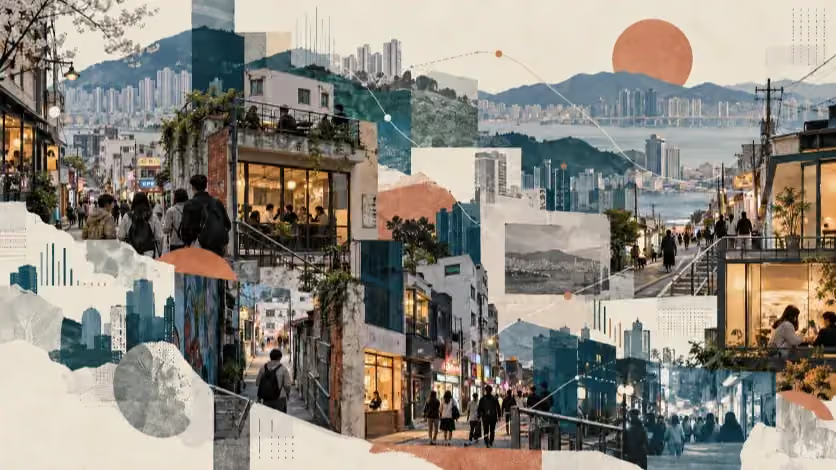
What Became of Busan’s University Streets?
From 2015 to 2023, registered businesses grew near Pusan National University...
 NewsOct 12, 2026
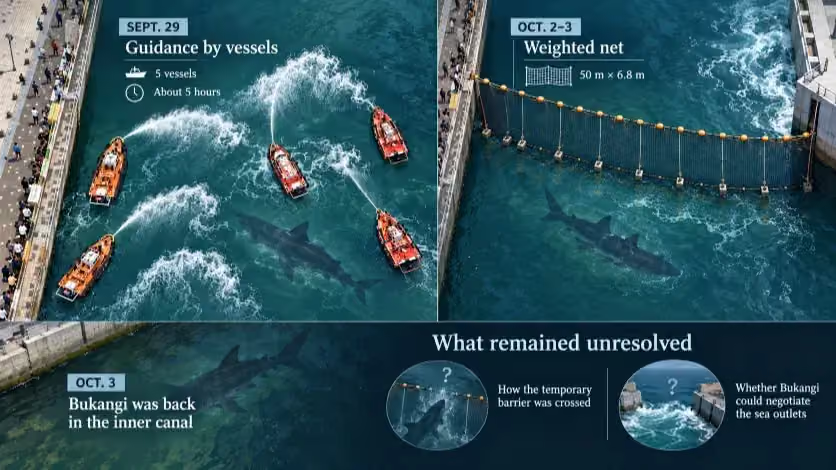
Bukangi, the Shark That Stayed in Busan’s North Port
A rescue net guided Bukangi toward the sea, but the dusky shark returned to B...
More from the author
More from this byline
Stay with the same line of reporting through more work from this byline.
 NewsOct 9, 2026
Why “Busan Is Good” Falls Short as a City Brand
 NewsSep 18, 2026
The Other AI Race Is for the Freedom to Change Course
Reader Signal
Community readWhat did this report leave you with?
Choose the signal that best reflects your reading. Select it again to remove it.
One response per article
No response selected
A moderated conversation about the reporting.
One-level replies and newsroom moderation keep the conversation anchored to this article.
Discussion Status
Open
Please sign in to join the discussion.
Newsletter
Weekly reporting and context from Busan and Korea.