Busan’s 22-Day Classical Music Festival Kicks Off Across the City
Busan opens the 16th Busan Maru International Music Festival, running Sept. 2–23 with concerts across new and historic venues under the theme “Soul in Classics.”

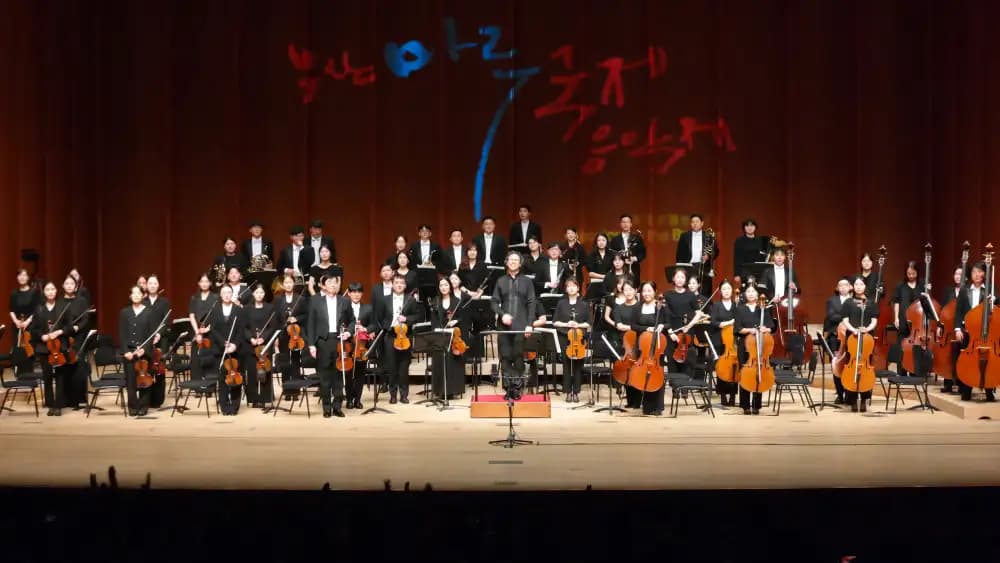
Busan, South Korea — The 16th Busan Maru International Music Festival opened Tuesday night with a concert at the Busan Cultural Center Grand Theater, beginning a 22-day classical music program running through September 23. Conductor Gustavo Rivero Weber led the BMIMF Festival Orchestra, with Russian pianist Alexander Yakovlev as soloist.
Founded in 2010, the festival has grown steadily into one of Korea’s major classical music events. This year’s edition coincides with the opening of the Busan Concert Hall in June and the trial operation of the Nakdong Arts Center, giving the city new venues built for international-standard acoustics and stage technology.
Under the theme “Soul in Classics,” performances will take place at the Busan Concert Hall, Nakdong Arts Center, Haeundae Cultural Center, Eulsukdo Cultural Center, Dongnae Cultural Center, and Yeongdo Cultural Center. Promenade concerts and outreach events will bring music to public spaces, schools, and hospitals.
International artists include Italian violinist Davide Alogna, Korean-American pianist Ben Kim from the Liszt University of Music in Weimar, flutist Luisa Sello from Italy, and Chinese conductor Yin Jiongjie with the Xiamen Philharmonic Orchestra. Local groups such as the Busan Philharmonic Orchestra and the BMIMF Festival Chamber Orchestra will also perform.
The Concerto Competition Gala Concert on Wednesday will feature young soloists selected through July preliminaries, performing with the Millennium Symphony Orchestra under conductor Choi Young-sun. Other programs include a Korea-China-Japan Friendly Concert, the Science Meets Music project, and the Dream Project for youth orchestras.
City officials say the Busan Concert Hall, seating over 2,000, is the city’s largest cultural investment to date. The Nakdong Arts Center, expected to open fully next year, will add another mid-sized venue for concerts and touring productions.
“The Busan Maru International Music Festival reaches its 16th edition at a moment when the city has new stages to offer and a stronger ambition to connect with the world,” said a director from Busan’s Department of Culture.
Organizers confirm concerts will continue through September 23, with updates and ticket information available at bmimf.co.kr. Programs may change depending on schedules for overseas artists and orchestras.
Audience numbers for past editions ranged between 20,000 and 30,000. Officials expect this year’s new venues and expanded programming to draw larger crowds and contribute to Busan’s push to become a cultural destination alongside events like the Busan International Film Festival in October.
For local musicians, the festival offers rare chances to share programs with international peers. For the city, it is a showcase of cultural infrastructure and ambition. The final concerts later this month will close a program that began 15 years ago with a single performance and has grown into one of Korea’s leading classical music platforms.
Continue this reporting
Reporting on the same issue
Related coverage selected from the article's desk, topics and newsroom relationships.
 NewsSep 20, 2026
What It Takes for U.S. Navy Repair Work to Become a Busan Industry
HJ Shipbuilding has brought U.S. Navy maintenance work to Yeongdo. Whether it...
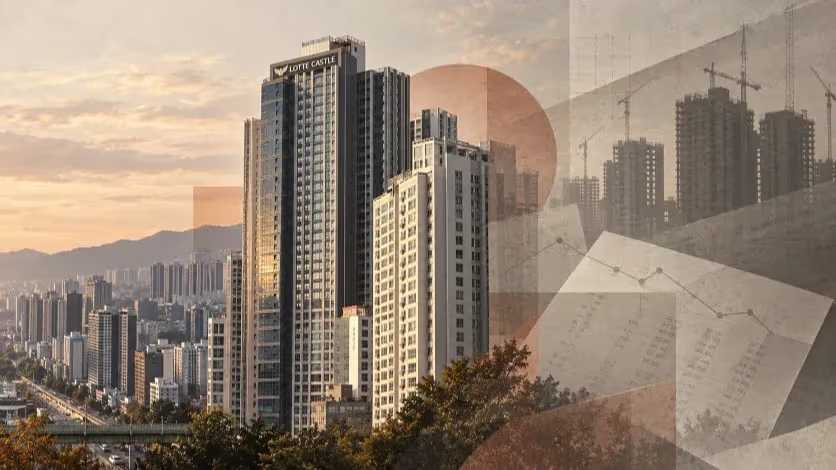 NewsSep 17, 2026
Busan’s Finished Homes, Unfinished Projects
Busan’s unsold homes sit in one monthly total, but they belong to very differ...
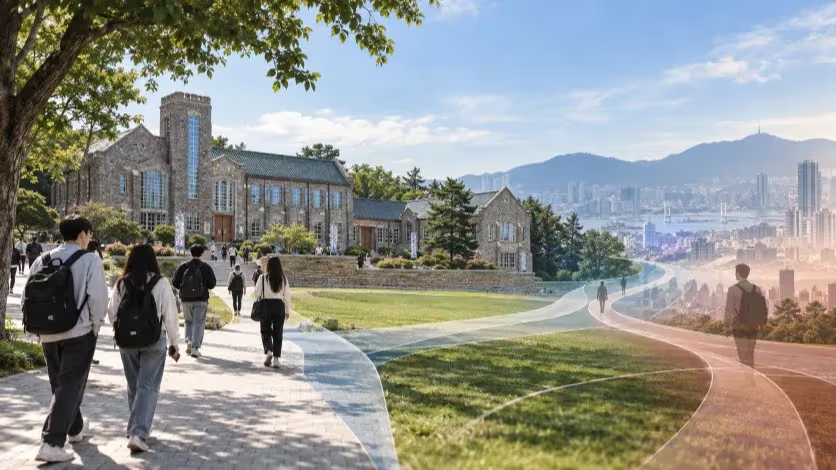 NewsSep 16, 2026
Busan’s Young-Adult Migration Turns Sharply at 25–29
Busan can still draw young adults into the city, but keeping them becomes far...
More from the author
More from this byline
Stay with the same line of reporting through more work from this byline.
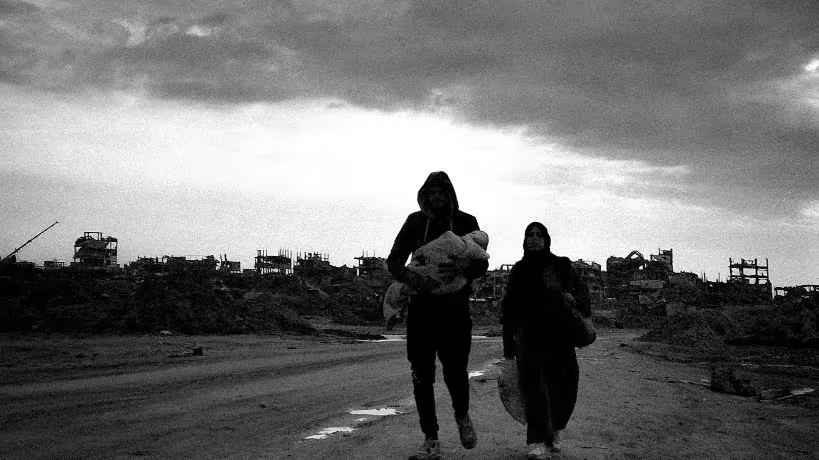 NewsApr 23, 2026
Gaza photo exhibition opens at Busan’s Arise Art Space
 NewsNov 10, 2025
Busan Fireworks Festival Marks 20 Years With Expanded Show
Editorial Record
Corrections, sourcing notes and newsroom disclosures remain part of the published record. View Newsroom Notes →
Reader Signal
Community readWhat did this report leave you with?
Choose the signal that best reflects your reading. Select it again to remove it.
One response per article
No response selected
A moderated conversation about the reporting.
One-level replies and newsroom moderation keep the conversation anchored to this article.
Discussion Status
Open
Please sign in to join the discussion.
Newsletter
Weekly reporting and context from Busan and Korea.