Second Daeti Tunnel Project in Busan Gets Green Light
Busan, South Korea – The City of Busan is advancing its urban infrastructure goals with the recent approval of the “Second Daeti Tunnel” project, a significant initiative to address persistent traffic congestion and bolster connectivity within South Korea’s second-largest metropolis. Approved through the Ministry of Economy and Finance’s preliminary feasibility study, this project is set to play a critical role in Busan’s ambitions to become a “Global Hub City” by enhancing regional access and s

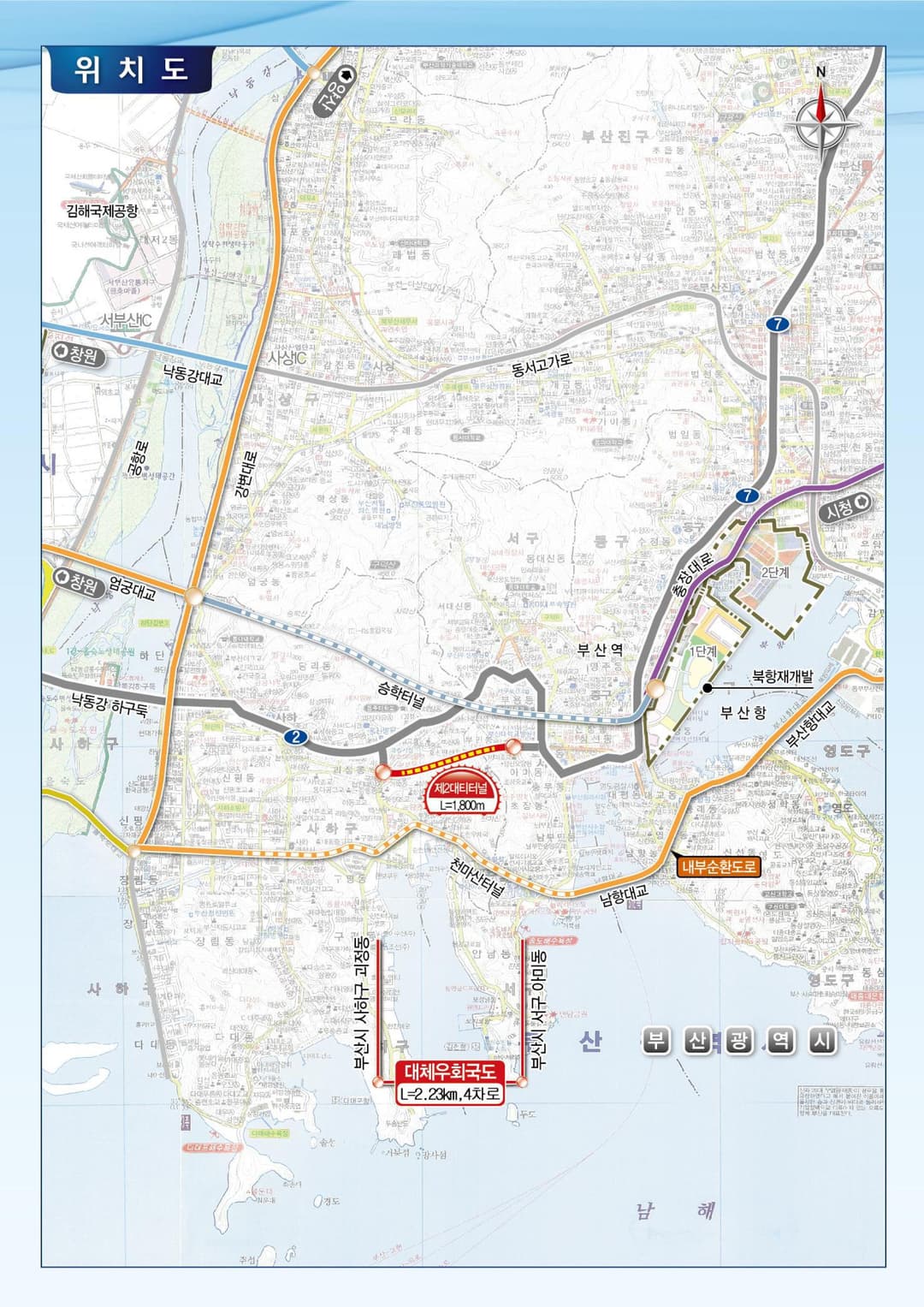
Busan, South Korea – The City of Busan is advancing its urban infrastructure goals with the recent approval of the “Second Daeti Tunnel” project, a significant initiative to address persistent traffic congestion and bolster connectivity within South Korea’s second-largest metropolis. Approved through the Ministry of Economy and Finance’s preliminary feasibility study, this project is set to play a critical role in Busan’s ambitions to become a “Global Hub City” by enhancing regional access and supporting balanced development.
For years, heavy congestion has affected key routes in Busan, particularly Nakdong-daero and the original Daeti Tunnel, which was built in 1971 to connect Seo-gu with Saha-gu (West Busan). Increased commuter and commercial traffic has placed a significant burden on these corridors, prompting the need for a dedicated bypass to streamline travel and improve mobility across the city. Designated in 2021 under the Ministry of Land, Infrastructure, and Transport’s 4th Metropolitan Area Traffic Congestion Road Improvement Plan, the Second Daeti Tunnel has undergone an extensive evaluation process, culminating in 2022 with a feasibility study and final approval.
The project, projected to cost around 209.3 billion KRW (approximately $175 million USD), will extend a new four-lane tunnel from Goejeong-dong in Saha-gu to Ami-dong in Seo-gu. Spanning 2.23 kilometers, the tunnel is designed to ease travel times and reduce congestion in heavily trafficked areas, with construction anticipated to commence in 2027 after the completion of detailed designs by 2025. Completion is slated for 2033.
The project’s funding model represents a collaborative effort between Busan and the national government, with each contributing half of the construction expenses. This investment highlights the importance of infrastructure modernization as a shared goal, supported by both local and national authorities, in anticipation of broad urban and economic benefits.
In addition to traffic relief, the Second Daeti Tunnel is expected to catalyze development in Busan’s eastern and western regions. By establishing a critical transit link between Seo-gu and Saha-gu—two areas with high growth potential already undergoing redevelopment—the tunnel is set to enhance access and encourage economic activity in underserved neighborhoods. This project aligns with the city’s wider urban renewal initiatives, aiming to attract new investment and fuel sustainable development across Busan.
Now advancing into the design phase, the Second Daeti Tunnel project reflects Busan’s commitment to addressing urban growth challenges through carefully phased implementation. City officials have pledged to prioritize transparency and environmental oversight at each step, ensuring that the project not only achieves its traffic mitigation goals but also enhances quality of life for local communities. Residents and stakeholders are being encouraged to participate in feedback sessions to address potential construction impacts and maximize community benefits.
The Second Daeti Tunnel signifies a pivotal development in Busan’s long-term growth strategy, supporting its broader vision of sustainable, balanced urban expansion. As the city continues to modernize its infrastructure, this project stands as an essential milestone in Busan’s journey toward becoming a regional hub of innovation, connectivity, and inclusive development.
Continue this reporting
Reporting on the same issue
Related coverage selected from the article's desk, topics and newsroom relationships.
 NewsOct 16, 2026
What Is Still Worth Going to See?
Busan’s biennale faces questions of artistic judgment and institutional care....
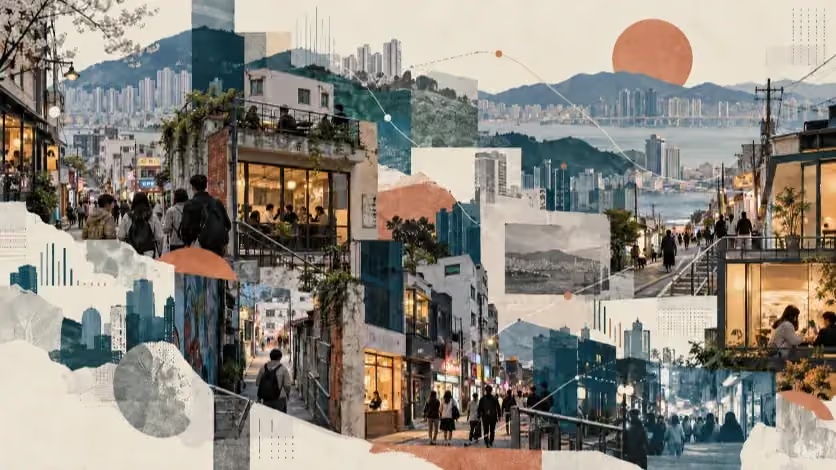 NewsOct 14, 2026
What Became of Busan’s University Streets?
From 2015 to 2023, registered businesses grew near Pusan National University...
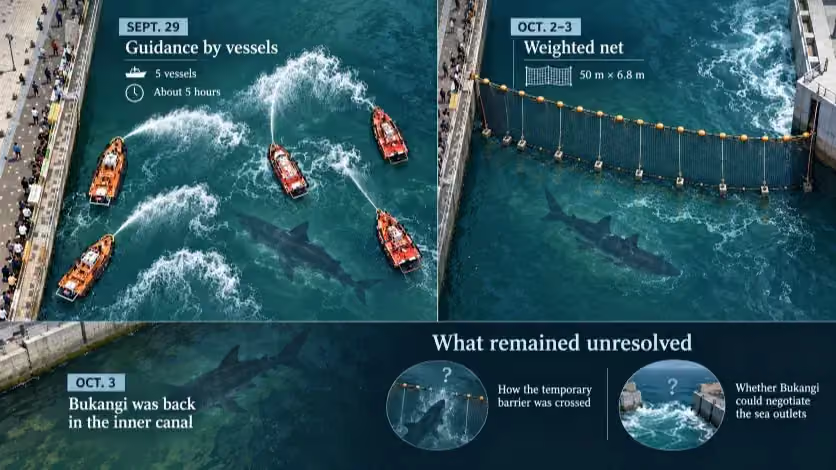 NewsOct 12, 2026
Bukangi, the Shark That Stayed in Busan’s North Port
A rescue net guided Bukangi toward the sea, but the dusky shark returned to B...
More from the author
More from this byline
Stay with the same line of reporting through more work from this byline.
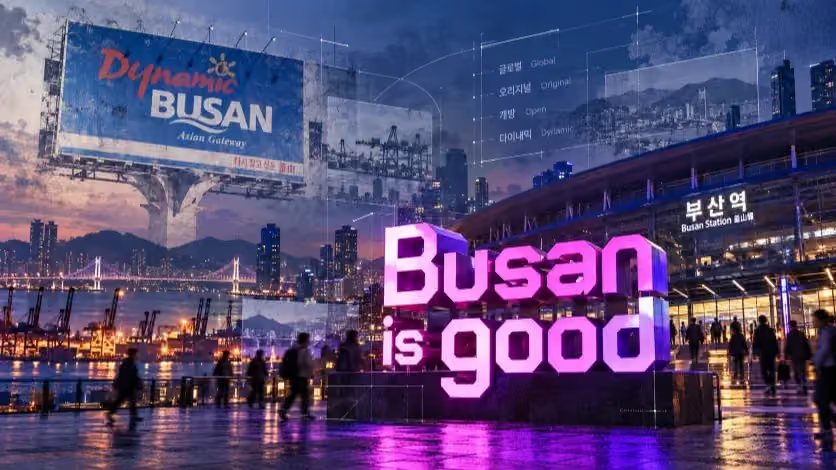 NewsOct 9, 2026
Why “Busan Is Good” Falls Short as a City Brand
 NewsSep 18, 2026
The Other AI Race Is for the Freedom to Change Course
Reader Signal
Community readWhat did this report leave you with?
Choose the signal that best reflects your reading. Select it again to remove it.
One response per article
No response selected
A moderated conversation about the reporting.
One-level replies and newsroom moderation keep the conversation anchored to this article.
Discussion Status
Open
Please sign in to join the discussion.
Newsletter
Weekly reporting and context from Busan and Korea.