Saha-gu's Financial Incentives to Boost Marriage and Combat Population Decline
Busan, South Korea - Saha-gu, located in the southwest of Busan, is known for its tourist attraction Gamcheon Culture Village and the industrial complex Sinpyeong-Jangnim. The district, which borders the Nakdonggang River, is part of Busan’s old downtown area, facing a rapid decline in its young population. Along with Jung-gu, Dong-gu, and Seo-gu, Saha-gu is categorized as an old downtown region with outdated living conditions. The once-bustling area around Dong-A University’s Hadan campus has d

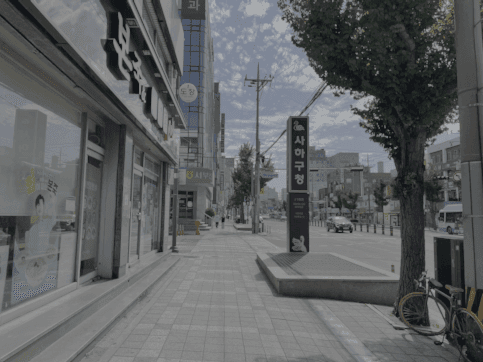
Busan, South Korea - Saha-gu, located in the southwest of Busan, is known for its tourist attraction Gamcheon Culture Village and the industrial complex Sinpyeong-Jangnim. The district, which borders the Nakdonggang River, is part of Busan’s old downtown area, facing a rapid decline in its young population. Along with Jung-gu, Dong-gu, and Seo-gu, Saha-gu is categorized as an old downtown region with outdated living conditions. The once-bustling area around Dong-A University’s Hadan campus has declined due to a decrease in the school-age population and the campus's dispersion. While Hadan Station remains a crucial transportation hub to Gangseo-gu, other areas are predominantly inhabited by the elderly.
In response to these demographic challenges, Saha-gu is launching an innovative program to encourage marriage among its residents by providing substantial financial incentives.
Saha-gu's program offers a range of financial benefits to support dating and marriage:
- Meeting Day Event: Scheduled for October, this event will allow unmarried men and women to meet. Initially focusing on local residents, the program plans to include foreign participants in the following year.
- Financial Support: Couples who are matched will receive 500,000 KRW each as a dating allowance. Upon marriage, they will receive a 20,000,000 KRW congratulatory fund. Additionally, couples can receive up to 30,000,000 KRW for a housing deposit or an 800,000 KRW monthly rent subsidy for up to five years.
South Korea is grappling with significant demographic challenges, including a low birth rate and an aging population. Saha-gu, with approximately 294,732 residents as of May 2024, has seen a steady population decline in recent years. These trends are part of broader national issues, where urban centers face stagnation despite ongoing urban expansion.
Saha-gu is home to a diverse community of foreign residents, with a significant presence of marriage migrants. As of 2023, the district had 1,721 marriage migrants, the highest among Busan's 16 districts. According to the Ministry of the Interior and Safety, Saha-gu's foreign resident population stood at 3,463 in 2023, making it the second highest in Busan after Gangseo-gu, which has 4,203 foreign residents. Leveraging this diversity, the district aims to counteract population decline by fostering a supportive environment for multicultural families.
However, the effectiveness of such matchmaking initiatives in boosting birth rates remains uncertain. Statistics from 2022 indicate that multicultural births in South Korea totaled 12,526, a 45% decrease from 22,908 in 2012. The average childbearing age for multicultural women has also increased to 32.4 years, reflecting a broader trend of declining birth rates in both multicultural and native Korean families.
Saha-gu's program is notable for its extensive financial support compared to similar initiatives in other regions:
- Seongnam's "Solomon's Choice": Focuses on matchmaking with limited financial support.
- Gwangyang's "Solo Ending": Another matchmaking event offering minimal incentives.
- Gimhae's "I am Gimhae Solo": Encourages singles to meet but lacks substantial financial backing.
Saha-gu’s approach, with its comprehensive financial support for marriage-related expenses, sets a precedent for how local governments can actively combat population decline.
Public opinion on the initiative is mixed. Some residents question the necessity and appropriateness of using public funds to support marriages, especially for foreigners. Concerns range from whether such significant financial resources should be allocated in this manner to broader anxieties about the severity of the population decline.
Officials, however, emphasize the program's potential to rejuvenate the community and support young couples, pointing to the urgent need for such measures. While there is optimism about the program’s benefits, many are adopting a wait-and-see approach to observe its outcomes.
Should the program prove successful, plans are in place to expand its scope. This includes extending eligibility to foreign residents, aligning with Saha-gu's diverse population of about 5,300 foreign nationals and many multicultural families. The basic local government (BLG) also intends to allocate additional funds for housing deposits, rent subsidies, and other marriage-related expenses in the next fiscal year, aiming to ensure the program's sustainability and effectiveness.
The introduction of such policies by local governments highlights the severity of the population decline in Busan. By offering substantial financial support, Saha-gu not only alleviates the financial burden of marriage but also aims to promote community stability and growth. This initiative serves as a stark reminder of the demographic challenges facing the region and showcases the potential impact of targeted financial incentives on population trends.
Continue this reporting
Reporting on the same issue
Related coverage selected from the article's desk, topics and newsroom relationships.
 NewsOct 16, 2026
What Is Still Worth Going to See?
Busan’s biennale faces questions of artistic judgment and institutional care....
 NewsOct 14, 2026
What Became of Busan’s University Streets?
From 2015 to 2023, registered businesses grew near Pusan National University...
 NewsOct 12, 2026
Bukangi, the Shark That Stayed in Busan’s North Port
A rescue net guided Bukangi toward the sea, but the dusky shark returned to B...
More from the author
More from this byline
Stay with the same line of reporting through more work from this byline.
 NewsOct 9, 2026
Why “Busan Is Good” Falls Short as a City Brand
 NewsSep 18, 2026
The Other AI Race Is for the Freedom to Change Course
Reader Signal
Community readWhat did this report leave you with?
Choose the signal that best reflects your reading. Select it again to remove it.
One response per article
No response selected
A moderated conversation about the reporting.
One-level replies and newsroom moderation keep the conversation anchored to this article.
Discussion Status
Open
Please sign in to join the discussion.
Newsletter
Weekly reporting and context from Busan and Korea.