Saha-gu, Busan: A Crucial Battleground in South Korea's 22nd National Assembly Elections
Busan, South Korea - As South Korea marches toward the pivotal 22nd National Assembly Elections in 2024, the Saha-gu district in Busan emerges as a critical battleground, charged with political fervor amid ongoing electoral redistricting. The reconfiguration proposal, particularly concerning Saha-gab (a) and Saha-eul (b), and the transfer of Sinpyeong 2-dong, has triggered an early start to election campaigns, with seasoned politicians and new faces alike vying for dominance. In Saha-gab (a), t

Busan, South Korea - As South Korea marches toward the pivotal 22nd National Assembly Elections in 2024, the Saha-gu district in Busan emerges as a critical battleground, charged with political fervor amid ongoing electoral redistricting. The reconfiguration proposal, particularly concerning Saha-gab (a) and Saha-eul (b), and the transfer of Sinpyeong 2-dong, has triggered an early start to election campaigns, with seasoned politicians and new faces alike vying for dominance.
In Saha-gab (a), the political scene is experiencing a significant transformation. Lee Seong-kweun, the former Vice Mayor for Economic Affairs and a veteran in the political arena, has joined the race under the People Power Party. His candidacy is poised to challenge established names like Kim Chuck-su and Choi Min-ho, making the district a critical test for party policies and candidate popularity.
Meanwhile, the Democratic Party, not to be outdone, is showing signs of an aggressive campaign strategy. Incumbent Choi In-ho, in a break from tradition, has expedited his candidacy registration, signaling a calculated effort to gain early momentum and establish a commanding presence in the race.
The political temperature in Saha-eul (b) is rising with the People Power Party's incumbent Cho Kyoung-tae facing stiff competition within his own party. The entry of Bae Jin-tak, Jeong Sang-mo, Jeong Ho-yoon, and former Saha District Mayor Cho Jung-hwa has set the stage for a highly competitive election.
Meanwhile, the Democratic Party in Saha-eul (b) is witnessing a shift in strategy. The inclusion of former Saha District Mayor Kim Tae-seok, former council member Kang Moon-bong, and high-profile recruit Lee Jae-seong from NCSoft, reflects a drive to inject fresh perspectives into the race. The party’s commitment to inclusive primaries suggests rigorous candidate selection, with potential last-minute alignments expected, given the strategic implications for the upcoming local elections.
As these political narratives unfold, the Saha District becomes a microcosm of South Korea's evolving political landscape. The redistricting process, while administrative in nature, is influencing campaign strategies and shaping the future of political representation in Busan. With the nation's attention focused on these changes, the Saha District's role in the upcoming National Assembly Elections is being closely watched. The outcomes here will not only determine local representation but also reflect broader political trends in South Korea, making it a key barometer in the country's vibrant and often unpredictable political climate
Continue this reporting
Reporting on the same issue
Related coverage selected from the article's desk, topics and newsroom relationships.
 NewsOct 16, 2026
What Is Still Worth Going to See?
Busan’s biennale faces questions of artistic judgment and institutional care....
 NewsOct 14, 2026
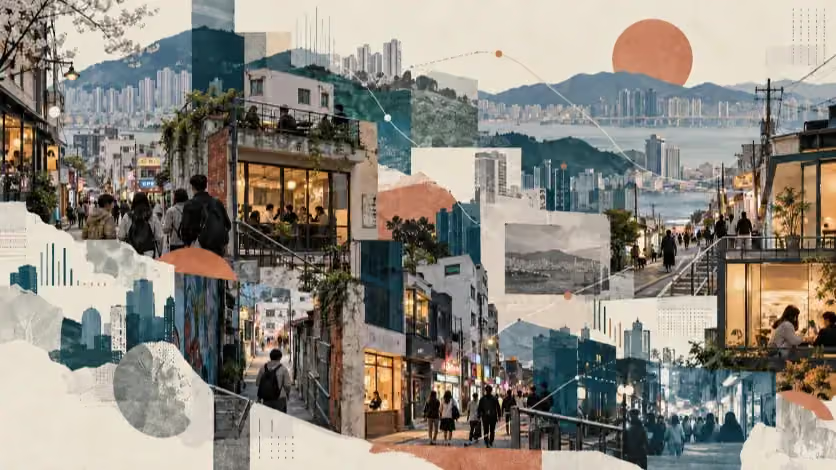
What Became of Busan’s University Streets?
From 2015 to 2023, registered businesses grew near Pusan National University...
 NewsOct 12, 2026
Bukangi, the Shark That Stayed in Busan’s North Port
A rescue net guided Bukangi toward the sea, but the dusky shark returned to B...
More from the author
More from this byline
Stay with the same line of reporting through more work from this byline.
 NewsOct 9, 2026
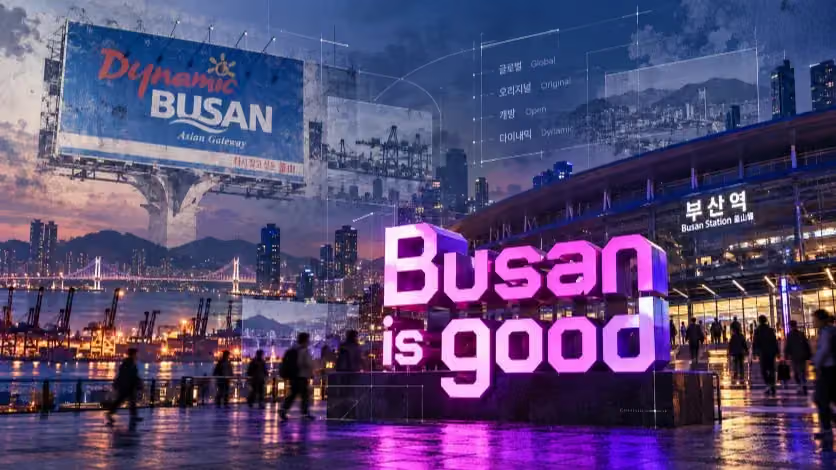
Why “Busan Is Good” Falls Short as a City Brand
 NewsSep 18, 2026
The Other AI Race Is for the Freedom to Change Course
Reader Signal
Community readWhat did this report leave you with?
Choose the signal that best reflects your reading. Select it again to remove it.
One response per article
No response selected
A moderated conversation about the reporting.
One-level replies and newsroom moderation keep the conversation anchored to this article.
Discussion Status
Open
Please sign in to join the discussion.
Newsletter
Weekly reporting and context from Busan and Korea.