Rising Costs, Loan Cuts Hit Busan Builders
Busan, South Korea - The construction industry in Busan is facing its most severe crisis in recent years as soaring costs, tighter lending policies, and a sluggish housing market place mounting pressure on developers. With construction costs surging by 29% over the past three years and financial institutions imposing stricter loan requirements, small and mid-sized construction firms are being pushed to the brink of insolvency. The wave of bankruptcies among local developers is raising concerns a

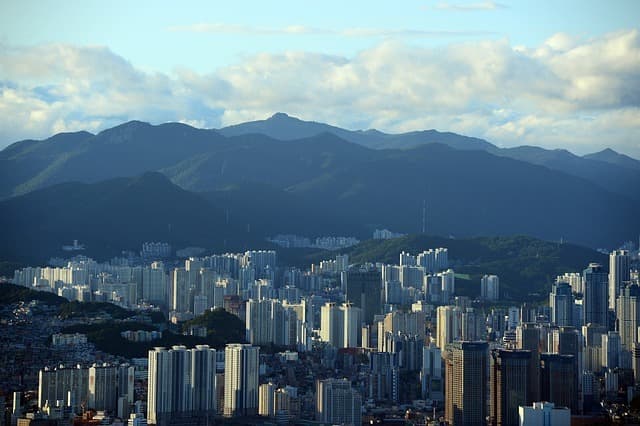
Busan, South Korea - The construction industry in Busan is facing its most severe crisis in recent years as soaring costs, tighter lending policies, and a sluggish housing market place mounting pressure on developers. With construction costs surging by 29% over the past three years and financial institutions imposing stricter loan requirements, small and mid-sized construction firms are being pushed to the brink of insolvency. The wave of bankruptcies among local developers is raising concerns about broader economic repercussions for the city.
At the heart of the crisis is a sharp contraction in financial accessibility. Major banks have responded to rising loan delinquency rates by implementing stricter lending policies for construction firms. Woori Bank, beginning January 31, has restricted new loans exceeding ₩1 billion to companies that meet higher credit standards. KB Kookmin Bank has set a ₩12.5 trillion cap on annual construction loan increases, monitoring at-risk firms more aggressively. Meanwhile, Hana Bank has classified the construction industry as "high-risk," reducing loan issuance, while NH Nonghyup Bank has opted to provide financing only to select high-credit projects.
This shift in lending policies comes as construction loan delinquencies rise. As of late 2024, the default rate on Project Finance (PF) loans—a key source of funding for real estate projects—has surged to 22% in Busan, the highest level among non-metropolitan regions. Total outstanding PF debt in the city now exceeds ₩9.8 trillion, signaling a growing financial strain that could further destabilize the market. Developers that once relied on easy access to credit are now grappling with severe liquidity constraints, forcing them to halt projects or, in some cases, file for bankruptcy.
The impact has been particularly harsh on mid-sized and regional construction firms, which lack the financial resilience of larger national developers. In November, Shintaeyang Construction, the seventh-largest builder in Busan, entered court receivership, marking one of the highest-profile collapses in the region. Shortly thereafter, Daejeo Construction, the second-largest developer in Gyeongnam, followed suit, filing for legal restructuring. Jeil Construction, a major player in Jeonbuk, ceased operations in December, succumbing to the burden of unsold inventory and financial strain.
The collapse of these firms is part of a broader trend. Since the beginning of 2025, 317 construction companies across South Korea have shut down, averaging 12 closures per day, according to the Ministry of Land, Infrastructure, and Transport. More than 61% of these closures occurred outside the capital region, with cities like Busan bearing the brunt of the downturn.
Beyond the financial distress among developers, the housing market itself is showing signs of deepening stagnation. As of December 2024, Busan recorded 1,892 unsold new housing units, a 10% increase from the previous quarter. With prospective buyers hesitant to enter the market, newly built apartments remain vacant, further squeezing developers already struggling to manage high construction costs.
This downturn is expected to have broader economic consequences, particularly for employment in the region. The construction industry remains a major source of jobs in Busan, employing approximately 100,000 workers, but continued financial distress among developers could lead to widespread job cuts. Public infrastructure investment is also projected to decline by 1.7%, further limiting opportunities in the sector. Analysts at the Korea Construction Industry Research Institute (KCIRI) forecast that overall construction investment in South Korea will shrink by 2.1% in 2025, bringing total industry spending down to ₩295 trillion.
The industry’s struggles are reflected in the Construction Business Survey Index (CBSI), which has dropped to its lowest level since the 2008 financial crisis. Analysts warn that without targeted government intervention, the downward trend is likely to continue. However, policymakers have yet to introduce substantial relief measures tailored to the construction industry, leaving developers to navigate the crisis on their own.
Industry experts suggest that survival in the current market will require aggressive cost-cutting, productivity improvements, and alternative financing strategies. Some firms are turning to smart construction technologies to enhance efficiency and reduce costs, while others are restructuring operations to weather the downturn. However, in the absence of easing financial conditions or a rebound in housing demand, many developers may continue to struggle.
As Busan grapples with the escalating crisis in its construction sector, the industry faces an uncertain future. If lending restrictions persist and housing demand remains subdued, further bankruptcies and project delays could follow, exacerbating economic challenges for the city. With financial markets tightening and developers under mounting pressure, Busan’s once-thriving construction sector stands at a critical crossroads.
Continue this reporting
Reporting on the same issue
Related coverage selected from the article's desk, topics and newsroom relationships.
 NewsOct 16, 2026
What Is Still Worth Going to See?
Busan’s biennale faces questions of artistic judgment and institutional care....
 NewsOct 14, 2026
What Became of Busan’s University Streets?
From 2015 to 2023, registered businesses grew near Pusan National University...
 NewsOct 12, 2026
Bukangi, the Shark That Stayed in Busan’s North Port
A rescue net guided Bukangi toward the sea, but the dusky shark returned to B...
More from the author
More from this byline
Stay with the same line of reporting through more work from this byline.
 NewsOct 9, 2026
Why “Busan Is Good” Falls Short as a City Brand
 NewsSep 18, 2026
The Other AI Race Is for the Freedom to Change Course
Reader Signal
Community readWhat did this report leave you with?
Choose the signal that best reflects your reading. Select it again to remove it.
One response per article
No response selected
A moderated conversation about the reporting.
One-level replies and newsroom moderation keep the conversation anchored to this article.
Discussion Status
Open
Please sign in to join the discussion.
Newsletter
Weekly reporting and context from Busan and Korea.