Relaxing Loan Regulations Won’t Save Busan’s Real Estate Market
Busan’s real estate crisis, marked by high unsold inventory and declining prices, is being met with short-term solutions like relaxed loan regulations, which fail to address deeper economic issues.


BUSAN, South Korea — Busan is facing a real estate crisis marked by rising unsold inventory and a continual decline in property prices. Once a symbol of economic prosperity, Busan’s real estate sector is now struggling with an overabundance of newly constructed apartments that remain unsold, leaving both developers and investors in significant financial distress. Despite these challenges, many policymakers and local media outlets continue to advocate for short-term solutions, such as relaxing loan regulations, to stimulate the property market. However, experts argue that these measures are insufficient because they fail to address the deeper, structural issues that are driving the crisis.
Rather than relying on property-focused policies—which often exacerbate economic inequality and fail to offer sustainable growth—Busan must pursue a strategy of comprehensive industrial revitalization and technological innovation to recover its economy and stabilize its real estate market.
In recent years, Busan’s economy has increasingly relied on low-wage service industries, with a notable lack of high-quality job opportunities. This shift has led to economic stagnation, which is reflected in the real estate market. According to the Busan Real Estate Association, as of March 2025, the number of unsold units in the city reached over 5,000, the highest level since the 2009 global financial crisis.
Despite new housing developments, property prices in Busan have continued to fall. In 2024, the average price of an apartment dropped by approximately 5% compared to the previous year. In stark contrast, Seoul’s real estate market, particularly in affluent districts like Gangnam, has seen property prices soar, further highlighting the growing economic polarization between the capital city and regions like Busan. This disparity has left Busan struggling with low purchasing power and weak demand for housing.
The decline of traditional industries such as shipbuilding and automobile manufacturing, compounded by high levels of unemployment, has led to a significant lack of economic vitality in Busan. Even with new housing projects, local residents simply do not have the financial capacity to purchase homes, exacerbating the unsold inventory crisis.
In response to the downturn in the real estate market, some policymakers have proposed that relaxing loan regulationscould be an effective solution to stimulate demand and reduce the inventory of unsold housing. The idea is that making credit more accessible would allow more people to buy homes, thereby stimulating the market and driving up property prices. However, this approach overlooks the structural problems at the heart of Busan’s real estate crisis, and many experts argue that this could make the situation worse in the long run.
Relaxing loan regulations could indeed lead to a temporary increase in property transactions, as more buyers would be able to secure financing. However, this would likely create an artificial price inflation, driven not by real demand, but by speculative investment. Investors with the financial capacity to make high-value purchases would flood the market, pushing prices even higher and making housing less affordable for local residents.
Moreover, this approach fails to address the underlying economic stagnation in Busan. The real challenge lies not in access to credit but in weak economic fundamentals—namely, job creation, industrial diversification, and technological innovation. As long as these issues remain unresolved, demand for housing will remain weak, regardless of how easily credit is made available.
Focusing on the real estate market as a primary tool for economic recovery is not only unsustainable but also economically inefficient. While property speculation may offer short-term liquidity, it does little to stimulate long-term economic growth. Relying on real estate to drive economic recovery distorts the allocation of resources, leading to misguided investments that do not contribute to a productive economy.
The proposed solutions to Busan’s real estate crisis, such as relaxing loan regulations and offering tax breaks for multiple homeowners, focus primarily on short-term demand stimulation. While these measures might provide temporary relief by increasing property transactions, they do little to address the underlying structural issues of the city’s economy. The true challenge lies in the decline of traditional industries, lack of industrial diversification, and low economic vitality.
Policies that solely focus on property speculation and supply-side interventions ignore the deeper economic stagnation that drives the real estate market downturn. Additionally, increasing public housing supply or providing incentives to developers fails to tackle the core issue: the need for a comprehensive economic transformation based on industrial innovation and technological development.
Without long-term structural reforms and a shift toward a more diverse, innovation-driven economy, these policies will merely delay the inevitable economic challenges, offering short-lived benefits without creating sustainable growth in Busan's real estate or economy.
One of the most significant contributors to the misguided policy focus on property solutions is the role of local media. Many regional newspapers and media outlets, in their coverage of Busan’s real estate crisis, continue to focus excessively on short-term fixes, such as relaxing loan regulations or increasing real estate supply, without questioning their long-term effectiveness. While these measures may seem like immediate solutions, they fail to address the root causes of the crisis—such as economic stagnation, lack of industrial diversification, and weak purchasing poweramong local residents.
Local media often fails to sufficiently highlight the structural economic issues at play, instead reporting on surface-level symptoms like unsold housing inventory or declining property prices. By prioritizing property-centered narratives, they contribute to the over-reliance on real estate as a policy solution, while critical areas such as job creation, technological innovation, and industrial reform remain underreported. In doing so, these media outlets play a pivotal role in narrowing the public’s view, reinforcing a political cycle that treats real estate speculation as the solution to economic recovery. This repetitive focus on housing issues during every election cycle limits the broader public discourse on economic restructuring and fails to engage with the deeper structural reforms required for long-term stability.
In this sense, the media's focus on short-term property market solutions is not just misleading but also counterproductive, as it diverts attention from more critical issues like industrial innovation and economic diversification. The responsibility of the media should be to encourage a comprehensive discussion of economic recovery strategies, instead of perpetuating a limited view that ignores economic diversification and long-term growth strategies.
While relaxing loan regulations and stimulating the property market may offer temporary relief, these measures do not address the core issues of economic stagnation and the lack of industrial diversification in Busan. Long-term economic recovery depends not on real estate speculation, but on structural reforms that focus on creating a diverse, innovation-driven economy. By prioritizing industrial diversification, job creation, and technological innovation, Busan can create a sustainable economic foundation that will benefit not only its real estate market, but its residentsas well.
The real estate market is an important part of the economy, but it should not be the central focus of recovery. Busan’s future lies in building a resilient economy that goes beyond property investment and focuses on creating real value in emerging industries. Only by shifting focus to industrial innovation can Busan achieve sustainable growth and secure a prosperous future for all its residents.
Continue this reporting
Reporting on the same issue
Related coverage selected from the article's desk, topics and newsroom relationships.
 NewsSep 20, 2026
What It Takes for U.S. Navy Repair Work to Become a Busan Industry
HJ Shipbuilding has brought U.S. Navy maintenance work to Yeongdo. Whether it...
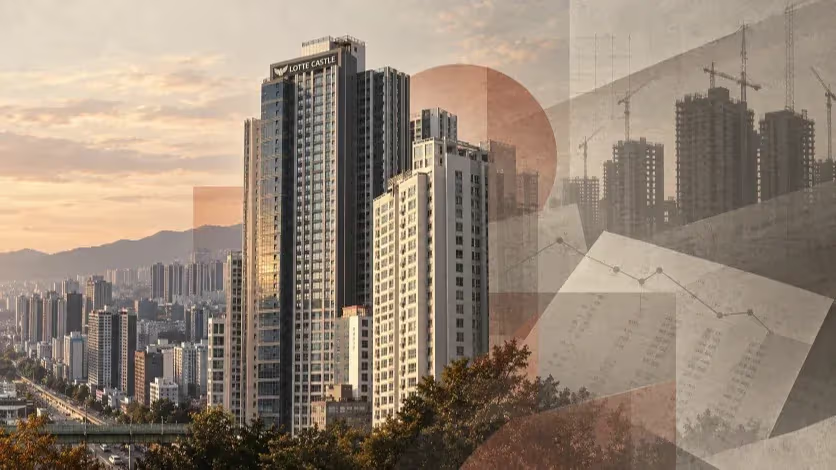 NewsSep 17, 2026
Busan’s Finished Homes, Unfinished Projects
Busan’s unsold homes sit in one monthly total, but they belong to very differ...
 NewsSep 16, 2026
Busan’s Young-Adult Migration Turns Sharply at 25–29
Busan can still draw young adults into the city, but keeping them becomes far...
More from the author
More from this byline
Stay with the same line of reporting through more work from this byline.
 NewsSep 18, 2026
The Other AI Race Is for the Freedom to Change Course
 NewsSep 5, 2026
How a Political Appointment Becomes a Judgment of Character
Editorial Record
Corrections, sourcing notes and newsroom disclosures remain part of the published record. View Newsroom Notes →
Reader Signal
Community readWhat did this report leave you with?
Choose the signal that best reflects your reading. Select it again to remove it.
One response per article
No response selected
A moderated conversation about the reporting.
One-level replies and newsroom moderation keep the conversation anchored to this article.
Discussion Status
Open
Please sign in to join the discussion.
Newsletter
Weekly reporting and context from Busan and Korea.