Challenges Facing Busan’s New Startup Institute
Challenges and Overlaps in Busan’s Startup Ecosystem: Is a New Institute the Solution? As Busan City accelerates its efforts to establish the provisionally named Busan Institute for Technology Startup & Investment, multiple questions arise about whether this new entity can solve the core issues hindering the city's startup ecosystem. Despite the intent to position Busan as a "Global Startup Hub," there are serious concerns about overlap with existing institutions, lack of collaboration, insuffi

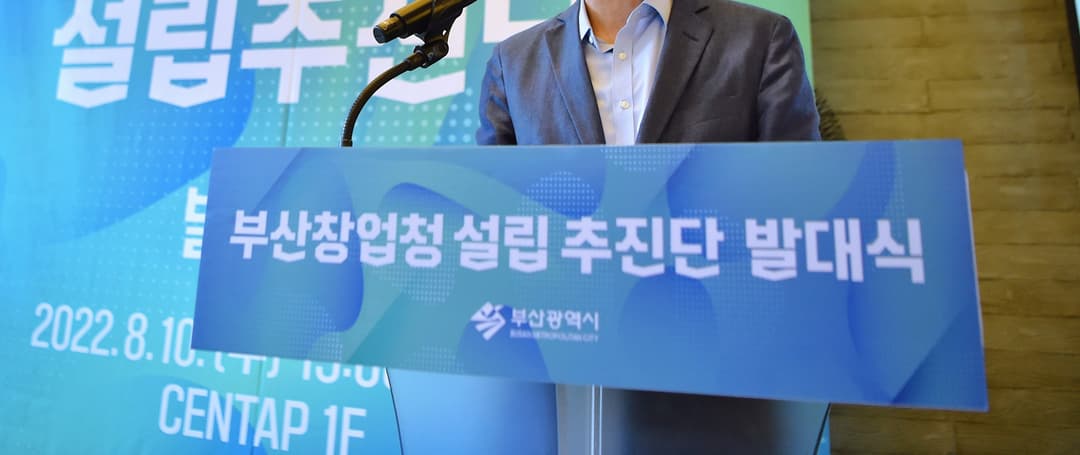
Challenges and Overlaps in Busan’s Startup Ecosystem: Is a New Institute the Solution?
As Busan City accelerates its efforts to establish the provisionally named Busan Institute for Technology Startup & Investment, multiple questions arise about whether this new entity can solve the core issues hindering the city's startup ecosystem. Despite the intent to position Busan as a "Global Startup Hub," there are serious concerns about overlap with existing institutions, lack of collaboration, insufficient expertise, and inefficiencies in the broader support system.
Busan already has a number of organizations aimed at supporting startups, such as Busan Technopark, Busan Economic Promotion Agency, and the Busan Center for Creative Economy & Innovation. These institutions provide a variety of services, including funding, mentoring, and networking opportunities. However, the addition of the new Busan Institute for Technology Startup & Investment raises concerns about functional overlap. Each institution offers similar services, leading to the question: why create another organization that duplicates efforts?
Instead of focusing on a new institution, critics argue that the existing organizations should be optimized and better integrated. The current structure lacks clear collaboration and synergy, resulting in fragmented efforts that do not adequately meet the needs of startups throughout their growth cycle. The lack of a cohesive strategy across these institutions limits the effectiveness of Busan’s overall startup ecosystem.
Busan’s existing startup support system is marked by a lack of cooperation among its key institutions. Although there are several organizations designed to foster innovation, they frequently operate in silos, without coordinated activities. Entrepreneurs report significant confusion in navigating the various offerings, which often overlap in their function but fail to provide seamless, end-to-end support.
Without improved institutional collaboration, the startup ecosystem risks remaining fragmented. For example, while multiple entities offer mentoring and funding, few work together to provide a cohesive pipeline that supports startups from inception to scaling and beyond.
Another pressing issue is the lack of specialized knowledge and expertise in the existing support structure. While Busan’s startup programs are well-established in supporting early-stage ventures, they often fall short in helping businesses scale and expand. The current institutions do not possess the industry-specific expertise required for high-growth sectors like technology, manufacturing, and biotech—fields where deeper insights and advanced guidance are essential for global competitiveness.
One of the most significant challenges facing Busan’s startups is the lack of accessible funding. Although the city manages several funds, including the Mother Fund, only a small percentage of this capital is reinvested into local startups. Much of the funding flows back to Seoul-based institutions or external investors, leaving Busan’s startups struggling to secure sufficient financial support for scaling.
Furthermore, the funding that is available tends to focus on early-stage ventures, leaving little for startups that have matured but still require substantial investments to expand globally or improve their technology infrastructure. Critics argue that unless Busan addresses this fundamental funding gap, the establishment of a new institute will do little to change the investment landscape.
One of the primary critiques of Busan’s current startup ecosystem is the lack of support for scaling businesses. While there are numerous programs for early-stage ventures, post-launch support is often inadequate. As startups progress through various growth stages, they require more tailored assistance, including help with securing larger investments, expanding into international markets, and scaling their operations. Unfortunately, Busan’s institutions have not developed specialized scaling programs, leaving many startups at a crossroads, either relocating to Seoul or failing to grow beyond a small regional player.
The introduction of the Busan Institute for Technology Startup & Investment may inadvertently lead to greater bureaucratic complexity. Instead of streamlining the existing fragmented ecosystem, adding another entity could dilute the resources available for supporting startups. With multiple agencies offering similar services, startups may face even more confusion about where to turn for the best assistance.
While the concept behind the provisionally named Busan Institute for Technology Startup & Investment is ambitious, it faces significant challenges in implementation. Busan’s existing institutions already suffer from inefficiencies, lack of collaboration, and insufficient funding. Unless these issues are addressed, the new institute may simply add another layer to an already complex and underperforming system.
For Busan to truly foster a thriving startup ecosystem, the focus should be on enhancing collaboration, reducing overlap, and investing in specialized expertise. Only then can Busan build a startup ecosystem that not only incubates new businesses but also supports them in scaling to become global players.
Continue this reporting
Reporting on the same issue
Related coverage selected from the article's desk, topics and newsroom relationships.
 NewsOct 16, 2026
What Is Still Worth Going to See?
Busan’s biennale faces questions of artistic judgment and institutional care....
 NewsOct 14, 2026
What Became of Busan’s University Streets?
From 2015 to 2023, registered businesses grew near Pusan National University...
 NewsOct 12, 2026
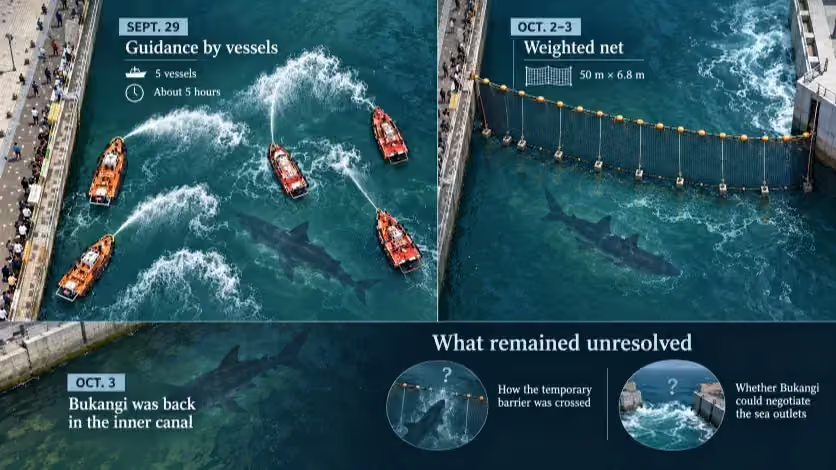
Bukangi, the Shark That Stayed in Busan’s North Port
A rescue net guided Bukangi toward the sea, but the dusky shark returned to B...
More from the author
More from this byline
Stay with the same line of reporting through more work from this byline.
 NewsOct 9, 2026
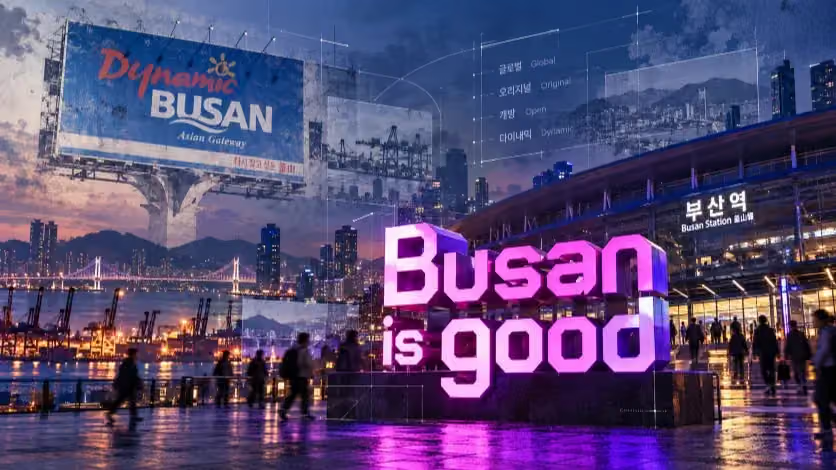
Why “Busan Is Good” Falls Short as a City Brand
 NewsSep 18, 2026
The Other AI Race Is for the Freedom to Change Course
Reader Signal
Community readWhat did this report leave you with?
Choose the signal that best reflects your reading. Select it again to remove it.
One response per article
No response selected
A moderated conversation about the reporting.
One-level replies and newsroom moderation keep the conversation anchored to this article.
Discussion Status
Open
Please sign in to join the discussion.
Newsletter
Weekly reporting and context from Busan and Korea.