Busan’s ₩35 Billion Housing Plan for MOF Relocation Covers Just 100 Units
Busan has pledged 100 leased apartments and cash incentives for ministry staff moving from Sejong. With up to 600 households expected, the package risks falling short while the city’s downtown continues to shrink.

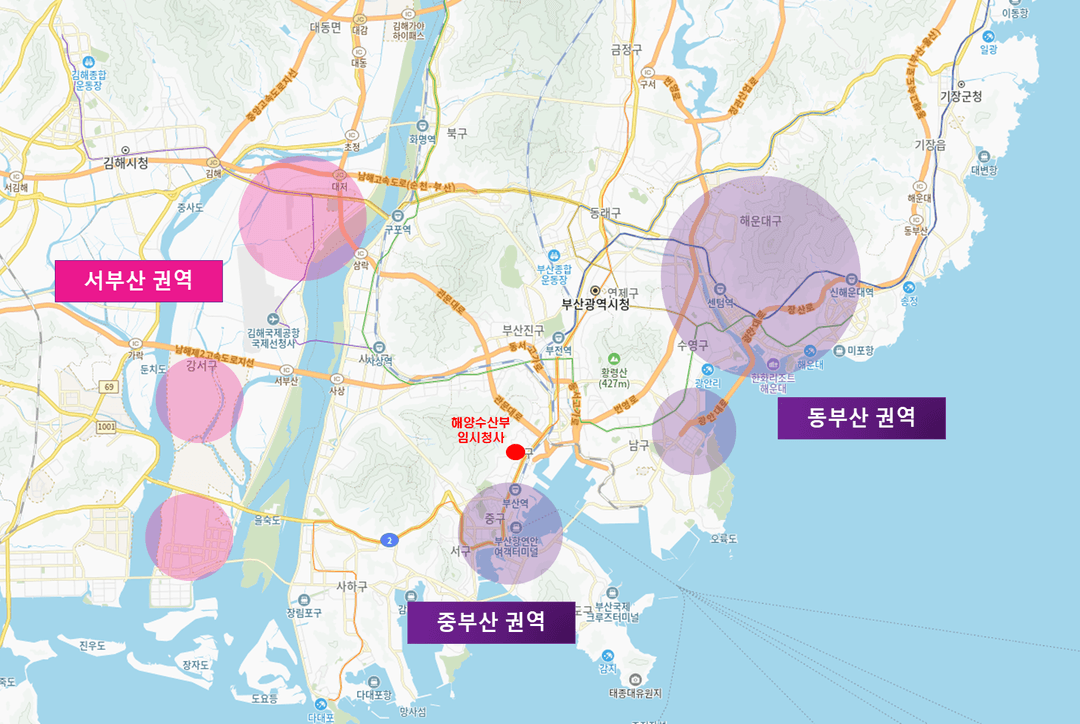
Busan, South Korea — Busan City has committed ₩35 billion to a housing package intended to smooth the relocation of the Ministry of Oceans and Fisheries (MOF) from Sejong. The centerpiece of the plan is the lease of 100 family apartments for four years, coupled with promises of future priority and special housing supply once new projects come online. Alongside the housing measures, the city has pledged direct cash incentives ranging from a ₩4 million relocation grant to a ₩400,000 monthly settlement stipend per employee.
The announcement signals urgency, but the arithmetic is blunt. With roughly 850 ministry staff expected to move by the end of 2025 and family accompaniment rates in past relocations averaging 65–70 percent, as many as 500 to 600 households may need homes in Busan. One hundred leased units cover less than one-fifth of that demand. For the majority, the private rental market—already showing signs of scarcity—remains the only option.
Equally pressing is the question of alignment. The ministry’s headquarters will operate from temporary offices in Dong-gu, within walking distance of Busan Station and the North Port redevelopment zone, areas struggling with population loss and urban decline. Yet the city’s long-term housing track is tied to large-scale projects in West Busan, such as Eco-Delta City and Myeongji, far from the old core. Without a clear framework for how relocation housing will be distributed across districts, the policy risks reinforcing suburban growth while leaving the central districts—where demographic collapse is most acute—untouched.
The relocation of the Ministry of Oceans and Fisheries is not simply an administrative reshuffle. It represents the transfer of an entire headquarters, with about 850 staff and their families expected to leave Sejong by the end of 2025. The ministry has already designated temporary offices in Dong-gu—the IM Building and Hyupsung Tower—while longer-term plans for a permanent headquarters remain under discussion.
Past government relocations provide useful context. When central agencies were moved to Sejong or to regional innovation cities over the past two decades, family accompaniment rates generally hovered between 65 and 70 percent. If those ratios hold, Busan could expect roughly 500 to 600 family households seeking housing in the coming year. That baseline makes the city’s promise of 100 leased units appear modest.
Busan’s leadership has presented the housing initiative as a necessary step to ensure the “soft landing” of the ministry. Officials stress that relocating families will stimulate local consumption and reinforce Busan’s role as the nation’s maritime capital. But the political stakes go further. The city has lobbied for years to host additional maritime-related agencies and even corporate headquarters. A smooth integration of the MOF is viewed as a litmus test: failure could undercut Busan’s credibility as a relocation destination for future institutions, while success might strengthen its claims to become a true national maritime hub.
The Housing Package: A Two-Track Plan
Busan’s housing strategy rests on what city officials call a two-track approach: immediate relief through leased apartments and a longer-term solution based on preferential allocations.
The city has earmarked ₩35 billion over four years to lease 100 apartments that will serve as family housing for ministry employees. That translates to ₩350 million per unit under current budget assumptions. City officials have not disclosed whether these will be secured under the jeonse deposit system or through monthly rental contracts. In either case, the scale is limited. With an expected demand of 500–600 households, the leased stock can accommodate fewer than one in five. The remaining families will face the private market, where available rentals have already dropped nearly 50 percent year-on-year and prices are showing signs of firming.
For permanent settlement, Busan promises to open access to apartments at cost through the Busan Urban Corporation and to reserve a share of public and private housing projects under a “special supply” designation. This second track, however, cannot proceed without legislative backing. Two separate special acts are pending in the National Assembly, both of which would create legal authority for such allocations. Until one of those bills passes, the long-term supply remains a proposal without binding force.
Housing is only one component of the package. The city has also committed to cash and family support measuresdesigned to ease settlement. Each relocating employee will be eligible for a ₩4 million relocation grant and a ₩400,000 monthly settlement subsidy. Additional programs include scholarships for children, childcare and birth allowances, and reimbursement of brokerage and registration fees. The incentives are generous compared to existing municipal programs for youth or newlyweds, a disparity that has already drawn quiet criticism from civic groups.
Market Strain and the Limits of Busan’s Two-Track Plan
Securing 100 family apartments in central Busan will not be straightforward. The ministry’s temporary headquarters will be located in Dong-gu, with the Busan Station–Nampo–North Port belt as the natural catchment. Yet this core area offers little new supply: large-scale residential projects are tied to the North Port Phase-2 redevelopment, a 2.28 km² scheme running through 2030. In practice, the city must draw its stock from existing private rentals, where availability is limited.
Price signals underscore the tension. Official data show home prices in Busan rising 1.47% year-on-year at the start of 2025, a modest recovery after the previous year’s decline. Yet the sales market is burdened by unsold inventory, reflecting weak demand in new-builds. This mismatch—soft sales but firm rents in desirable areas—suggests the city will either have to pay above-market rates or disperse its leased stock across multiple districts.
Rental conditions add further complexity. Nationwide, the shift from jeonse deposits to monthly rent contracts is accelerating, and Busan is no exception. Central districts such as Busanjin-gu and Haeundae-gu have seen advertised monthly rents climb, even as deposit-based leases shrink. The city has not clarified whether its 100-unit program will rely on deposits or monthly leases, but the choice will directly affect both fiscal outlay and the type of housing stock that can be secured.
Longer term, supply will be concentrated in West Busan, particularly at Eco-Delta City and Myeongji, where tens of thousands of units are planned. While those projects offer scale, they lie far from the ministry’s new headquarters. Without specific measures to channel families into the old core, the relocation risks deepening the imbalance: suburban expansion on one hand, continued decline in Jung-gu and Dong-gu on the other.
Busan’s geography exposes a contradiction at the heart of the relocation strategy. The areas where new housing can be delivered in large numbers are not the places where demographic decline is most severe.
In the west of the city, vast new projects such as Eco-Delta City in Gangseo and the adjoining Myeongji district offer the kind of scale that makes “special supply” allocations administratively easy. Tens of thousands of units are already planned there, and Busan Urban Corporation has clear leverage over land and development. Yet this part of the city lies at the very edge of the metropolitan area. For ministry staff whose new headquarters will be in Dong-gu, the daily commute from Gangseo will be long and inconvenient. The housing is abundant, but it is geographically misaligned with the workplace.
The situation around the ministry’s new offices is almost the reverse. The Nampo–Busan Station–North Port corridor is both symbolically important and demographically fragile. Jung-gu’s population has already dropped below 40,000, making it one of the fastest-shrinking districts in Korea. The North Port Phase-2 redevelopment is supposed to restore vitality by building a new mixed-use waterfront, but those apartments will not be ready for years. In the meantime, families who try to settle nearby face an aging housing stock and a shortage of modern, family-sized units.
To the east, in districts like Haeundae, Suyeong, and Nam-gu, the picture is different again. These are already established as high-demand residential zones with strong schools, services, and infrastructure. They are attractive destinations for relocating families, but they also command prices that sit far above the budget framework of the city’s leasing program. In practice, only staff with higher incomes will be able to secure homes here, while the official support measures will have little impact.
That leaves the old downtown—Dong-gu, Jung-gu, and Yeongdo—as the most glaring omission in the plan. These are the districts that surround the ministry’s offices and where population decline is most acute. Yet they are almost absent from the city’s relocation framework. Without targeted incentives—such as vouchers tied to central addresses or programs to convert vacant buildings into apartments—the relocation risks bypassing the very neighborhoods that most need new residents.
The more closely the relocation package is examined, the more it reveals structural weaknesses. The most immediate issue is scale. Even under conservative assumptions, at least five hundred ministry households are likely to seek homes in Busan. The city’s plan to lease one hundred units, therefore, does not constitute a comprehensive housing strategy but rather a symbolic gesture. For the majority of families, the move will still hinge on the private rental market, which is already showing signs of strain.
Legal uncertainty compounds the problem. The long-term promise of priority and special supply allocations cannot be delivered without parliamentary approval. Two competing special bills are pending in the National Assembly, but neither has cleared committee. Until one is enacted, the second track of Busan’s plan is little more than a political aspiration. For relocating families, this means there is no clear timeline for permanent settlement options beyond the private market.
Equity questions add another layer of risk. The relocation package includes a ₩4 million one-time relocation grant and a ₩400,000 monthly stipend, along with scholarships, childcare payments, and fee reimbursements. These benefits are substantially higher than what the city provides to local youth, newlyweds, or low-income renters. Civic groups have already begun to point out the disparity, and if the program proceeds without adjustment it may trigger accusations of preferential treatment for central government staff at the expense of local residents.
Finally, there is the matter of urban alignment. The relocation could have been used to address Busan’s most pressing demographic challenge: the decline of its downtown districts. Instead, the housing supply that looks easiest to secure lies in the western suburbs, far from the new headquarters. Without a targeted mechanism to anchor families in the old core, the relocation risks accelerating suburban growth while leaving the central city to hollow out further.
Uncertain Paths Forward
Critics note that Busan has tools beyond a block lease. Rental vouchers could spread the same ₩35 billion across more households, while also directing settlement into districts most in need of new residents. Converting underused offices or commercial buildings into housing could both expand supply and aid urban regeneration. Additional incentives tied to school support or long-term residency would anchor families in the core rather than pushing them to distant suburbs.
Yet none of these options can proceed without firmer legal ground. The city’s long-term promise of priority and special allocations depends on special legislation still stalled in the National Assembly. Competing bills from the ruling and opposition parties remain in committee, and with elections looming the issue risks being treated as leverage rather than resolved policy. Until the law passes, the second track of Busan’s plan is an aspiration, not a guarantee.
This leaves the relocation package in an awkward middle ground. On paper, it is ambitious: leased housing, cash stipends, and long-term supply. In practice, it serves only a fraction of the need, relies on laws not yet written, and risks exacerbating existing divides. For Busan, the transfer of a central ministry is a rare chance to reverse its downtown decline. Whether it becomes a turning point or a missed opportunity will depend less on ribbon-cuttings and more on whether families put down roots in the places that matter most for the city’s future.
Continue this reporting
Reporting on the same issue
Related coverage selected from the article's desk, topics and newsroom relationships.
 NewsOct 16, 2026
What Is Still Worth Going to See?
Busan’s biennale faces questions of artistic judgment and institutional care....
 NewsOct 14, 2026
What Became of Busan’s University Streets?
From 2015 to 2023, registered businesses grew near Pusan National University...
 NewsOct 12, 2026
Bukangi, the Shark That Stayed in Busan’s North Port
A rescue net guided Bukangi toward the sea, but the dusky shark returned to B...
More from the author
More from this byline
Stay with the same line of reporting through more work from this byline.
- NewsOct 14, 2026
What Became of Busan’s University Streets?
 NewsSep 28, 2026
Why Some Commercial Space in Busan Is Hard to Reuse
Reader Signal
Community readWhat did this report leave you with?
Choose the signal that best reflects your reading. Select it again to remove it.
One response per article
No response selected
A moderated conversation about the reporting.
One-level replies and newsroom moderation keep the conversation anchored to this article.
Discussion Status
Open
Please sign in to join the discussion.
Newsletter
Weekly reporting and context from Busan and Korea.