Busan’s Unsold Housing Hits 15-Year High as Market Weakness Persists
Busan’s unsold completed housing stock rose to 2,663 units in June 2025, marking the city’s highest level in nearly 15 years.

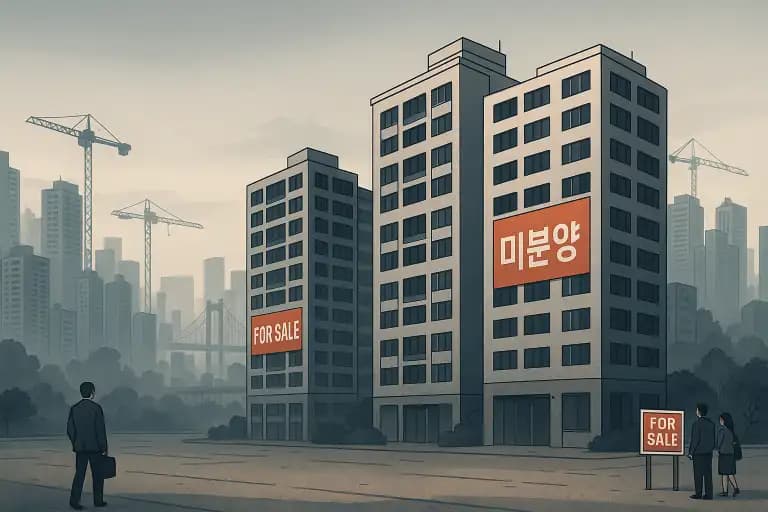
Busan, South Korea — Busan’s unsold housing stock rose to 2,663 completed units as of June, reaching the highest level since July 2010, according to government housing statistics. The figure has increased each month since January, when completed but unsold units exceeded 2,000 for the first time in more than a decade.
The total number of unsold units in Busan, including those under pre-sale, stood at 5,375 at the end of June. While this is slightly down from 5,420 in May, it remains above historical averages and continues to signal weak buyer demand. The city’s total unsold inventory had fallen below 4,000 in late 2024 but reversed course in the first half of this year.
Compared to national figures, where unsold post-construction homes declined in June, Busan’s trend moved in the opposite direction. The accumulation of completed but vacant units indicates localized market imbalance, particularly in districts with recent supply expansion.
The last time Busan reported this level of unsold completed stock was in the aftermath of the 2008–2009 global financial crisis. At the time, completed unsold inventory exceeded 5,000 units. The market began to recover in 2011 following rate cuts and policy intervention. From 2012 through 2021, unsold completed units in Busan generally remained below 1,000.
Current trends suggest the imbalance is persistent. Monthly supply continues to enter the market while absorption remains limited. In several districts, developers are delaying new launches or offering discounts to reduce inventory.
The increase in unsold completed units is concentrated in several districts. As of mid-2024, Nam-gu accounted for 1,241 unsold units, followed by Gijang-gun with 814, Sasang-gu with 549, Busanjin-gu with 531, and Geumjeong-gu with 453. These five districts represent the majority of Busan’s post-construction housing overhang.
The concentration reflects both recent supply growth and low absorption rates in those areas. Nam-gu has seen a series of large-scale developments in the Yongho and Munhyeon zones, many of which have recorded weak sales following completion. Gijang-gun, a peripheral district with ongoing greenfield projects, has also posted low contract rates since early 2024.
In several instances, completed apartment complexes failed to secure any sales. One project in Suyeong-gu recorded zero contract signings as of July, leaving the entire building vacant. While Suyeong-gu includes high-demand submarkets such as Marine City, some projects have launched at price points above local buyer capacity.
Developers in these areas have begun offering price incentives, reduced transfer fees, or rental guarantees. However, the measures have not led to material reductions in inventory. Several properties continue to show no occupancy several months after completion, according to local government housing registers.
The spatial mismatch between supply and demand has widened. In core areas with stable demand—such as parts of Haeundae—unsold volumes remain limited. In contrast, peripheral zones and redevelopment districts account for most of the excess.
The sustained rise in unsold inventory is attributed to a combination of oversupply, financing constraints, and demand-side weakness.
From 2020 to 2022, developers in Busan accelerated project launches, anticipating population inflow linked to infrastructure projects, including the proposed Gadeok Island airport and Expo-related developments. In several districts, projected demand did not materialize. The result was an excess of new units in areas with limited household formation.
At the same time, monetary tightening raised financing costs. The Bank of Korea’s policy rate increased from 0.5% in 2021 to 3.5% by early 2023. Mortgage rates followed, leading to a sharp decline in home purchase activity. Lending regulations further reduced borrowing capacity, particularly for first-time buyers and households with high debt ratios.
Unit pricing has also contributed to absorption failure. In multiple cases, new apartment prices were set above comparable existing properties. Projects launched between 2021 and 2023 reflect construction cost inflation, but end-user income levels did not adjust accordingly. In peripheral districts, launch prices exceeded local affordability thresholds.
Demographic factors have amplified the imbalance. Busan’s population has declined for five consecutive years. Outmigration of younger households and a rising share of elderly residents have lowered structural housing demand, particularly for family-sized new apartments.
Investor activity has also diminished. Tax reforms, holding cost increases, and narrowing price differentials between new and resale units have reduced speculative transactions. Unlike Seoul and some capital-region cities, Busan has seen limited inflows of investment demand since 2022.
Taken together, the gap between delivered supply and effective demand has widened. Without price corrections or external stimulus, the imbalance is expected to persist through the near term.
The central government and Korea Land and Housing Corporation (LH) introduced multiple measures in 2024 and 2025 to reduce unsold housing inventories in provincial cities, including Busan.
In April 2025, LH reopened its post-construction purchase program for the first time since 2009. A total of 58 construction companies nationwide applied for government acquisition of 3,536 unsold units. Among them, 11 Busan-based firms submitted 783 units, the highest number from any single region.
Selected units are subject to on-site inspection and documentation review. Purchase prices are determined at up to 83% of the officially appraised value, with additional deductions applied to long-unsold properties. LH plans to convert eligible units into public rental housing. The final list of acquired projects is expected in the third quarter.
In parallel, the Ministry of Land implemented tax incentives to stimulate individual purchases. Buyers acquiring one unsold unit in designated provincial areas are exempted from ownership-based capital gains tax penalties. In addition, a 50% acquisition tax reduction is applied if the purchased unit is held for rental purposes for two years or more.
The Housing and Urban Guarantee Corporation (HUG) has also tightened pre-sale approval criteria in districts with high unsold volumes. This includes higher pre-sale rate requirements and financial screening for new project initiators. The objective is to prevent additional supply in overstocked submarkets.
No new large-scale subsidy programs have been introduced. Budget allocations for 2025 prioritize selective absorption of existing units rather than demand-side stimulation or nationwide price support.
As of July, absorption effects from the above measures remain limited. Applications for LH buyouts exceeded initial targets, but physical transfers have not yet occurred. Market-wide contract volumes show localized improvement but have not materially reduced post-construction stock.
Short-term indicators suggest that inventory pressure in Busan will remain elevated through the second half of 2025. Monthly additions of new completions continue, while absorption rates remain below pre-pandemic averages. Developers in multiple districts have delayed or scaled back planned launches.
Interest rate levels remain a key constraint. The Bank of Korea has maintained the base rate at 3.5% since early 2023. A reversal in monetary policy has not yet been announced. Unless rates decline meaningfully, borrowing costs are expected to limit end-user demand, particularly among first-time buyers.
Some developers have begun offering price reductions and incentives. However, price adjustments have been limited in scope and are concentrated in peripheral areas. Market-wide price corrections have not occurred as of July.
Government programs, including LH purchases and tax incentives, are expected to remove a portion of unsold stock. The scale of these measures covers a fraction of total inventory. Additional support may be introduced depending on fiscal capacity and market response in Q4 2025.
Long-term absorption will depend on demographic and economic variables. Busan's population has declined by approximately 1% over the past three years. Employment indicators have remained flat, and internal migration continues to favor the capital region.
Forecasts from local research institutes project that a full return to balanced inventory levels may not occur before 2026 or later. District-level recovery will vary based on price adjustment, infrastructure proximity, and household formation rates.
Continue this reporting
Reporting on the same issue
Related coverage selected from the article's desk, topics and newsroom relationships.
 NewsOct 16, 2026
What Is Still Worth Going to See?
Busan’s biennale faces questions of artistic judgment and institutional care....
 NewsOct 14, 2026
What Became of Busan’s University Streets?
From 2015 to 2023, registered businesses grew near Pusan National University...
 NewsOct 12, 2026
Bukangi, the Shark That Stayed in Busan’s North Port
A rescue net guided Bukangi toward the sea, but the dusky shark returned to B...
More from the author
More from this byline
Stay with the same line of reporting through more work from this byline.
- NewsOct 14, 2026
What Became of Busan’s University Streets?
 NewsSep 28, 2026
Why Some Commercial Space in Busan Is Hard to Reuse
Reader Signal
Community readWhat did this report leave you with?
Choose the signal that best reflects your reading. Select it again to remove it.
One response per article
No response selected
A moderated conversation about the reporting.
One-level replies and newsroom moderation keep the conversation anchored to this article.
Discussion Status
Open
Please sign in to join the discussion.
Newsletter
Weekly reporting and context from Busan and Korea.