Busan's Universities to Offer Affordable Breakfast Program for Students
South Korean universities in Busan, including Pusan National University, Korea Maritime University, Busan University of Foreign Studies, and the Catholic University of Pusan, will introduce a 1,000 won breakfast program for their students. This initiative is backed by the Ministry of Agriculture, Food and Rural Affairs, and the National Agricultural Research Center, which have selected 41 universities to participate in the project this year. The program aims to support 680,000 students. The 1,0

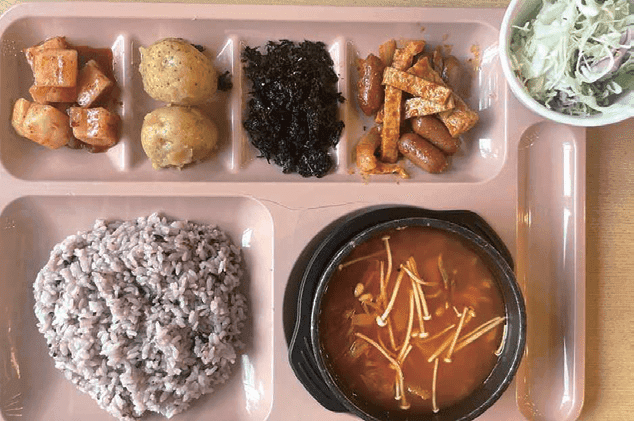
South Korean universities in Busan, including Pusan National University, Korea Maritime University, Busan University of Foreign Studies, and the Catholic University of Pusan, will introduce a 1,000 won breakfast program for their students. This initiative is backed by the Ministry of Agriculture, Food and Rural Affairs, and the National Agricultural Research Center, which have selected 41 universities to participate in the project this year. The program aims to support 680,000 students.
The 1,000 won breakfast project provides affordable, high-quality breakfasts for university students who often skip the most important meal of the day. With a 53% breakfast skipping rate among 20-somethings, the highest among all age groups, the program intends to encourage young people to develop breakfast habits and increase rice consumption.
Under this program, students pay 1,000 won for breakfast, the government contributes another 1,000 won, and schools autonomously share the remaining cost. The recent inflation has increased the burden of food costs for university students, prompting a high number of universities across the country to participate in the program. The government has even secured additional budgeting to increase the number of supported students from the initially planned 500,000 to 680,000.
Participating universities span the entire country, including Busan, Ulsan, Daegu, Gyeongsang-do, Seoul, Gyeonggi-do, Incheon, Gangwon-do, Daejeon, Chungcheong-do, Gwangju, and Jeolla-do regions. Last year's government survey revealed that 98.7% of respondents would like to see the 1,000 won breakfast program continue, and 91.8% felt the importance of breakfast through the initiative.
Jeon Han-young, a Food Policy Specialist at the Ministry of Agriculture, Food and Rural Affairs, highlighted the dual purpose of the program: to increase rice consumption by forming healthy eating habits and easing the burden of food costs for students in the era of high prices.
Continue this reporting
Reporting on the same issue
Related coverage selected from the article's desk, topics and newsroom relationships.
 NewsOct 22, 2026
Busan Port’s LNG and Methanol Plan: Who Pays to Keep Fuel Ready?
Busan already supplies ships with LNG and methanol, drawing on regional and i...
 NewsOct 16, 2026
What Is Still Worth Going to See?
Busan’s biennale faces questions of artistic judgment and institutional care....
 NewsOct 14, 2026
What Became of Busan’s University Streets?
From 2015 to 2023, registered businesses grew near Pusan National University...
More from the author
More from this byline
Stay with the same line of reporting through more work from this byline.
 NewsOct 9, 2026
Why “Busan Is Good” Falls Short as a City Brand
 NewsSep 18, 2026
The Other AI Race Is for the Freedom to Change Course
Reader Signal
Community readWhat did this report leave you with?
Choose the signal that best reflects your reading. Select it again to remove it.
One response per article
No response selected
A moderated conversation about the reporting.
One-level replies and newsroom moderation keep the conversation anchored to this article.
Discussion Status
Open
Please sign in to join the discussion.
Newsletter
Weekly reporting and context from Busan and Korea.