Busan’s Landmark Railway Underground Project Selected for National Pilot Program
Busan secures a major urban development breakthrough as the Busanjin-Busan Station section of the Gyeongbu Line is selected for South Korea’s National Railway Underground Pilot Program.

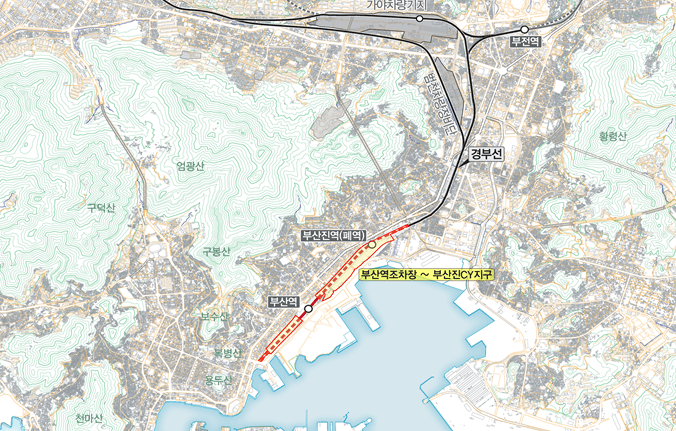
Busan, South Korea – Busan has achieved a major milestone in urban infrastructure development with the selection of the Busanjin Station to Busan Station section of the Gyeongbu Line railway for the National Railway Underground Integrated Development Pilot Program, spearheaded by the Ministry of Land, Infrastructure, and Transport (MOLIT).
This long-awaited railway undergrounding project, with a total investment of KRW 1.8184 trillion ($1.36 billion USD), will run from 2027 to 2036. The initiative includes burying 2.8 kilometers of railway underground, constructing an artificial deck over the existing railway, and launching an urban redevelopment project on the Busanjin CY and Busan Station marshalling yard sites.
Busan has long advocated for the undergrounding of the Gyeongbu Line to address urban fragmentation, noise pollution, and declining city infrastructure. After years of planning and government proposals, Busan’s persistence has paid off, with the project being officially selected as a pilot case for railway underground development.
The selection comes as part of MOLIT’s broader national railway redevelopment strategy, which was introduced following the Railway Undergrounding and Integrated Development Act, enacted in January 2024. Busan is among five metropolitan cities chosen for the initiative, alongside Seoul, Incheon, Daejeon, and Gyeonggi-do Province.
The Busanjin-Busan Station section was selected over a broader 11.7-kilometer proposal, with the 8.7-kilometer Gu-po to Gaya Vehicle Depot section currently under review for future inclusion. Despite this partial selection, Busan City is working closely with MOLIT and relevant agencies to ensure the remaining sections are incorporated into the ministry’s 2025 Railway Undergrounding Master Plan.
The undergrounding of the Busanjin-Busan Station section is expected to resolve longstanding urban division issuescaused by the railway and serve as a catalyst for further redevelopment in downtown Busan. The affected area lies adjacent to Phase 2 of the North Port Redevelopment Project, a critical initiative to transform Busan into a global logistics and business hub.
The railway’s underground relocation will remove barriers between neighborhoods, improve connectivity, and enhance land utilization for future commercial and residential developments. Additionally, it will accelerate the long-delayed Phase 2 of the North Port Redevelopment, which had been stalled due to increased costs associated with railway repositioning.
Following the project’s official selection, Busan City will carry out a basic planning study from 2025 to 2026, incorporating expert opinions and undergoing administrative procedures, including a review by the Central Urban Planning Committee.
Busan Mayor Park Heong-joon hailed the project as a game-changer for the city’s urban structure, stating: “This pilot project is a once-in-a-century opportunity to reshape Busan’s urban landscape. By undergrounding the Gyeongbu Line, we will reunite divided communities and create new economic growth engines that will enhance the quality of life for Busan’s citizens.”
He also emphasized the importance of aligning the railway project with North Port Redevelopment, ensuring that Busan’s urban core is transformed into a cutting-edge innovation district.
With the railway underground project now officially underway, Busan is positioning itself for a new era of urban renewal. By integrating transportation and redevelopment efforts, the city is laying the foundation for its next 100 years of growth, setting a precedent for smart, sustainable city planning in South Korea.
Continue this reporting
Reporting on the same issue
Related coverage selected from the article's desk, topics and newsroom relationships.
 NewsOct 16, 2026
What Is Still Worth Going to See?
Busan’s biennale faces questions of artistic judgment and institutional care....
 NewsOct 14, 2026
What Became of Busan’s University Streets?
From 2015 to 2023, registered businesses grew near Pusan National University...
 NewsOct 12, 2026
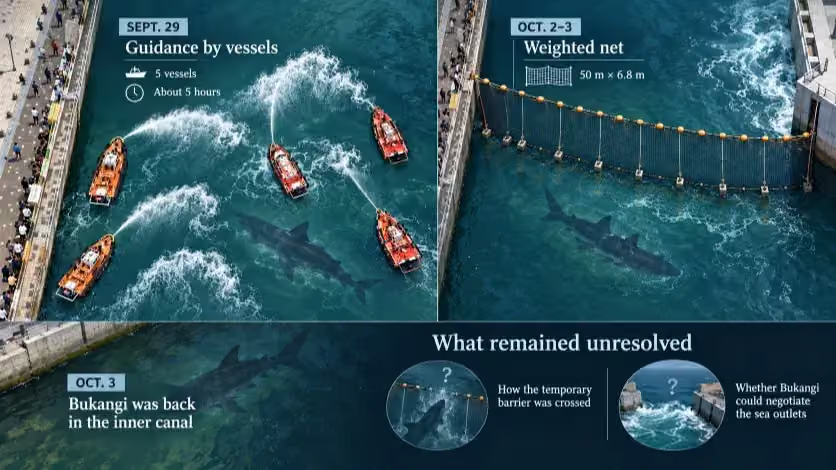
Bukangi, the Shark That Stayed in Busan’s North Port
A rescue net guided Bukangi toward the sea, but the dusky shark returned to B...
More from the author
More from this byline
Stay with the same line of reporting through more work from this byline.
 NewsOct 9, 2026
Why “Busan Is Good” Falls Short as a City Brand
 NewsSep 18, 2026
The Other AI Race Is for the Freedom to Change Course
Reader Signal
Community readWhat did this report leave you with?
Choose the signal that best reflects your reading. Select it again to remove it.
One response per article
No response selected
A moderated conversation about the reporting.
One-level replies and newsroom moderation keep the conversation anchored to this article.
Discussion Status
Open
Please sign in to join the discussion.
Newsletter
Weekly reporting and context from Busan and Korea.