Busan's Industrial Struggle: Business Vitality Dips for the Sixth Year
The year 2022 stood as a significant milestone for assessing the industrial health of Busan, South Korea. The Industrial Vitality Index, developed jointly by the Busan Chamber of Commerce and Industry and Korea Rating & Data, emerged as a pivotal tool in this evaluation. Amidst a complex global economic landscape, the report dissected the nuances of Busan's economic resilience and adaptability across its diverse industrial sectors. The 2022 analysis, delving deep into the performance of around

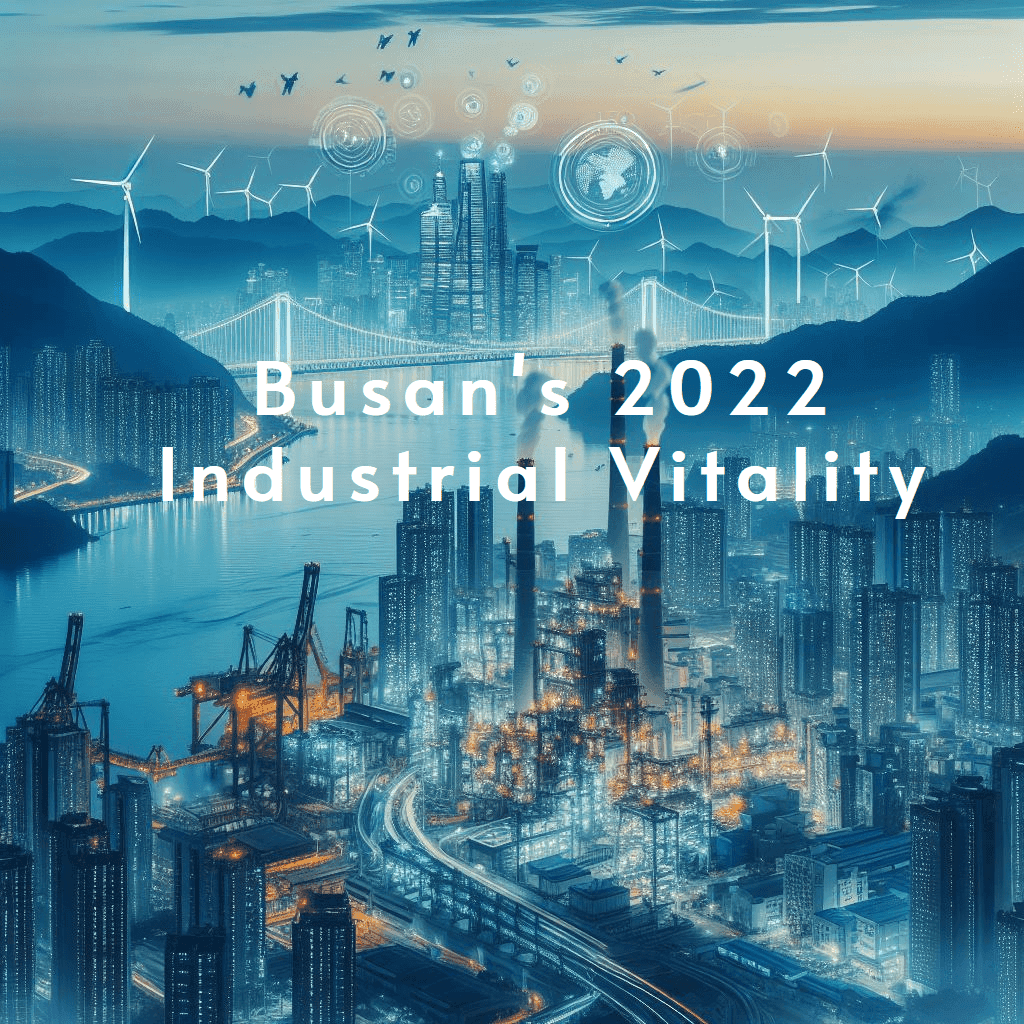
The year 2022 stood as a significant milestone for assessing the industrial health of Busan, South Korea. The Industrial Vitality Index, developed jointly by the Busan Chamber of Commerce and Industry and Korea Rating & Data, emerged as a pivotal tool in this evaluation. Amidst a complex global economic landscape, the report dissected the nuances of Busan's economic resilience and adaptability across its diverse industrial sectors.
The 2022 analysis, delving deep into the performance of around 5,500 companies in Busan, highlighted a concerning trend. The Industrial Vitality Index, benchmarked against the base year of 2016 (score of 100), registered a decline to 83.6. This downturn was not an isolated event but a reflection of broader global economic headwinds and local challenges.
Central to the city's industrial challenges was the enduring impact of the COVID-19 pandemic. Disruptions in global supply chains and shifts in consumer behaviors significantly impacted industries, particularly those reliant on international trade and tourism. The manufacturing sector, a key pillar of Busan's economy, grappled with production setbacks and fluctuating demand.
Sector-Specific Outcomes
Manufacturing Sector faced hurdles from disrupted supply chains and increased global competition. The push toward automation and digital technologies also necessitated a rethinking of traditional manufacturing approaches.
Services Sector, initially hit hard by reduced international tourism, this sector showed signs of recovery later in the year, especially in domestic tourism and local services.
Construction Sector, despite supply chain and regulatory challenges, demand for residential and commercial construction, fueled by urban development initiatives, provided some stability.
ICT Sector, demonstrating robustness, benefited from the accelerated digital shift, positioning itself as a critical driver of Busan's future economic growth.
In contrast to the broader industrial downturn, Busan's top 100 companies showcased resilience. Robust sales performances, stable or growing employment rates, and continued investment in assets reflected their ability to navigate and adapt to the challenging economic landscape.
Employment Trends Across Sectors -A Mixed Bag
The employment scenario in 2022 painted a diverse picture. While the manufacturing sector saw a dip in employment, reflecting the need for technological adaptation, sectors like construction and ICT experienced stability and growth in employment, highlighting their evolving significance in Busan’s economy.
Faced with these challenges, the Busan local government and industry bodies implemented strategic responses. These included financial support for SMEs, infrastructure projects to spur the construction sector, and policies promoting technological innovation. Industry bodies focused on workforce development and advocated for regulatory reforms, aiming to foster a collaborative and growth-conducive business environment.
For long-term vitality, the report suggests a multi-pronged approach. This includes increased support for R&D, especially in emerging technologies, diversifying global trade partnerships, and focusing on sustainable practices. These strategies align with global economic trends and aim to bolster Busan's industrial sectors in the face of evolving challenges.
As global and local economic landscapes continue to evolve, the commitment of the government and industries to navigate these changes will be pivotal in shaping Busan’s industrial future.
Continue this reporting
Reporting on the same issue
Related coverage selected from the article's desk, topics and newsroom relationships.
 NewsOct 16, 2026
What Is Still Worth Going to See?
Busan’s biennale faces questions of artistic judgment and institutional care....
 NewsOct 14, 2026
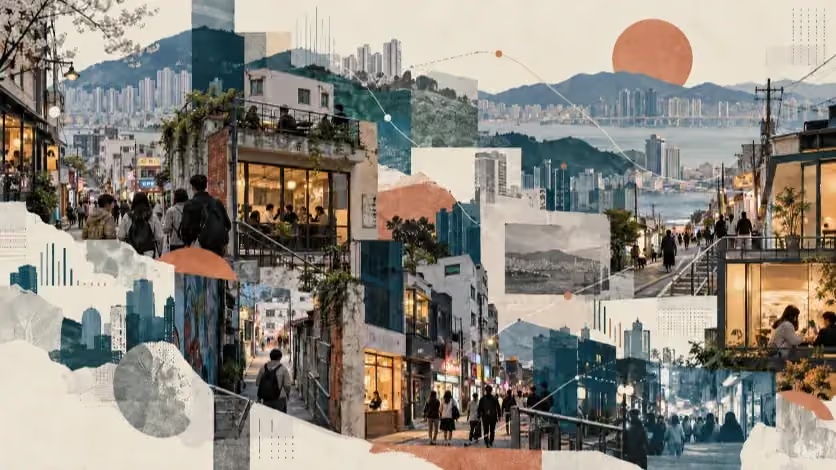
What Became of Busan’s University Streets?
From 2015 to 2023, registered businesses grew near Pusan National University...
 NewsOct 12, 2026
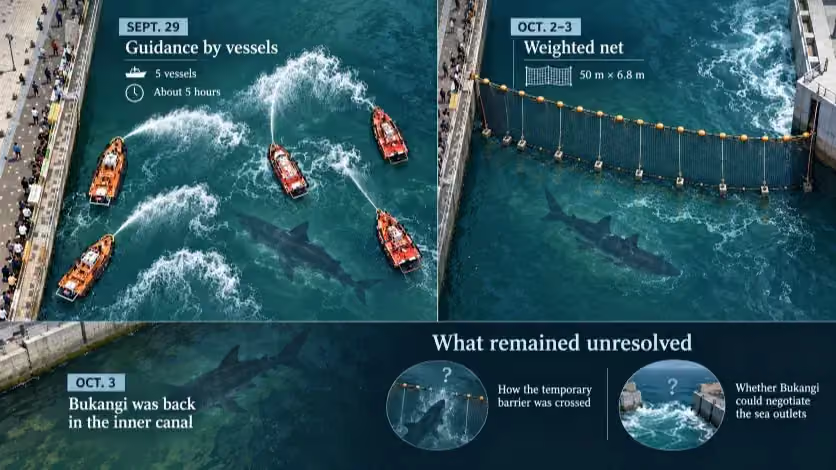
Bukangi, the Shark That Stayed in Busan’s North Port
A rescue net guided Bukangi toward the sea, but the dusky shark returned to B...
More from the author
More from this byline
Stay with the same line of reporting through more work from this byline.
 NewsOct 9, 2026
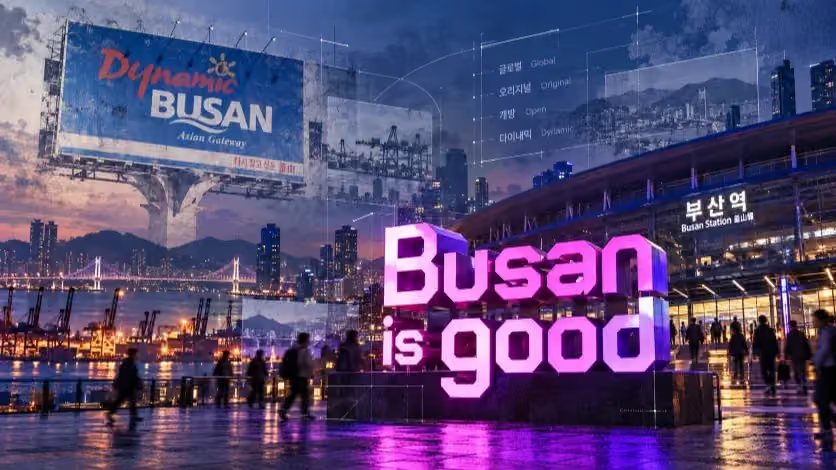
Why “Busan Is Good” Falls Short as a City Brand
 NewsSep 18, 2026
The Other AI Race Is for the Freedom to Change Course
Reader Signal
Community readWhat did this report leave you with?
Choose the signal that best reflects your reading. Select it again to remove it.
One response per article
No response selected
A moderated conversation about the reporting.
One-level replies and newsroom moderation keep the conversation anchored to this article.
Discussion Status
Open
Please sign in to join the discussion.
Newsletter
Weekly reporting and context from Busan and Korea.