Busan’s Industrial Push Returns to Gijang — But Lessons Go Unlearned
Despite two decades of stalled development, Busan is launching another industrial complex in Gijang-gun. Officials promise integrated housing and livability — but the project’s structure and geography suggest a repeat of the same failed playbook.

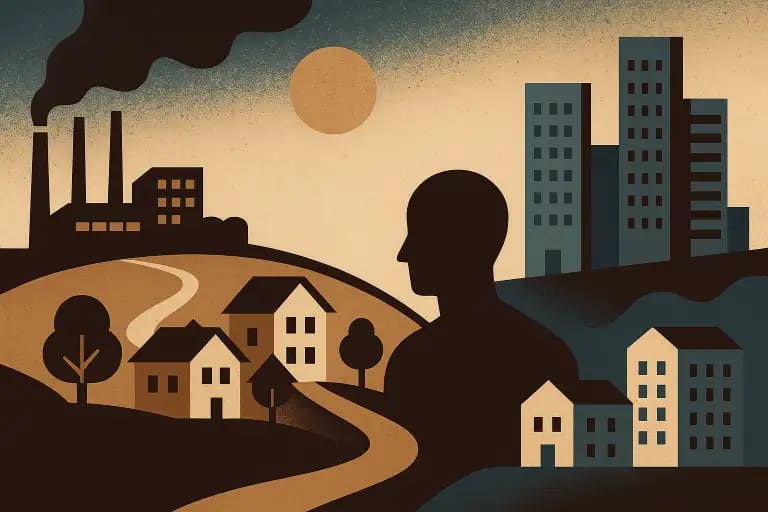
Busan, South Korea —They’ve done this before. On the northeastern edge of Busan, industrial complexes have been rising for years — first one, then another, until the count reached nine. Each came with the same hope: to ignite regional growth, attract new industries, and breathe life into areas long overlooked by Busan’s urban core.
Now, the city is trying again. The Dongbusan i-Park Phase 2 Industrial Complex is the latest installment in this decades-long strategy. Scheduled for completion in 2029, the project spans over 1.14 million square meters, with an adjacent “support district” offering nearly 2,000 housing units, cultural amenities, and commercial facilities. Officials describe it as a modern, self-contained development — a place where cutting-edge industries like batteries and semiconductors can thrive alongside livable neighborhoods. The city calls it “work-live-play.”
It all sounds familiar. The language has evolved, but the logic remains: build infrastructure, create jobs, and people will come.
But in Gijang, that promise has worn thin. Despite two decades of industrial investment, communities in places like Jang’an-eup have seen little lasting change. The region continues to struggle with low population density, uneven infrastructure, and a disconnect between economic planning and everyday life. The slogans are new. The results, so far, are not.
Over the past 15 years, nine industrial complexes have been built in Gijang-gun, including major zones in Jang’an, Myeongrye, and Banryong. Today, they host a total of 411 businesses employing 10,646 workers — respectable numbers, but modest when compared to the scale of land development and public ambition that launched them.
Some projects, like the Jang’an Industrial Complex, struggled to fill even half their lots in the early years. The city had to threaten land reclamation from companies that secured plots but failed to build. Development moved forward, but often without the population growth or social infrastructure to support it.
In Jang’an-eup, the trend has been particularly stark. Once home to around 20,000 people, the area now counts fewer than 8,000 residents — a significant decline even as factories rose around it. Young families left. Transit options stayed limited. Few reasons remained to settle, and fewer to stay.
Busan’s investment brought industrial output. It didn’t bring community. And without community, the infrastructure has lagged behind — no real urban center, no sustainable commercial base, no reason to imagine this time will be different.
City officials insist that the new project will avoid those past mistakes. This time, they say, the housing will come first. The plan includes a 270,000-square-meter support district, with 1,900 residential units, cultural space, and schools — all designed to keep workers close to their jobs.
But the geography tells a different story.
The residential district sits nearly three kilometers south of the industrial site, separated by farmland and rural roads. There is no integrated transit network, no dedicated infrastructure to connect home and work. In planning documents, the distance looks manageable. In daily life — for shift workers, for families without cars — it may be another barrier.
More importantly, proximity alone doesn’t build community. A few apartment towers and retail outlets don’t guarantee a neighborhood. If the new housing follows the same trajectory as Gijang’s earlier developments, it will arrive faster than the services needed to sustain it. Schools and shops may come late. Social cohesion may never arrive at all.
What remains is a pattern: industrial zones that operate by day, and housing clusters that stand apart at night — planned as a pair, but rarely joined.
The city isn’t shouldering the project alone. As with many recent developments, Dongbusan i-Park Phase 2 is being financed and executed by a Special Purpose Company (SPC) — a private consortium formed for this project. The total cost is estimated at ₩706.6 billion, or about $540 million.
The SPC model promises flexibility and risk-sharing. But in practice, the risks often shift. If land sales fall short or housing units remain empty, it’s the public — not the investors — who are left to manage the fallout. Across Korea, several stalled SPC-led projects have ended with local governments absorbing debt or quietly abandoning their original vision.
Busan has seen this before, even in Gijang. Public-private development brought factories, but not always people. Officials say they’ve learned from those outcomes. But the incentives — and the structural gaps — haven’t changed.
And for those expected to live, work, and raise families in these spaces, it’s still not clear whether this model was ever built with them in mind.
Busan’s ambitions for Dongbusan i-Park Phase 2 are neither small nor new. The scale is significant. The language — integration, innovation, livability — is modern. But the blueprint rests on a familiar foundation: build infrastructure first, and hope that life will follow.
Gijang’s recent history suggests that hope is not enough. Industrial complexes alone haven’t reversed population decline. Support districts haven’t translated into sustainable communities. And the public-private development model continues to prioritize transaction over habitation — delivering buildings, but rarely belonging.
The issue is not with growth itself, or even with large-scale planning. It’s with repetition without reckoning. If the city continues to pursue industrial expansion without confronting the human realities of mobility, housing, and social connection, it risks reinforcing the very imbalances it claims to correct.
Busan isn’t just shaping land use policy in Gijang. It’s shaping the terms on which people decide whether a place is worth calling home. That choice can’t be engineered. It has to be earned — not with press releases or floor plans, but with genuine, lived integration.
Continue this reporting
Reporting on the same issue
Related coverage selected from the article's desk, topics and newsroom relationships.
 NewsOct 16, 2026
What Is Still Worth Going to See?
Busan’s biennale faces questions of artistic judgment and institutional care....
 NewsOct 14, 2026
What Became of Busan’s University Streets?
From 2015 to 2023, registered businesses grew near Pusan National University...
 NewsOct 12, 2026
Bukangi, the Shark That Stayed in Busan’s North Port
A rescue net guided Bukangi toward the sea, but the dusky shark returned to B...
More from the author
More from this byline
Stay with the same line of reporting through more work from this byline.
- NewsOct 14, 2026
What Became of Busan’s University Streets?
 NewsSep 28, 2026
Why Some Commercial Space in Busan Is Hard to Reuse
Reader Signal
Community readWhat did this report leave you with?
Choose the signal that best reflects your reading. Select it again to remove it.
One response per article
No response selected
A moderated conversation about the reporting.
One-level replies and newsroom moderation keep the conversation anchored to this article.
Discussion Status
Open
Please sign in to join the discussion.
Newsletter
Weekly reporting and context from Busan and Korea.