Busan's Employment Surge: Success or Statistical Illusion?
Busan, South Korea – A recent press release from Busan Metropolitan City celebrates record highs in employment rates, with city officials pointing to a “historic low” in unemployment and a nine-month rise in manufacturing jobs. The city’s upbeat assessment, however, raises questions about the depth of these improvements. A closer analysis suggests that while some sectors indeed show signs of growth, critical challenges beneath these headlines signal potential issues with job quality, demographic

Busan, South Korea – A recent press release from Busan Metropolitan City celebrates record highs in employment rates, with city officials pointing to a “historic low” in unemployment and a nine-month rise in manufacturing jobs. The city’s upbeat assessment, however, raises questions about the depth of these improvements. A closer analysis suggests that while some sectors indeed show signs of growth, critical challenges beneath these headlines signal potential issues with job quality, demographic pressures, and sectoral imbalances that could impact the city's long-term economic health.
Employment Rates on the Rise, But What Lies Beneath?
Busan’s employment rate for the critical working-age demographic (15-64) has reached 67.3% – a record for the city and a figure that positions Busan as a top employment center among South Korea’s metropolitan cities. The city also reports a drop in unemployment to an impressive 1.9%, the lowest since tracking began. These figures, taken at face value, seem to indicate a robust economic environment where job opportunities abound and labor force participation is high.
But statistics alone don’t tell the full story. These positive shifts in employment may be less about new job creation and more about the city’s declining working-age population. With fewer people in the 15-64 demographic, the employment rate can appear deceptively high even if the actual number of jobs created is modest or stable. In other words, Busan’s employment growth may partly reflect an aging population rather than a vibrant job market expansion.
| Category | Figures | Year-on-Year Change |
|---|---|---|
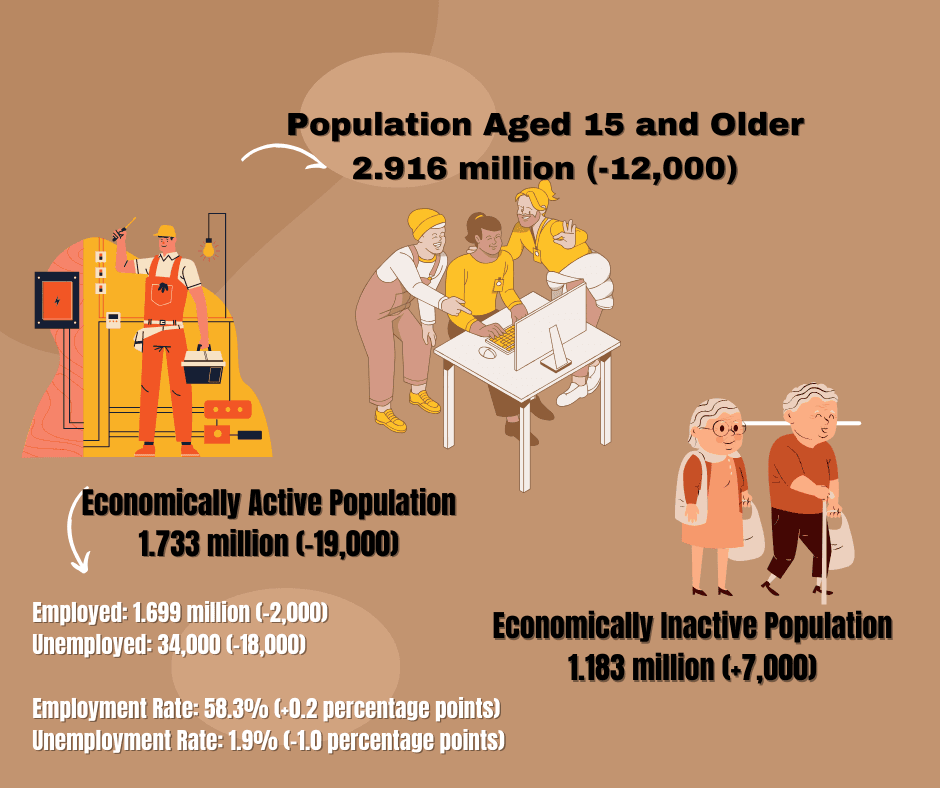
| Population Aged 15 and Older | 2.916 million | -12,000 |
| Economically Active Population | 1.733 million | -19,000 |
| - Employed | 1.699 million | -2,000 |
| - Unemployed | 34,000 | -18,000 |
| Employment Rate | 58.3% | +0.2 percentage points |
| Unemployment Rate | 1.9% | -1.0 percentage points |
| Economically Inactive Population | 1.183 million | +7,000 |
Employment by Industry (Year-on-Year Comparison)
| Industry | Employed | Year-on-Year Change |
|---|---|---|
| Construction | 125,000 | -16.3% |
| Wholesale, Retail, Accommodation, and Food Services | 363,000 | -8.1% |
| Electricity, Transport, Communication, and Financial Services | 231,000 | -2.3% |
| Business, Personal, Public, and Other Services | 716,000 | +5.8% |
| Manufacturing | 246,000 | +10.5% |
Manufacturing Booms, But Service Sector and Construction Suffer
A centerpiece of Busan’s employment gains is the manufacturing sector, which has seen a 10.5% increase in employment over the past nine months. This growth spurt, led by sectors such as electronics and machinery, is indeed a positive development for a city historically rooted in manufacturing. However, it also signals an area of over-reliance that could become problematic if global demand for these exports wanes.
Meanwhile, the service and construction sectors tell a different story. Both sectors have faced sustained declines, with construction jobs shrinking as much as 16.3% year-on-year, and the tourism-heavy service industry also contracting. These industries have traditionally provided essential employment opportunities, especially for younger and lower-skilled workers. Their decline not only limits job options but also affects the quality and diversity of employment available to the broader population. This divergence suggests that while manufacturing booms, the city is leaving behind crucial areas that provide everyday employment for many residents.
Job Quality: Are Busan’s Employment Gains Built to Last?
Amid these shifting employment dynamics, another critical question looms: are the jobs being created in Busan of high quality and stability? The city points to an increase in permanent employment, especially within manufacturing, but what remains unaddressed is the nature of these positions. For instance, are they providing sustainable wages, adequate benefits, and long-term security for workers?
Further, recent data indicate that temporary and part-time roles have also risen, as the city’s service sector jobs have dwindled. While these jobs might temporarily boost employment rates, they often lack the financial stability required for residents to support their households. The job quality disparity between high-skilled manufacturing positions and the dwindling service jobs underscores the need for Busan to focus not only on employment quantity but also on the quality and resilience of these roles.
Growing Inactive Population: What Are the Implications?
Perhaps one of the most concerning trends behind Busan’s employment report is the rising number of individuals in the inactive population—those not participating in the workforce at all. This group has grown by 0.6%, with notable increases in people occupied by caregiving, schooling, or discouraged from seeking work. Such a shift can have long-term repercussions on Busan’s economy, affecting local consumption and tax revenue.
This growing inactive population highlights a critical policy gap: many individuals remain outside the labor market due to a lack of supportive measures, like affordable childcare or targeted re-entry programs for the unemployed. Without initiatives that address the reasons behind this inactivity, Busan risks further reducing its labor supply and facing an imbalanced economic structure where fewer people are supporting an aging population.
Generalized Optimism Fails to Address Specific Gaps
While the city celebrates manufacturing gains and low unemployment, its current approach may overlook key areas of concern. The fall in construction and service jobs has largely been attributed to cyclical factors and reduced domestic demand, yet the city’s press release offers little insight into concrete plans to address these sectoral declines.
To truly stabilize its workforce, Busan needs targeted support measures that address the unique challenges of different industries. For example, construction and retail might benefit from job retraining programs and incentives to encourage new entrants. Without specific, sector-focused action, Busan’s labor market remains vulnerable to the cyclical pressures it’s facing today.
Real Progress Requires a Broader Economic Vision
Busan’s record employment rates and rising manufacturing jobs make for an appealing headline, yet the reality on the ground may be more complex. These optimistic numbers risk obscuring deeper structural challenges—an aging workforce, reliance on a single sector, and significant job losses in vital areas of the economy. Busan’s leadership would do well to adopt a more holistic approach that looks beyond employment figures to ensure that the city’s economic foundation remains strong and sustainable.
Real economic resilience is built not just on employment rates, but on meaningful improvements in job quality, inclusivity, and strategic foresight. Only by addressing these underlying issues can Busan genuinely secure its future as a thriving, resilient city for all residents.
Continue this reporting
Reporting on the same issue
Related coverage selected from the article's desk, topics and newsroom relationships.
 NewsOct 16, 2026
What Is Still Worth Going to See?
Busan’s biennale faces questions of artistic judgment and institutional care....
 NewsOct 14, 2026
What Became of Busan’s University Streets?
From 2015 to 2023, registered businesses grew near Pusan National University...
 NewsOct 12, 2026
Bukangi, the Shark That Stayed in Busan’s North Port
A rescue net guided Bukangi toward the sea, but the dusky shark returned to B...
More from the author
More from this byline
Stay with the same line of reporting through more work from this byline.
 NewsOct 9, 2026
Why “Busan Is Good” Falls Short as a City Brand
 NewsSep 18, 2026
The Other AI Race Is for the Freedom to Change Course
Reader Signal
Community readWhat did this report leave you with?
Choose the signal that best reflects your reading. Select it again to remove it.
One response per article
No response selected
A moderated conversation about the reporting.
One-level replies and newsroom moderation keep the conversation anchored to this article.
Discussion Status
Open
Please sign in to join the discussion.
Newsletter
Weekly reporting and context from Busan and Korea.