Busan’s Economic Decline: Is Korea’s First Metropolitan City Losing to Incheon?
Busan’s economy is in decline while Incheon surpasses it in GDP and population. Can Korea’s first metropolitan city reclaim its position?

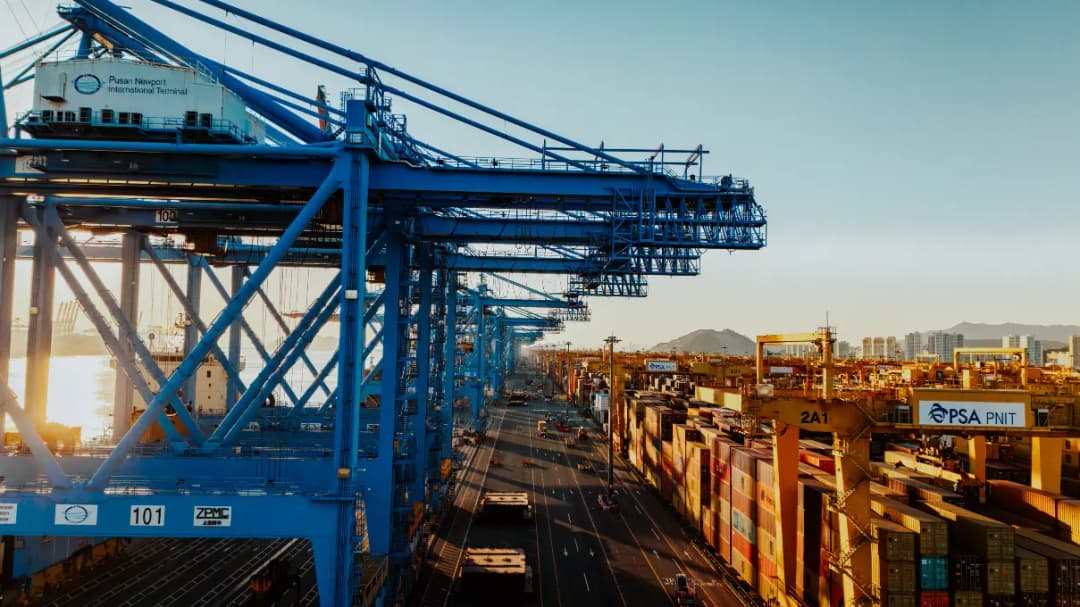
BUSAN, South Korea - Busan, South Korea’s first designated metropolitan city, has long stood as the nation’s foremost port and industrial hub outside Seoul. Historically, the city was at the center of Korea’s modernization, flourishing through its shipping industry, manufacturing sector, and strategic location along global trade routes. It was the first city to be designated a directly governed metropolitan city in 1963, an acknowledgment of its pivotal economic role. However, as economic landscapes shift, Busan now faces a sobering reality: its position as Korea’s second city is under threat.
Recent data indicates a significant economic and demographic shift, with Incheon surpassing Busan in gross regional domestic product (GRDP) for the first time in history. According to 2023 figures, Incheon’s GRDP reached 116.8 trillion KRW, edging ahead of Busan’s 114.1 trillion KRW. This reversal is not an isolated incident but part of a broader trend that sees Incheon growing in economic influence while Busan struggles with stagnation. Once considered the clear economic powerhouse outside Seoul, Busan now finds itself on the defensive, facing a shrinking population, an aging workforce, and an exodus of young talent to the capital region.
The demographic trends further underscore the city’s crisis. In 1995, Busan had nearly 3.88 million residents, making it Korea’s second-largest city. Today, that number has declined to 3.33 million, with over 23.5% of its population aged 65 or older. The city’s youth population has been steadily declining, driven by a lack of employment opportunities and better prospects in Seoul and its surrounding metropolitan areas. In contrast, Incheon has seen continuous population growth, reaching 2.95 million, and is projected to peak at 3.13 million by 2037. The younger workforce in Incheon has contributed to the city’s expanding economy, further solidifying its role as an emerging economic center.
While Busan remains a major logistics and trade hub, its economic structure has not evolved at the same pace as its competitors. The city remains overly reliant on shipbuilding, manufacturing, and port logistics, industries that have seen declining global competitiveness due to automation and shifting trade patterns. In contrast, Incheon has diversified into logistics, finance, biotechnology, and high-tech industries, benefiting from its proximity to Incheon International Airport and major foreign investments in Songdo International Business District. The presence of Samsung BioLogics and Hyundai Motors’ advanced facilities has helped Incheon secure long-term economic growth.
Busan’s struggles are compounded by the fact that it lacks a strong presence of major corporations, making it less attractive to young professionals. Despite its size and infrastructure, the city has failed to attract top-tier conglomeratesor international firms at the scale seen in Incheon. The absence of high-paying jobs and a dynamic business environment has fueled the continued migration of skilled workers to the Seoul metropolitan area, further weakening Busan’s ability to compete.
In response to these challenges, Busan has sought to secure the nation’s first Maritime Court, a move aimed at reinforcing its status as Korea’s leading shipping and logistics hub. Such an institution would solidify Busan’s position as the country’s legal and arbitration center for maritime disputes, bringing high-value financial and legal jobs while strengthening its global competitiveness. However, Incheon has also emerged as a competitor in this race, arguing that its infrastructure, including Incheon International Airport and its growing role in logistics, makes it an equally viable location for the court. The fact that both cities are vying for this legal institution highlights the urgency for Busan to take more aggressive steps in securing its economic future.
To reverse its decline, Busan must urgently implement policies aimed at attracting corporate investment, fostering new industries, and retaining young talent. The city’s economic framework must shift from traditional manufacturing to high-tech industries, digital innovation, and knowledge-based sectors. Large-scale corporate investments, tax incentives, and startup incubators must be prioritized to prevent further brain drain and create a more competitive business environment. Furthermore, Busan’s urban planning must focus on livability, ensuring that young professionals view the city as an attractive place to build careers and families.
While Busan retains the advantages of a world-class port, a vibrant cultural scene, and a strong infrastructure, its failure to act decisively could result in further economic decline, allowing Incheon to solidify its claim as South Korea’s second economic powerhouse. If strategic reforms are not enacted soon, the city that once symbolized Korea’s industrial might risks being left behind in the country’s urban hierarchy.
Continue this reporting
Reporting on the same issue
Related coverage selected from the article's desk, topics and newsroom relationships.
 NewsOct 16, 2026
What Is Still Worth Going to See?
Busan’s biennale faces questions of artistic judgment and institutional care....
 NewsOct 14, 2026
What Became of Busan’s University Streets?
From 2015 to 2023, registered businesses grew near Pusan National University...
 NewsOct 12, 2026
Bukangi, the Shark That Stayed in Busan’s North Port
A rescue net guided Bukangi toward the sea, but the dusky shark returned to B...
More from the author
More from this byline
Stay with the same line of reporting through more work from this byline.
 NewsOct 9, 2026
Why “Busan Is Good” Falls Short as a City Brand
 NewsSep 18, 2026
The Other AI Race Is for the Freedom to Change Course
Reader Signal
Community readWhat did this report leave you with?
Choose the signal that best reflects your reading. Select it again to remove it.
One response per article
No response selected
A moderated conversation about the reporting.
One-level replies and newsroom moderation keep the conversation anchored to this article.
Discussion Status
Open
Please sign in to join the discussion.
Newsletter
Weekly reporting and context from Busan and Korea.