Busan’s Dongbaek Pass Boosts Public Transit Use by 76%
Busan, South Korea — A recent survey reveals that Busan's "Dongbaek Pass" initiative has led to a significant increase in public transit use among residents, with 76.5% of pass users reporting more frequent use of public transportation. The survey, conducted from October 15 to October 22, 2024, also shows high user satisfaction, with 92.5% of respondents expressing overall satisfaction with the program. Launched in August 2023, the Dongbaek Pass was designed to make public transportation more a

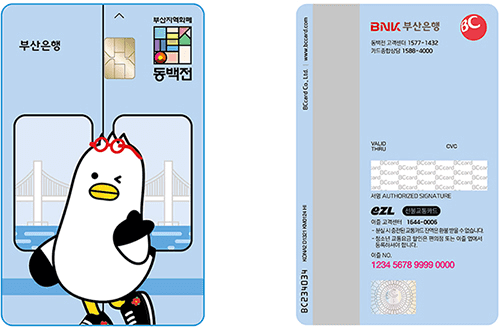
Busan, South Korea — A recent survey reveals that Busan's "Dongbaek Pass" initiative has led to a significant increase in public transit use among residents, with 76.5% of pass users reporting more frequent use of public transportation. The survey, conducted from October 15 to October 22, 2024, also shows high user satisfaction, with 92.5% of respondents expressing overall satisfaction with the program.
Launched in August 2023, the Dongbaek Pass was designed to make public transportation more accessible and affordable for Busan residents, with the goal of reducing traffic congestion and environmental impact. The program aligns with the city’s broader urban planning objectives of increasing public transit ridership and reducing the city’s reliance on private vehicles. Since its launch, the Dongbaek Pass has become a central component of Busan’s push toward a greener, more efficient transit system.'
According to survey results, 76.5% of Dongbaek Pass users report an increase in their use of public transportation, while personal vehicle usage has decreased by an average of 0.8 days per week. The survey, which included over 17,500 respondents, also reveals that 81.9% of users believe the Dongbaek Pass has enhanced the public transportation environment in Busan. With these results, the Dongbaek Pass has proven to be a key factor in Busan’s recent transit improvements, further supported by the high satisfaction rate among users.
Since its inception, the Dongbaek Pass has seen significant growth, with membership doubling from 256,000 users in October 2023 to 575,000 by October 2024. The city has taken steps to expand access to the program, introducing a prepaid version of the Dongbaek Pass in March 2024 to cater to low-credit individuals and foreign residents. A youth-specific version was also launched in July 2024 for residents aged 13 to 18, making the program more inclusive across demographic groups. Additionally, in August 2024, the Dongbaek Pass was integrated with the K-Pass to offer benefits to frequent public transit users, further incentivizing public transportation use.
The success of the Dongbaek Pass program goes beyond transportation. The rebate incentives associated with the pass have not only eased transportation costs for residents but also encouraged local spending, contributing to Busan’s economic cycle. The decrease in private car usage also supports the city’s environmental goals by potentially reducing emissions and urban congestion. This aligns well with global trends toward greener, more sustainable urban living.
Building on the program’s success, Busan is launching two community engagement events to further encourage the use of public transit and strengthen resident participation. The “Share Your Dongbaek Pass Experience” event will reward users who share their experiences with the pass, selecting winners for monetary rewards. Additionally, the “Dongbaek Pass Family Hunt” initiative encourages families to adopt public transit, with selected families receiving cash prizes based on their number of family members using the pass. These events aim to foster a deeper connection between residents and the city’s public transit system while gathering valuable user feedback for future improvements.
Busan’s Mayor Park Heong-joon praised the program's success, emphasizing that the Dongbaek Pass has not only helped reduce transportation costs but has also played a crucial role in driving public transit adoption. “The Dongbaek Pass is helping to ease residents’ financial burdens while promoting a more sustainable public transit network. This year, the city recorded a historic high of 44.4% in public transportation share, the highest since the implementation of our semi-public operation model,” he stated. Mayor Park reiterated Busan’s commitment to continuously improving the Dongbaek Pass to make public transportation the most convenient option for residents and to maintain Busan’s position as a leading city in sustainable transit.
The Dongbaek Pass aligns with a growing global trend of cities prioritizing public transportation initiatives to combat congestion, reduce emissions, and improve urban livability. Programs like Seoul’s T-money card and similar initiatives in cities such as Tokyo, London, and New York emphasize the role of integrated transit cards in promoting public transit use. Busan’s approach, which combines access expansion, financial incentives, and community engagement, serves as a model for cities aiming to enhance their transit systems and achieve sustainability goals.
Continue this reporting
Reporting on the same issue
Related coverage selected from the article's desk, topics and newsroom relationships.
 NewsOct 16, 2026
What Is Still Worth Going to See?
Busan’s biennale faces questions of artistic judgment and institutional care....
 NewsOct 14, 2026
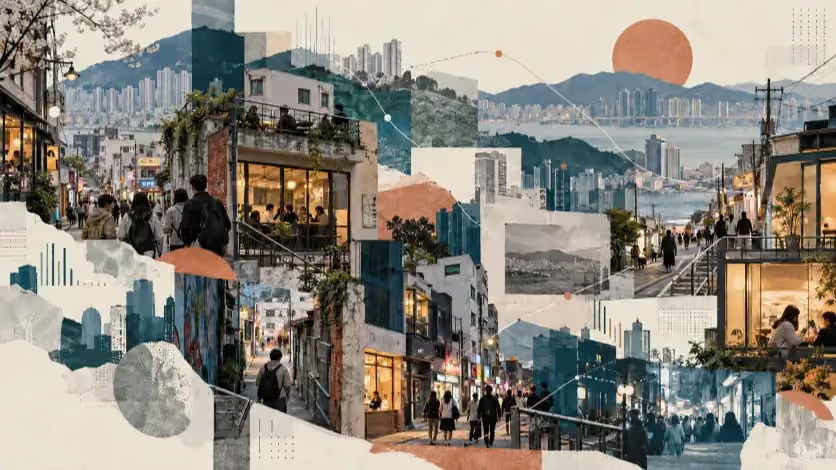
What Became of Busan’s University Streets?
From 2015 to 2023, registered businesses grew near Pusan National University...
 NewsOct 12, 2026
Bukangi, the Shark That Stayed in Busan’s North Port
A rescue net guided Bukangi toward the sea, but the dusky shark returned to B...
More from the author
More from this byline
Stay with the same line of reporting through more work from this byline.
 NewsOct 9, 2026
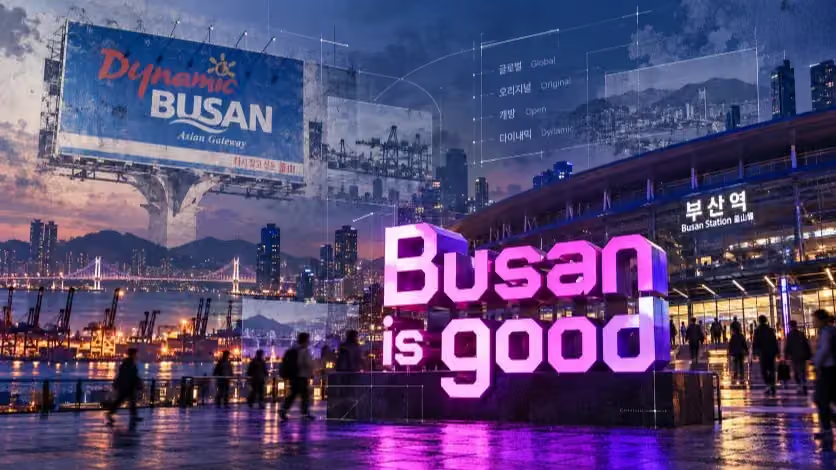
Why “Busan Is Good” Falls Short as a City Brand
 NewsSep 18, 2026
The Other AI Race Is for the Freedom to Change Course
Reader Signal
Community readWhat did this report leave you with?
Choose the signal that best reflects your reading. Select it again to remove it.
One response per article
No response selected
A moderated conversation about the reporting.
One-level replies and newsroom moderation keep the conversation anchored to this article.
Discussion Status
Open
Please sign in to join the discussion.
Newsletter
Weekly reporting and context from Busan and Korea.