Busan’s Broken Blocks: Why Alley Commerce Alone Won’t Save the City’s Urban Core
Despite millions in revitalization funds, Busan’s neighborhood markets continue to empty out. A deeper structural crisis—marked by aging districts, hollow high-rises, and disconnected urban planning—demands a shift from short-term fixes to long-term ecosystem design.

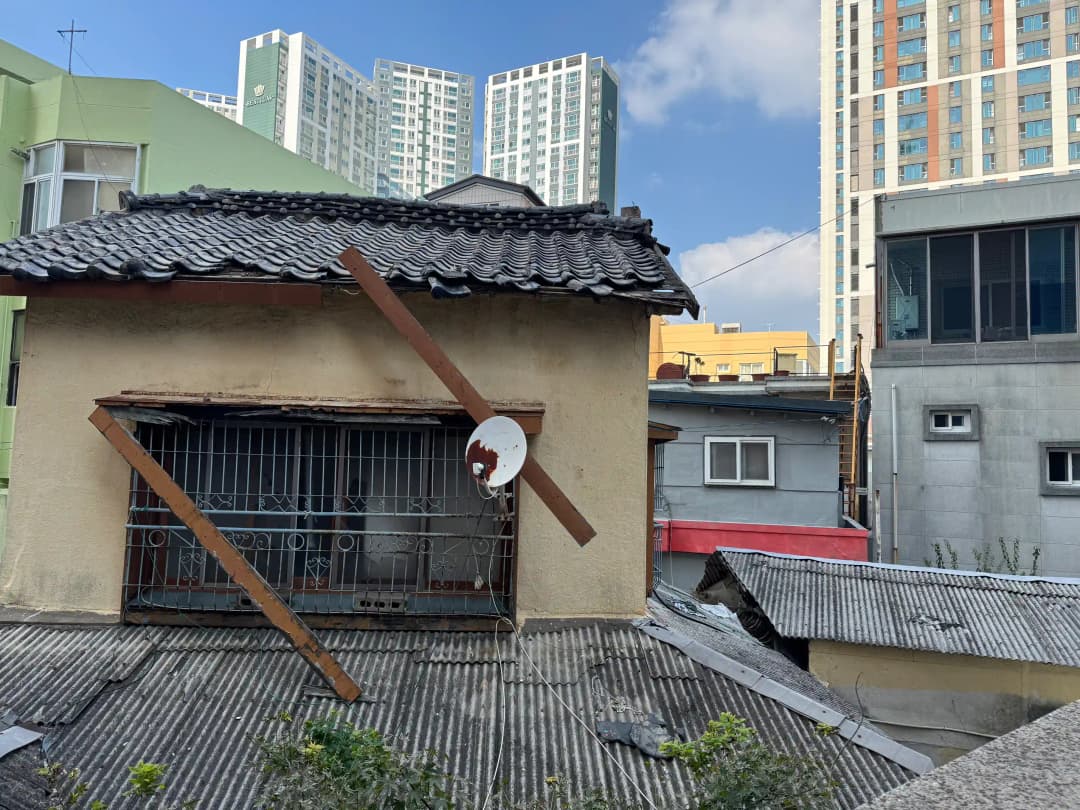
Busan, South Korea — Behind the shimmering façade of South Korea’s second-largest city lies an increasingly hollow urban reality. While apartment towers rise in sleek succession and sidewalk banners tout revitalization projects for alleyway businesses, the heart of Busan’s local economy is quietly unraveling. Empty storefronts, stagnant street life, and the growing isolation of residential zones point to a deeper structural breakdown—one that small-scale grants or seasonal festivals alone cannot fix.
The failure isn’t one of effort, but of vision.
Over the past several years, the city has launched a series of well-intentioned initiatives to support its "golmok-sanggwon", or alley markets. The programs emphasize organization, branding, and temporary cultural events—often backed by municipal subsidies and student marketer programs. Some have yielded modest results, but most struggle against deeper currents: accelerating demographic decline, suburban-style tower blocks isolating foot traffic, and commercial zoning strategies divorced from community life.
Despite repeated policy cycles, the fragmentation remains. Even the recent 2025 Golmok Economy Revitalization Plan continues to operate within a limited paradigm—offering up to ₩100 million for designated "model alleys" but without tackling the systems that determine why these spaces succeed or fail. These interventions occur in isolation from broader development trends, particularly the unchecked expansion of high-rise apartments whose commercial zones often sit vacant for years.
The truth is stark: neighborhood commerce in Busan is not just fading; it is structurally imploding.
New apartment complexes, often approved through a developer-centric planning process, exacerbate the problem. Their retail podiums are priced out of reach for small business owners, poorly connected to surrounding areas, and frequently lack pedestrian permeability. Designed for cars, managed for profit, and conceived without public input, these buildings offer square footage—not street life. Their commercial space remains underused not because of lack of demand, but because of architectural and economic misalignment.
Compounding the crisis is a governance vacuum. Local governments, despite their commitment, lack the cross-sectoral capacity needed to orchestrate meaningful urban transformation. Planners are overburdened, urban designers underutilized, and interdepartmental coordination sparse. Without a guiding philosophy rooted in inclusion, sustainability, and human-scale design, policy becomes reactive—fighting symptoms while the disease spreads.
This is where a new framework is urgently needed: one that shifts from patchwork to ecosystem.
Rather than scatter funds across dozens of temporary branding exercises, the city should designate a limited number of Strategic Commercial Cores based on demographic movement, cultural anchors, and transportation nodes. These cores must become living laboratories for next-generation urbanism—not just lined with shops, but infused with multifunctional spaces: child care, wellness centers, digital hubs, and co-op kitchens tailored to local residents.
A unified digital backbone could link physical interventions: storytelling, navigation, delivery, mobile commerce, and community data collection. Universities and start-ups must also be embedded—not as passive consultants but as on-site incubators for sustainable business models.
Crucially, underused storefronts and overbuilt podium malls must be reconsidered. With legal and policy tools, these can be transformed into social infrastructure—places not of transaction, but connection.
Because what’s at stake isn’t just rent revenue or foot traffic—it’s the urban fabric itself.
Unless Busan reimagines the very purpose of neighborhood commerce, it will continue down a path of fragmented streetscapes, ghost storefronts, and aging districts with no anchor. Already, the gap between redeveloped apartment zones and older low-income neighborhoods is stretching wider, both economically and socially. The rise of "closed tower enclaves" is accelerating urban stratification.
Now is the moment to ask: Can we move from building towers to building communities?
The answer depends not on aesthetic initiatives, but on structural courage. Urban design must shift from being reactive to proactive, from cosmetic to strategic, from individual spaces to interlinked systems.
Busan’s alleys may never look like they did decades ago. But they can still be something better—not artifacts of nostalgia, but engines of a more equitable, resilient, and human-scaled city.
Continue this reporting
Reporting on the same issue
Related coverage selected from the article's desk, topics and newsroom relationships.
 NewsOct 16, 2026
What Is Still Worth Going to See?
Busan’s biennale faces questions of artistic judgment and institutional care....
 NewsOct 14, 2026
What Became of Busan’s University Streets?
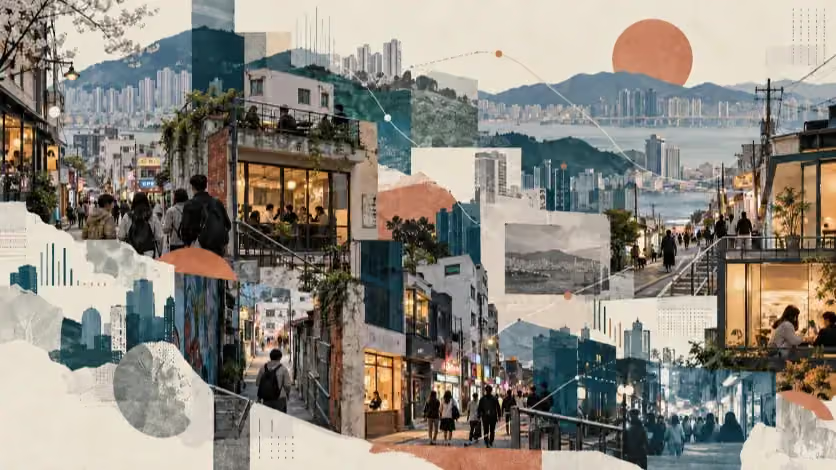
From 2015 to 2023, registered businesses grew near Pusan National University...
 NewsOct 12, 2026
Bukangi, the Shark That Stayed in Busan’s North Port
A rescue net guided Bukangi toward the sea, but the dusky shark returned to B...
More from the author
More from this byline
Stay with the same line of reporting through more work from this byline.
 NewsOct 9, 2026
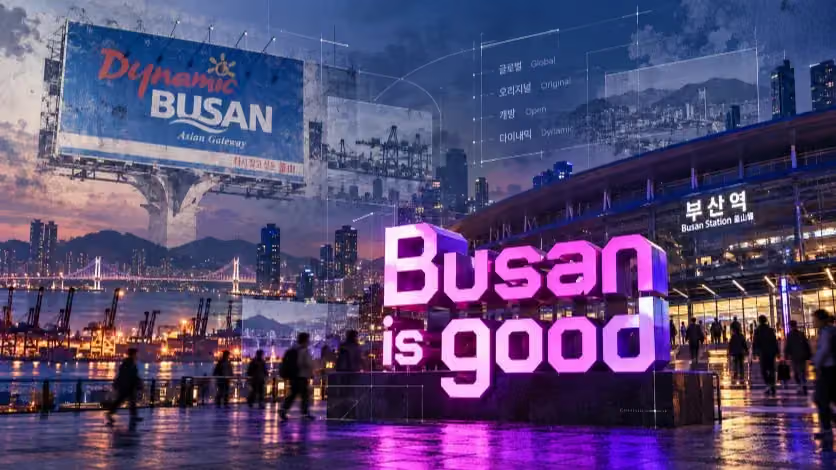
Why “Busan Is Good” Falls Short as a City Brand
 NewsSep 18, 2026
The Other AI Race Is for the Freedom to Change Course
Reader Signal
Community readWhat did this report leave you with?
Choose the signal that best reflects your reading. Select it again to remove it.
One response per article
No response selected
A moderated conversation about the reporting.
One-level replies and newsroom moderation keep the conversation anchored to this article.
Discussion Status
Open
Please sign in to join the discussion.
Newsletter
Weekly reporting and context from Busan and Korea.