Busan World Peace Forum Falls Short of Global Hub Goals
Busan, South Korea — The 2024 Busan World Peace Forum, held on November 1 under the theme “A World Without War: Strategies for Global Peace and Cooperation,” was promoted as a flagship event in Busan’s campaign to establish itself as a global hub for peace. Promoted as an impactful gathering of experts and leaders to discuss global peacebuilding, the forum was expected to set the stage for Busan’s commitment to international peace initiatives. However, upon closer examination, the forum lacked t

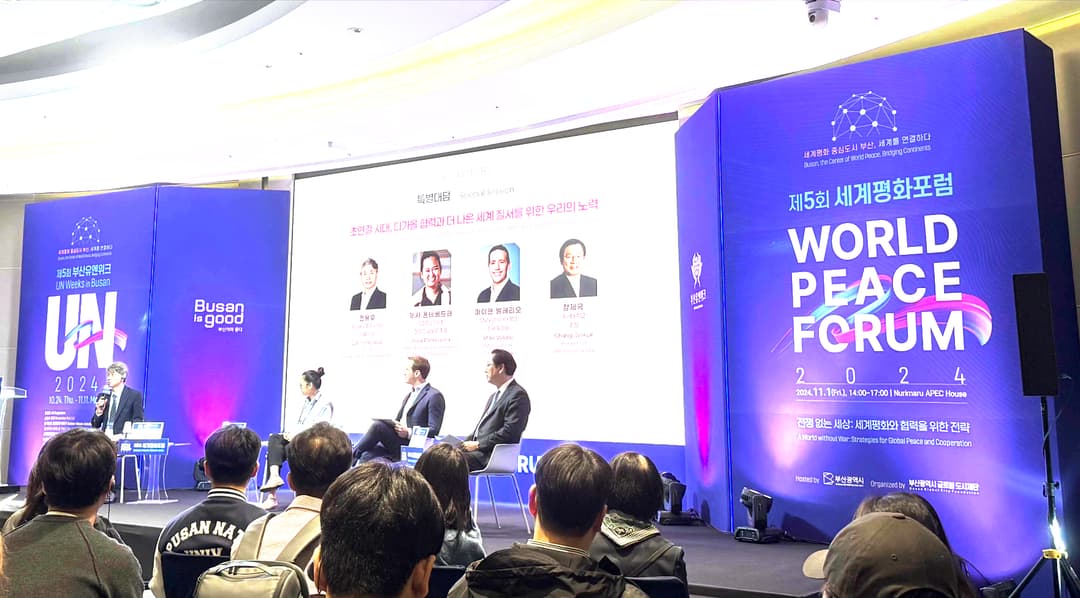
Busan, South Korea — The 2024 Busan World Peace Forum, held on November 1 under the theme “A World Without War: Strategies for Global Peace and Cooperation,” was promoted as a flagship event in Busan’s campaign to establish itself as a global hub for peace. Promoted as an impactful gathering of experts and leaders to discuss global peacebuilding, the forum was expected to set the stage for Busan’s commitment to international peace initiatives. However, upon closer examination, the forum lacked the anticipated depth and focus of a major international event, instead resembling a casual school workshop rather than a serious platform for global conflict resolution and peace strategies.
Busan has actively pursued a vision of becoming a global hub city, bolstered by significant infrastructure projects, cultural initiatives, and international events like the World Peace Forum. This ambition, while promising, faces growing scrutiny from both domestic and international observers. Concerns about the city’s ability to fulfill its global aspirations have been raised due to structural and operational limitations in its key institutions—the Busan Global City Foundation and Busan English Broadcasting (BeFM)—which play a central role in promoting the city’s international outreach.
Within South Korea, Busan’s efforts have received mixed reviews. While the city has achieved notable progress, such as ranking 15th globally and 3rd in Asia in the 2023 Smart City Index (SCI) and being named one of the top emerging travel destinations by Trip.com, critics argue that much of Busan’s global strategy remains superficial. Some have noted that the emphasis on image-building through exhibition-style events detracts from delivering impactful initiatives. Local criticism has also been directed toward the Busan Global City Foundation, citing its lack of concrete results and strategic focus.
Internationally, while Busan’s initiatives in forums and city diplomacy attract some attention, there has been limited direct coverage on the city’s overall global hub vision. International engagements such as Busan’s presentation on the future of Busan Port at the 9th World Cities Summit in Singapore have helped spotlight the city’s ambitions, yet global observers await more robust outcomes from Busan’s hub vision.
Other cities in South Korea, such as Seoul and Incheon, have pursued similar goals with varying strategies and levels of success. Seoul has actively strengthened its role as a global city by prioritizing the recruitment of international organizations and developing structured city diplomacy to increase its international presence. Incheon, on the other hand, has solidified its global presence by hosting international organizations like the Green Climate Fund (GCF), despite ongoing critiques about the need to further professionalize its international engagement.
Compared to Seoul and Incheon, Busan has shown potential but is often seen as lacking the institutional strength and strategic alignment needed to attract international organizations and global attention. For Busan to compete on this level, the city will need to transition from image-focused initiatives to substantive international engagement, bringing in specialized expertise and delivering measurable outcomes.
The Busan Global City Foundation, established to support urban diplomacy and internationalization, has faced criticism for prioritizing superficial projects over impactful initiatives. Critics argue that the foundation’s focus on exhibition-style events, rather than strategic projects with measurable impact, reflects its struggle to build Busan’s global standing meaningfully. Compounded by leadership turnover and budget constraints, the foundation has faced limitations in pushing forward high-impact initiatives.
Similarly, BeFM, the city’s English-language broadcasting station, has encountered challenges in broadening its reach and producing content that resonates globally. Primarily focused on delivering basic information to English-speaking residents, the station lacks the diverse, engaging programming necessary to amplify Busan’s international appeal. Budget limitations have further restricted BeFM’s potential to serve as an influential platform for Busan’s global presence.
At the World Peace Forum, expectations were high for discussions on war prevention, conflict resolution, and global alliances for peace. However, the event largely missed these marks, with discussions often veering into lighter topics that lacked relevance to its stated mission. Instead of delivering the depth expected of an international peace forum, the event felt more like a college club gathering where attendees simply listened to experiences shared by speakers. It was disappointingly amateur for a forum aspiring to establish Busan as a city of peace. The grand theme projected on screens seemed to echo hollowly, lacking the substance to match its ambitious title.
Busan’s ambition to become a global hub for peace and cooperation is commendable, but it requires a more grounded approach to meet international standards. Future events must prioritize substance over image, fostering actionable discussions with clear goals. Additionally, stabilizing the Busan Global City Foundation’s leadership and strengthening BeFM’s content and outreach capabilities could provide the support Busan needs to make measurable strides.
For Busan to establish itself as a true global city of peace and collaboration, the focus must shift from appearance to impact. Through strategic investments, increased expertise, and a commitment to delivering meaningful results, Busan has the potential to achieve lasting influence on the global stage.
Continue this reporting
Reporting on the same issue
Related coverage selected from the article's desk, topics and newsroom relationships.
 NewsOct 16, 2026
What Is Still Worth Going to See?
Busan’s biennale faces questions of artistic judgment and institutional care....
 NewsOct 14, 2026
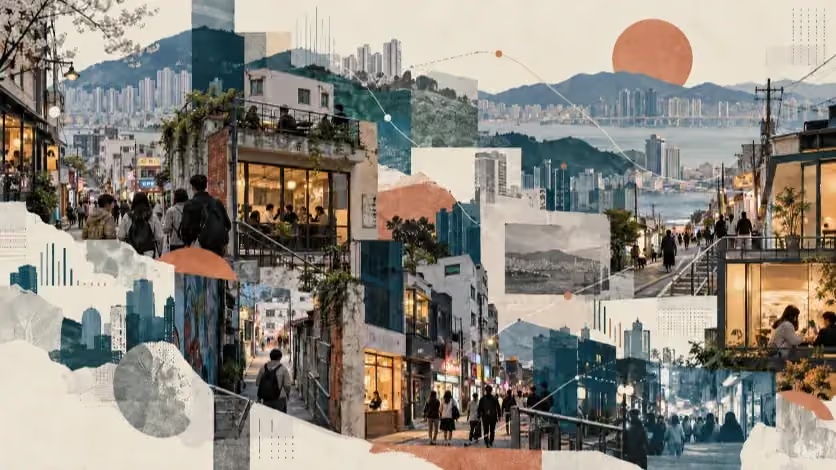
What Became of Busan’s University Streets?
From 2015 to 2023, registered businesses grew near Pusan National University...
 NewsOct 12, 2026
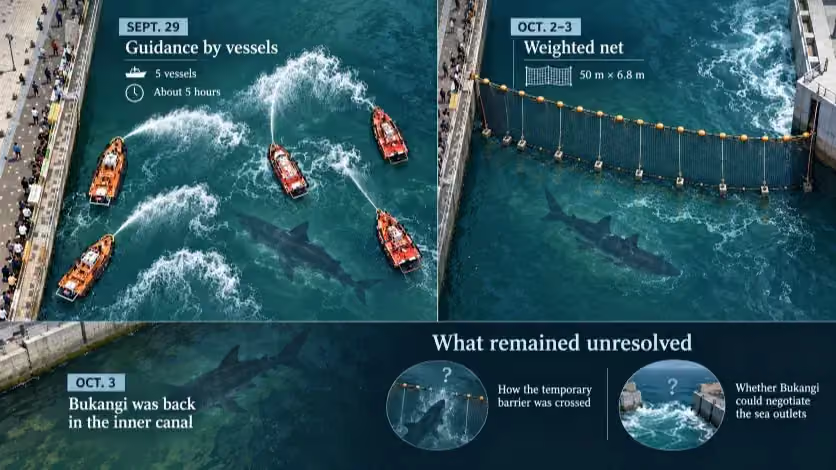
Bukangi, the Shark That Stayed in Busan’s North Port
A rescue net guided Bukangi toward the sea, but the dusky shark returned to B...
More from the author
More from this byline
Stay with the same line of reporting through more work from this byline.
 NewsOct 9, 2026
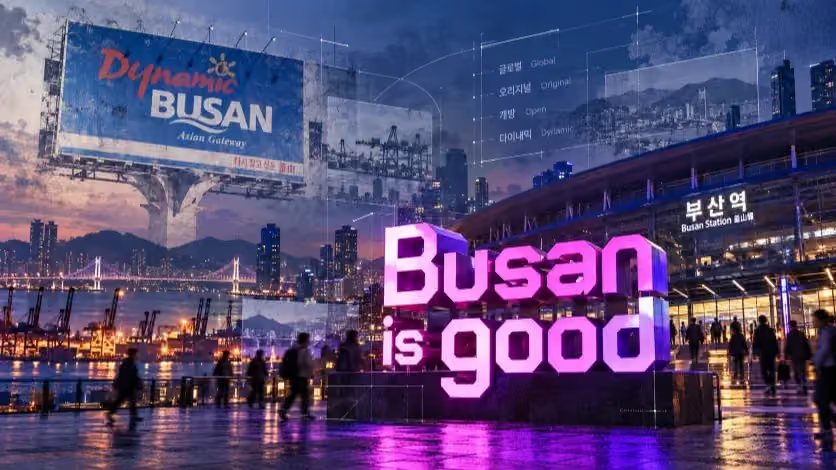
Why “Busan Is Good” Falls Short as a City Brand
 NewsSep 18, 2026
The Other AI Race Is for the Freedom to Change Course
Reader Signal
Community readWhat did this report leave you with?
Choose the signal that best reflects your reading. Select it again to remove it.
One response per article
No response selected
A moderated conversation about the reporting.
One-level replies and newsroom moderation keep the conversation anchored to this article.
Discussion Status
Open
Please sign in to join the discussion.
Newsletter
Weekly reporting and context from Busan and Korea.