Busan to Make Baekyang Tunnel Toll-Free Starting January 2025
Busan, South Korea – The City of Busan has announced an update to its transportation policy: starting January 10, 2025, the toll fees for the Baekyang Tunnel will be removed. This decision follows the expiration of the current management contract with the private operator on January 9, 2025, marking the end of the toll collection period. The Baekyang Tunnel, which has served as a crucial route connecting the western and central parts of Busan since its opening in 2001, has long been a toll road

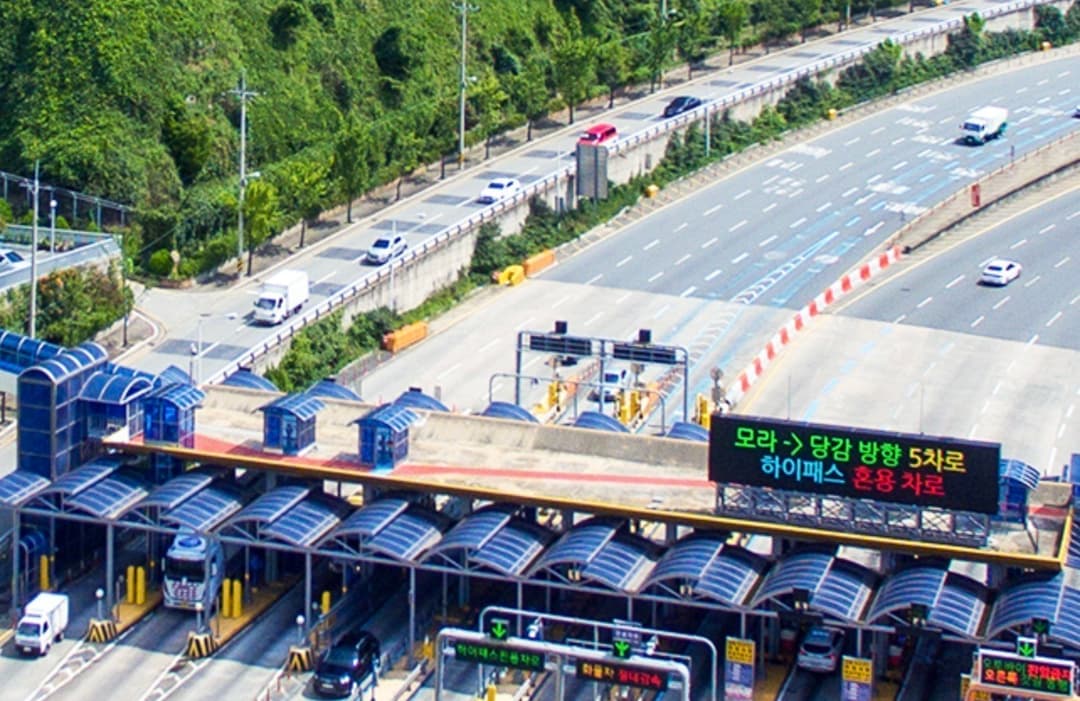
Busan, South Korea – The City of Busan has announced an update to its transportation policy: starting January 10, 2025, the toll fees for the Baekyang Tunnel will be removed. This decision follows the expiration of the current management contract with the private operator on January 9, 2025, marking the end of the toll collection period.
The Baekyang Tunnel, which has served as a crucial route connecting the western and central parts of Busan since its opening in 2001, has long been a toll road. The tunnel is a vital part of the city’s infrastructure, helping to alleviate traffic congestion on Gwanmun-daero, one of the city’s busiest thoroughfares. Initially, the city considered reducing the toll from 900 KRW (approximately 0.70 USD) to 500 KRW (approximately 0.39 USD) to manage anticipated traffic increases, but growing public demand has led to a complete abolition of the toll.
Busan’s Mayor, Park Heong-joon, explained the rationale behind this decision, emphasizing the importance of public welfare. "Even when a policy is considered rational, it’s essential to respect and respond to the voices of the citizens who experience its effects," Mayor Park stated. He noted that the decision to remove toll fees aligns with the city's commitment to reducing the financial strain on residents, especially during challenging economic times marked by rising costs of living.
The city anticipates that removing the toll will lead to a significant increase in traffic through the Baekyang Tunnel, with daily vehicle numbers expected to rise from around 75,000 to over 100,000. To address this, Busan is advancing plans to expand the tunnel from its current four lanes to seven lanes. This expansion is part of a broader project known as the New Baekyang Tunnel, which is expected to ease congestion on Gwanmun-daero.
The New Baekyang Tunnel project, currently in the strategic environmental assessment stage, is set to proceed with a formal agreement expected by 2024. This expansion aims to ensure that the city’s infrastructure can handle the increased traffic, thereby improving overall traffic flow and reducing congestion in the area.
After the toll is abolished, the Baekyang Tunnel will be managed by Busan Metropolitan City Construction Safety Test Office and Busan Infrastructure Corporation. The city's projected annual maintenance costs for the tunnel are estimated at approximately 20 billion KRW (around 15 million USD). While this is a significant expenditure, it is notably lower than the current 60 billion KRW (approximately 45 million USD) required under the toll system, which includes the costs of toll collection.
Looking ahead, the New Baekyang Tunnel, once operational, will likely be managed by a private operator. Depending on the terms of future agreements, toll fees could be reinstated for the expanded tunnel.
Busan's decision to eliminate tolls on the Baekyang Tunnel is part of a broader trend of reevaluating toll roads and other user fees in major cities worldwide. As urban populations grow and traffic congestion worsens, cities are increasingly seeking ways to balance infrastructure funding with the need to make transportation affordable and accessible.
For Busan, a city with over 3.5 million residents and a key economic hub in South Korea, this decision reflects a commitment to improving quality of life and ensuring that infrastructure keeps pace with the needs of its citizens. The removal of tolls is expected to ease daily commutes, reduce transportation costs, and contribute to the city's ongoing development as a global logistics and tourism center.
The planned expansion of the tunnel under the New Baekyang Tunnel project will be crucial in supporting the city’s infrastructure needs, ensuring smoother and more efficient transportation for both residents and visitors alike.
Continue this reporting
Reporting on the same issue
Related coverage selected from the article's desk, topics and newsroom relationships.
 NewsOct 16, 2026
What Is Still Worth Going to See?
Busan’s biennale faces questions of artistic judgment and institutional care....
 NewsOct 14, 2026
What Became of Busan’s University Streets?
From 2015 to 2023, registered businesses grew near Pusan National University...
 NewsOct 12, 2026
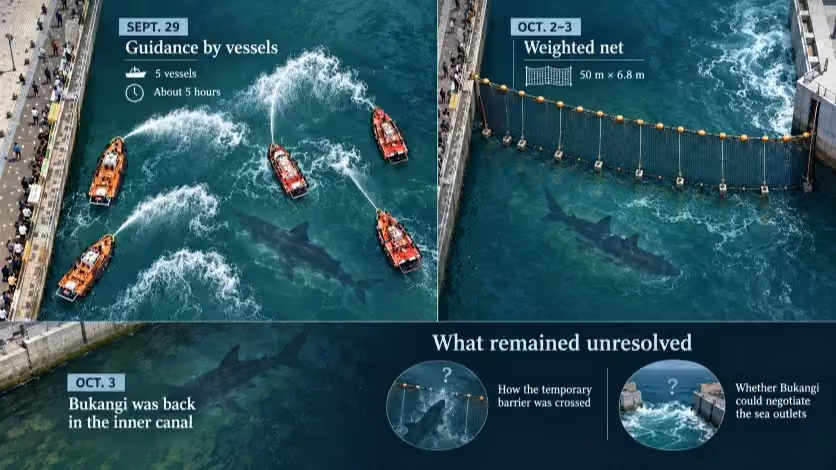
Bukangi, the Shark That Stayed in Busan’s North Port
A rescue net guided Bukangi toward the sea, but the dusky shark returned to B...
More from the author
More from this byline
Stay with the same line of reporting through more work from this byline.
 NewsOct 9, 2026
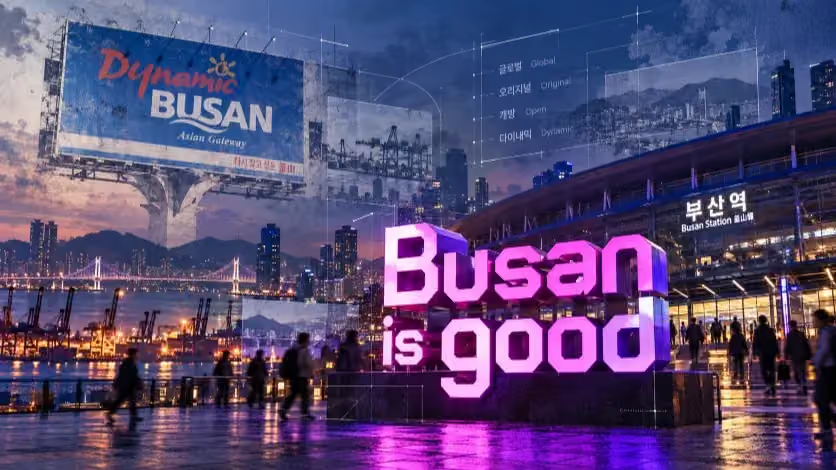
Why “Busan Is Good” Falls Short as a City Brand
 NewsSep 18, 2026
The Other AI Race Is for the Freedom to Change Course
Reader Signal
Community readWhat did this report leave you with?
Choose the signal that best reflects your reading. Select it again to remove it.
One response per article
No response selected
A moderated conversation about the reporting.
One-level replies and newsroom moderation keep the conversation anchored to this article.
Discussion Status
Open
Please sign in to join the discussion.
Newsletter
Weekly reporting and context from Busan and Korea.