Busan Struggles to Combat Rising Lonely Deaths
Busan, South Korea - "Loneliness is spreading like an epidemic," warned a recent CNN report, pointing to the global rise in isolated deaths, or godoksa, particularly in South Korea. As national efforts intensify to prevent such tragedies, Busan—one of the cities hardest hit by this crisis—finds itself facing mounting challenges. Despite some promising local initiatives, Busan continues to struggle in fully addressing the root causes and impacts of these lonely deaths. Busan ranks third in South


Busan, South Korea - "Loneliness is spreading like an epidemic," warned a recent CNN report, pointing to the global rise in isolated deaths, or godoksa, particularly in South Korea. As national efforts intensify to prevent such tragedies, Busan—one of the cities hardest hit by this crisis—finds itself facing mounting challenges. Despite some promising local initiatives, Busan continues to struggle in fully addressing the root causes and impacts of these lonely deaths.
Busan ranks third in South Korea for the number of lonely deaths, reporting 287 cases in 2023, behind Gyeonggi Province (922 cases) and Seoul (559 cases). Over the past five years, Busan has experienced a steady rise in godoksa cases, a trend exacerbated by the growing number of single-person households. As of 2022, the city had approximately 61.7 million single-person households, placing a significant portion of the population at heightened risk.
The demographic breakdown of these lonely deaths is also alarming. Middle-aged men in their 50s and 60s account for over half of all godoksa cases. However, younger generations are not immune to this crisis; in fact, nearly 60% of godoksa deaths among individuals in their 20s are a result of suicide.
In response to the growing godoksa crisis, Busan has launched several initiatives aimed at identifying and supporting those at risk of social isolation. The city has implemented pilot programs in six districts—Saha-gu, Suyeong-gu, Sasang-gu, among others—focusing on early detection, regular welfare check-ins, and mental health support.
Busan is also utilizing innovative technology to tackle the issue. AI-assisted welfare checks are now being used to monitor isolated individuals, and community programs are being established to help residents foster social connections. These efforts are part of a broader strategy to reduce social isolation and prevent lonely deaths, particularly among the elderly and single-person households.
Despite these initiatives, Busan continues to face significant challenges in its fight against godoksa. One major issue is the inconsistency in local data collection. Without accurate statistics, it is difficult to identify at-risk individuals and allocate resources effectively. Calls for a dedicated investigation team to monitor and prevent godoksa have grown louder, with experts arguing that more detailed, on-the-ground assessments are needed.
Additionally, there are gaps in the city’s mental health services. While AI and technological solutions offer innovative approaches to welfare checks, they cannot replace the need for direct human interaction and professional counseling. Mental health services in Busan remain underfunded, leaving many vulnerable individuals without the support they need.
Busan’s local initiatives are aligned with the 1st National Loneliness Prevention Basic Plan (2023–2027), a government strategy aimed at preventing lonely deaths across South Korea. The national plan includes early identification of at-risk individuals, community outreach, and mental health interventions. However, despite these national efforts, Busan has struggled to keep pace with the growing needs of its isolated population.
The city government has acknowledged that more needs to be done. Plans are underway to expand Busan’s godoksaprevention programs and integrate them with local community initiatives. Officials hope that a more comprehensive long-term strategy—focusing on mental health services, community engagement, and more targeted interventions—will help reduce the city’s high rate of lonely deaths.
Despite some progress, Busan’s battle against godoksa is far from over. The city’s innovative pilot programs and AI technology offer some hope, but significant gaps remain in the areas of mental health support and community engagement. Without a more integrated approach that includes thorough mental health interventions and better data collection, Busan’s lonely death crisis is likely to persist. For now, the city faces a complex challenge in ensuring that its most vulnerable residents do not continue to die alone.
Continue this reporting
Reporting on the same issue
Related coverage selected from the article's desk, topics and newsroom relationships.
 NewsOct 16, 2026
What Is Still Worth Going to See?
Busan’s biennale faces questions of artistic judgment and institutional care....
 NewsOct 14, 2026
What Became of Busan’s University Streets?
From 2015 to 2023, registered businesses grew near Pusan National University...
 NewsOct 12, 2026
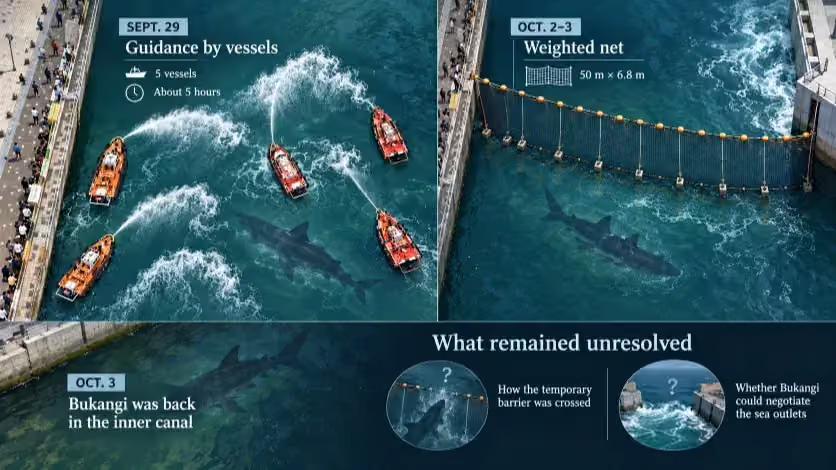
Bukangi, the Shark That Stayed in Busan’s North Port
A rescue net guided Bukangi toward the sea, but the dusky shark returned to B...
More from the author
More from this byline
Stay with the same line of reporting through more work from this byline.
 NewsOct 9, 2026
Why “Busan Is Good” Falls Short as a City Brand
 NewsSep 18, 2026
The Other AI Race Is for the Freedom to Change Course
Reader Signal
Community readWhat did this report leave you with?
Choose the signal that best reflects your reading. Select it again to remove it.
One response per article
No response selected
A moderated conversation about the reporting.
One-level replies and newsroom moderation keep the conversation anchored to this article.
Discussion Status
Open
Please sign in to join the discussion.
Newsletter
Weekly reporting and context from Busan and Korea.