Busan Sets Sail to Become a Global Shipbuilding Powerhouse with a Forward-Looking Strategy
During the 41st Emergency Economic Strategy Meeting, Busan Metropolitan City announced an extensive plan to position itself as a leading global player in the shipbuilding industry. The plan aims to tackle current challenges in the sector and drive the development of next-generation technologies. Mayor Park Hyung-jun led the meeting with a diverse group of experts, underscoring the city's commitment to rejuvenating its shipbuilding landscape. According to an ambitious blueprint, the city has ple


During the 41st Emergency Economic Strategy Meeting, Busan Metropolitan City announced an extensive plan to position itself as a leading global player in the shipbuilding industry. The plan aims to tackle current challenges in the sector and drive the development of next-generation technologies. Mayor Park Hyung-jun led the meeting with a diverse group of experts, underscoring the city's commitment to rejuvenating its shipbuilding landscape.
According to an ambitious blueprint, the city has pledged to invest 1.3694 trillion KRW by 2030 with a focus on three main areas. These areas include supporting the shipbuilding industry in overcoming its current crisis, securing a commanding lead in next-generation shipbuilding technologies, and elevating the overall shipbuilding ecosystem. The strategic infusion is expected to yield a production inducement effect of 3.4 trillion KRW, generate 900 billion KRW in added value, and create 8,870 new jobs, marking a significant economic impact.
Busan's shipbuilding sector, despite the global industry's upbeat order book reaching a peak since 2011, continues to grapple with critical challenges such as a dire shortage of skilled labor and increasing disparities in digital transformation capabilities. The city's comprehensive strategy seeks to mitigate these issues through initiatives like training over a thousand workers annually, fostering public-private partnerships, and enhancing safety measures to avert significant accidents.
A key aspect of Busan's strategy is its focus on pioneering technologies that promise to make the city stand out in the future shipbuilding market. Notable investments include the development of environmentally friendly propulsion methods, such as clean methanol and hydrogen fuel technologies, as well as the advancement of autonomous and ecologically sustainable ships. These efforts align with the International Maritime Organization's ambitious objectives to reduce greenhouse gas emissions, demonstrating Busan's commitment to eco-friendly innovation.
The plan also envisions creating a cohesive ecosystem within the shipbuilding industry by promoting digital transformation, boosting design and engineering expertise, and improving the international competitiveness of Busan's shipbuilding and maritime equipment sectors.
Expressing optimism about the plan's potential, Mayor Park Heong-joon stated that the strategic initiatives would not only ensure Busan's technological supremacy but also generate a positive cycle of job creation closely linked to the shipbuilding industry. This, he believes, will catapult Busan to the pinnacle of global shipbuilding excellence, reinforcing the city's ambition to emerge as a world-class shipbuilding hub.
Continue this reporting
Reporting on the same issue
Related coverage selected from the article's desk, topics and newsroom relationships.
 NewsOct 16, 2026
What Is Still Worth Going to See?
Busan’s biennale faces questions of artistic judgment and institutional care....
 NewsOct 14, 2026
What Became of Busan’s University Streets?
From 2015 to 2023, registered businesses grew near Pusan National University...
 NewsOct 12, 2026
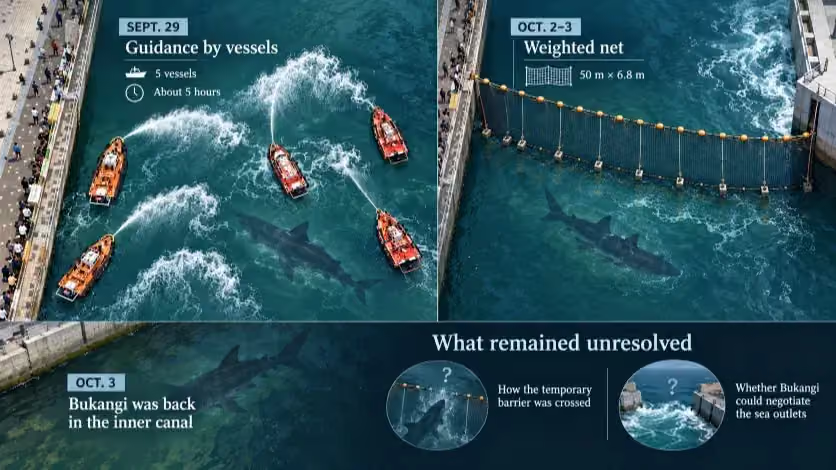
Bukangi, the Shark That Stayed in Busan’s North Port
A rescue net guided Bukangi toward the sea, but the dusky shark returned to B...
More from the author
More from this byline
Stay with the same line of reporting through more work from this byline.
 NewsOct 9, 2026
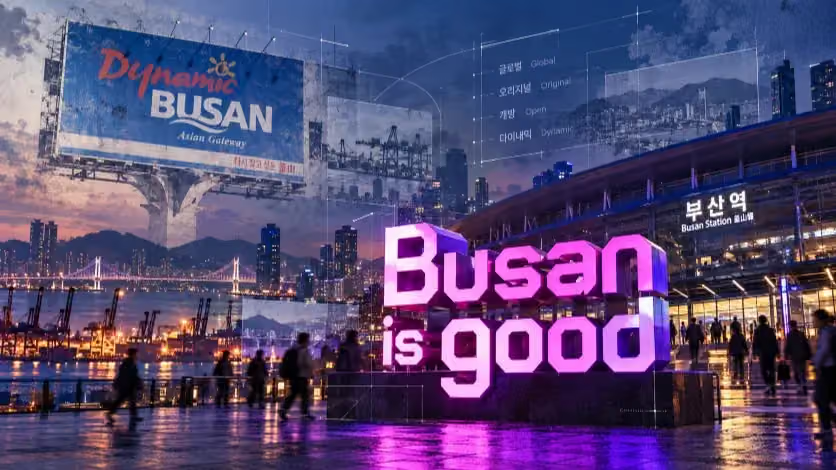
Why “Busan Is Good” Falls Short as a City Brand
 NewsSep 18, 2026
The Other AI Race Is for the Freedom to Change Course
Reader Signal
Community readWhat did this report leave you with?
Choose the signal that best reflects your reading. Select it again to remove it.
One response per article
No response selected
A moderated conversation about the reporting.
One-level replies and newsroom moderation keep the conversation anchored to this article.
Discussion Status
Open
Please sign in to join the discussion.
Newsletter
Weekly reporting and context from Busan and Korea.